

REVIEW · MALTA
Malta Multi Pass
Malta can feel like a lot, until you add the right pass. This one strings together unlimited sightseeing buses, Captain Morgan cruises, and entry to many top sites so you can build days that actually fit your pace.
I especially like two things. First, the Captain Morgan Grand Harbour Cruise is included for everyone and it is a calm, scenic way to orient yourself fast. Second, the pass pairs that water view with museum and archaeological stops in Valletta and beyond, so your “what should I do today?” question stays simple.
One consideration: you are moving around a busy island, so you will want a little slack time and to keep an eye on timing for buses and water departures. If you hit tight schedules, Malta traffic can make it feel slower than you expect.
In This Review
- Quick reasons it works for most itineraries
- How the Malta Multi Pass fits together (and how you should use it)
- Captain Morgan Grand Harbour Cruise: fort views you cannot get from land
- Two Islands by catamaran: Comino’s Blue Lagoon plus Gozo, in one day
- CitySightseeing Malta buses: use them for navigation, not speed
- Valletta museums and palace stops you can spread across days
- Grand Master’s Palace state rooms (plus a closure heads-up)
- Palace Armoury: why Knight armour is more than protection
- MUZA, archaeology, and the big art-meets-everything museum mood
- Fort St Angelo and Fort St Elmo: why Valletta’s skyline is really a defense map
- Knight religion, tribunals, and a hospital that shaped Malta
- Inquisitor’s Palace: the prison complex and the museum inside
- La Sacra Infermeria: a guided look at the Great Ward
- UNESCO temples day: Ħaġar Qim and Mnajdra’s sunrise alignments
- Prehistoric caves and temple sites beyond Valletta
- Għar Dalam: Malta’s oldest prehistoric site, layered by time
- Borġ in-Nadur: a temple site with a high valley view
- Ta’ Bistra Catacombs: big tombs, more recent discoveries
- Ta’ Ħaġrat, Skorba, and Tarxien: megalith craftsmanship in different forms
- Catacombs and Roman Malta: underground scale and a private-home look
- Malta Experience, Esplora, and the Aquarium for a smart break day
- The Malta Experience audio-visual show: a first-stop shortcut
- Esplora Interactive Science Centre: hands-on, plus a real planetarium
- Malta National Aquarium: an easy family win
- Mdina Cathedral Museum: a classic Mdina stop that fits neatly
- Optional Gozo Heritage Day: Ggantija, Nature Museum, windmill, and a prison
- Should you book the Malta Multi Pass?
- FAQ
- How long is the Malta Multi Pass valid?
- Can I ride the hop-on hop-off buses as many times as I want?
- What water trips are included?
- Is entry to the UNESCO temples included?
- What if a site is closed when I go?
- What languages are available?
- Do I need good weather for this experience?
- Can I cancel for a full refund?
Quick reasons it works for most itineraries

- Unlimited hop-on hop-off bus freedom on both Malta north and south routes, starting from Valletta Harbour
- Captain Morgan’s 90-minute Grand Harbour Cruise with live commentary in English and German, plus free Wi-Fi
- Blue Lagoon and Gozo water time with a full day you can split across islands
- Museum and heritage stacking so you can spend less time deciding and more time seeing
- Great value for longer stays when you activate the pass for 6 or 7 days and tap into many included heritage sites
Still weighing it up? These Malta trips held up well when we went through them.
- Malta: Gozo & Comino Islands, Blue Lagoon & Seacaves Tour
★ 4.5 · 15,672 reviews - Comino: Blue Lagoon, Crystal Lagoon, and Seacaves Tour
★ 4.6 · 5,673 reviews - Malta: Gozo, Comino, Blue & Crystal Lagoon, & Caves Cruise
★ 4.6 · 5,092 reviews - Malta: Comino, Blue Lagoon, Crystal Lagoon & Caves Cruise
★ 4.7 · 2,882 reviews
How the Malta Multi Pass fits together (and how you should use it)
The Malta Multi Pass is designed as a planning tool. Pick 3, 4, 6, or 7 days, activate the pass for consecutive days, then scan it for single entry at each included site.
Your best strategy is to build a “loop” day. Use the hop-on hop-off bus to get you to the right neighborhoods, then pick one main attraction plus one smaller add-on nearby. Malta’s sights are spread, but the bus makes the distances feel manageable, especially if you are arriving in Valletta.
Also, keep your proof of pass access handy on your phone. One practical tip I picked up: store it as screenshots so you can show it quickly, even if you lose the email or app access.
Captain Morgan Grand Harbour Cruise: fort views you cannot get from land

This is the one included activity that feels like a mental reset. The 90-minute harbour cruise runs along Grand Harbour and Marsamxett Harbour, with live narration in English and German tied to Malta’s key conflicts, including the Great Sieges of 1565 and 1942.
The boat is a 20 metre harbour catamaran ferry, and you can choose outdoors or air-conditioned indoor seating. There is free Wi-Fi and restrooms on board, and you can buy food and drink from vending machines if you want a light snack.
What you will love most is the vantage point. Forts, battlements, creeks, and Valletta’s skyline look different from the sea, and photos come out stronger because you are not fighting buildings and street angles.
A small “plan this” note: cruise times vary by day, so align your first day around a departure that gives you daylight photos.
Two Islands by catamaran: Comino’s Blue Lagoon plus Gozo, in one day
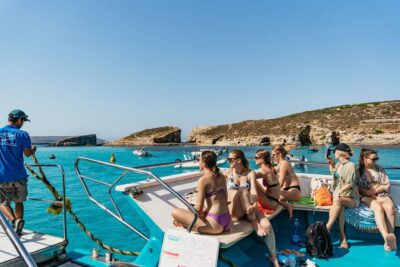
If you want water views without doing a complicated itinerary, this is the pass highlight. On 4 day and 7 day passes, you get a round trip on Captain Morgan’s Two Islands ferries to Comino’s Blue Lagoon and Gozo.
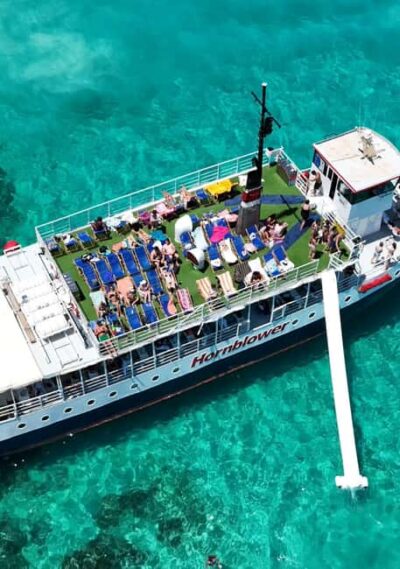
Departures run year-round from Sliema or Bugibba. The catamaran is 33 metres and eco-friendly, with the option to sit indoors (air-conditioned) or outdoors, plus toilets and a cash bar for drinks and snacks.
You get free time to enjoy the Blue Lagoon’s turquoise, crystal-clear water for swimming, sunbathing, relaxing, or exploring on foot. You also get island flexibility: you can do Gozo first then Comino, or Comino first then Gozo, roughly 2 hours on each, or stay with one island for about 4 hours.
The best practical tip here is timing discipline. Return departures matter, and the crew can announce afternoon ferry time amendments onboard the morning ferry, so take a photo or note the afternoon return time. Build in buffer time when you are headed back to the embarcation point.
CitySightseeing Malta buses: use them for navigation, not speed

This is your main “get around Malta” tool. CitySightseeing Malta hop-on hop-off buses offer both north and south routes starting from Valletta Harbour, with 30-plus stops and 40 points of interest along the way.
The north and south routes sweep up major areas like Mdina, Mosta, Ta Qali Crafts Village, the Three Cities (Vittoriosa, Cospicua, Senglea), Marsaxlokk, and Valletta city centre. On the north route, you may also catch the Blue Grotto stop at Wied iz-Zurrieq from April to October.
The bus format is ideal because you can ride as much as you want within your pass days. Hop off when you are ready for a big site, then hop back on when you want transport back into the flow of the day.
The drawback is simple: buses in Malta traffic can take longer than you plan. One traveler I reviewed used the bus mainly to reach a heritage location, then switched to local transport for the rest of the day. That is a smart model if you are aiming for tight timing at more than one place.
If you only remember one thing, make your schedule “site first, transport second.” Use the bus to set your base and move between clusters.


Valletta museums and palace stops you can spread across days
Valletta is where your pass can feel like magic, because many included sites sit close enough to string together. For longer pass durations, you get access to multiple heritage interiors and museums, plus places tied to the Knights of St John and the military history of the island.
Grand Master’s Palace state rooms (plus a closure heads-up)
The Grand Master’s Palace context matters, even if you only have time for one interior. The pass includes the state rooms and highlights linked to the Great Siege of 1565 visual narrative by Matteo Perez d’Aleccio, plus the French Gobelins tapestries titled Les Teintures des Indes and Baroque illusionistic ceiling paintings.
One catch: the state rooms are temporarily closed until further notice. If your dates fall during the closure, you will still want to pivot to the Armoury and the other Valletta sites that are open.
Palace Armoury: why Knight armour is more than protection
The Palace Armoury is one of those stops that turns history into a visual checklist. You will see how armour functioned as a status symbol, not just battlefield gear, with lavish decoration and careful craftsmanship.
Look for notable displays connected to Grand Masters Alof de Wignacourt and Jean de La Valette, plus armour and weapons tied to the Ottoman Empire during the Great Siege of 1565 and a selection of artillery pieces.
MUZA, archaeology, and the big art-meets-everything museum mood
MUZA, the Malta National Community Art Museum, is unlike the classic “one era at a time” museum. The collections are organized around four themes, The Mediterranean, Europe, Empire, and The Artist, mixing old masters with contemporary work and pairing objects with video and interactive experiences.
National Museum of Archaeology and National Museum of Natural History round out the museum mix in Valletta. The Natural History Museum is in the Auberge de Provence building, constructed in 1571 as a residence for the Knights from Provence, so even before the exhibits, the setting is part of the experience.
If you like seeing how Malta’s story stretches from Neolithic through Phoenician periods, this is a strong pairing with the prehistoric temples outside Valletta.
Fort St Angelo and Fort St Elmo: why Valletta’s skyline is really a defense map

Malta’s harbours are the reason these forts exist, and the forts explain why Malta mattered. With the pass, you can visit Fort St Angelo in the Three Cities area and Fort St Elmo in Valletta.
Fort St Angelo dominated the Grand Harbour when control of it meant control of the islands. After 1530, the Order of St John made it their headquarters, and it played a major role during the Great Siege of 1565. Later, the Royal Navy shifted its command hub there from 1906 to 1979, and during World War II it again offered protection against air raids.
Today the fort is a panoramic lookout with immersive displays and examples of artillery. Even if you do not love military history, the views help you understand where every “important point” on the map comes from.
Fort St Elmo includes the National War Museum. The fort was built by the Order of St John in 1552 as a strategic war machine facing Ottoman attacks. The museum includes artefacts going back to prehistoric times, plus highlights like the George Cross, Roosevelt’s Jeep Husky, and the Gloster Sea Gladiator N5520 FAITH.
Knight religion, tribunals, and a hospital that shaped Malta
Two stops give you a sense of Malta as both place of power and place of care.
Inquisitor’s Palace: the prison complex and the museum inside
The Inquisitor’s Palace in Birgu survives from a rare category of building. It hosted high-ranking officials over centuries, and it later became tied to the Maltese Inquisition era.
You can explore reconstructed spaces including kitchen areas, the piano nobile, private quarters, the tribunal setting, the prison complex, and the torture chamber reconstructions. It also houses the National Museum of Ethnography with permanent displays tied to religious traditions as consolidated by the Inquisition.
La Sacra Infermeria: a guided look at the Great Ward
Reliving the Sacra Infermeria is a guided tour in English. This is where you see Malta’s Knights as caretakers, not just warriors.
The infirmary carries over 400 years of human history, and by 1787 it had wards accommodating 563 beds, with emergency capacity rising to 914. The Great Ward, a 155 metre room, is known as the longest hospital ward in Europe in its time, with magnificent timber ceiling work.
If you want one stop that makes Malta’s story feel human, this is a strong pick.
UNESCO temples day: Ħaġar Qim and Mnajdra’s sunrise alignments
If you like ancient engineering, these sites give you that wow moment fast. Ħaġar Qim sits on a hilltop above the sea, overlooking the islet of Filfa, and it is on the UNESCO World Heritage list.
Excavated starting in 1839, the remains suggest dates between 3800 and 2200 BC, linked to the Ġgantija phase. The site has a central building plus remains of at least two other structures, and you can see huge megaliths used in construction, including a 5.2 metre high stone and one megalith estimated to weigh close to 20 tonnes.
One detail that sticks: an elliptical hole in a prehistoric chamber aligns with the Summer Solstice sunrise. There is also a dedicated visitor centre with interactive information.
Mnajdra is similar but offers a different feel. It sits on Malta’s southern coast overlooking Fifla, with three buildings facing a common oval forecourt. The South Temple has entrances and decorated blocks marking sunrise positions on the equinoxes and solstices.
Both are about an hour stops, and the visitor centres help you understand what you are looking at without making you guess.
Prehistoric caves and temple sites beyond Valletta
This is where your pass turns into an archaeology tour of Malta, without paying for each ticket one by one.
Għar Dalam: Malta’s oldest prehistoric site, layered by time
Għar Dalam is Malta’s oldest prehistoric site. You will see animal bones in a museum display, including remains of small-sized elephants and hippopotami that lived on the islands thousands of years ago.
The layers matter here. The Hippopotamus Layer was deposited by water during the Pleistocene era around 500,000 years ago, and the Deer Layer includes remains dating from 25,000 to 18,000 years ago. The Cultural Layer holds some of the earliest human presence evidence, around 7,400 years ago.
It is not only about bones either. The site includes ecological value with a garden of indigenous plants and trees.
Borġ in-Nadur: a temple site with a high valley view
Borġ in-Nadur sits high between two valleys, overlooking St George’s Bay in Birżebbuġa, and it is about 500 metres from Għar Dalam. The site was used in both the late Temple Period and the Bronze Age.
It was excavated in the 1920s by archaeologist Margaret Murray. You can see four apsed temple structures, fronted by a large enclosed area that is unusual for this type of building.
Ta’ Bistra Catacombs: big tombs, more recent discoveries
Ta’ Bistra Catacombs are the largest set of tombs and catacombs accessible beyond the ancient city limits. They were recorded in the late 1800s, investigated in 1933 by Captain Charles Zammit, and later part of the site was covered by a new road leading down to Burmarrad.
Additional studies in 2004, 2013, and 2014 brought the site back with new finds and updated interpretations, so it feels like a living research topic rather than a frozen museum.
Ta’ Ħaġrat, Skorba, and Tarxien: megalith craftsmanship in different forms
Ta’ Ħaġrat has two well-preserved structures and is known for its monumental doorway and facade. It is the only temple site built entirely from local Upper Coralline Limestone. You can also see a bench running along the facade and a raised-stone kerb courtyard that leads into chambers.
Skorba is recognized for archaeological value and specifically for evidence of domestic life tied to the temple builders. It has two megalithic temple structures, including one dating to the earliest Ġgantija phase and another later Tarxien phase, plus domestic huts.
Tarxien Temples are a four-structure complex built between 3800 and 2200 BC and reused between 2400 and 1500 BC. The South Temple is the most decorated, with relief sculpture and evidence the site was reused as a Bronze Age cremation cemetery. An elevated walkway gives you a unique viewpoint over the remains.
If you enjoy the sense that Malta is layered like geology and history, these stops make your days feel connected.
Catacombs and Roman Malta: underground scale and a private-home look
Malta’s Roman and early Christian traces show up in a few different ways on this pass.
St Paul’s Catacombs are located on the outskirts of Roman Melite, where Roman law prohibited burials inside the city. The catacombs were used from Punic and Roman times up until the 7th century AD and form a network of interconnected underground cemeteries.
You can walk through a main entrance into two large halls with pillars designed to resemble Doric columns. There are also circular rock tables in a low platform, the triclinia or Agape tables, used for commemorative meals.
Domus Romana gives you the private side. It lets you picture an ancient Roman aristocrat’s household with mosaics and household artefacts. A standout is the only set of marble statues of Emperor Claudius and his family seen in a private house.
These stops help you switch gears from the megalithic world into daily life.
Malta Experience, Esplora, and the Aquarium for a smart break day
Not every day needs to be hard-science and stone monuments. The pass includes a mix of indoor and family-friendly options that also help you avoid getting stuck in the sun.
The Malta Experience audio-visual show: a first-stop shortcut
The Malta Experience is a 45-minute audio-visual show telling the 7000-year story of the Maltese islands. It runs in 17 languages and plays in a panoramic auditorium with 265 seats.
If you are arriving with gaps in your understanding, this show can help you label places you see later. It is an efficient way to make the rest of the day click.
Esplora Interactive Science Centre: hands-on, plus a real planetarium
Esplora at Bighi is Malta’s interactive science centre. Expect over 200 exhibits, plus an Activity Centre for hands-on workshops and entertaining science shows.
The planetarium has a 10.7 metre diameter structure with a full-dome Colour space 4K theatre system. It can show full-dome shows and presenter-led visualizations, with an exhibition about the universe inside the planetarium building.
Malta National Aquarium: an easy family win
The Malta National Aquarium is curved like a starfish and includes 41 tanks. You can see Mediterranean fish, plus replicas of historical artifacts found in Maltese waters, and reptiles, insects, and amphibians.
The main tank is a 12 metre diameter space with Indian Ocean species including black-tip sharks, horn sharks, zebra sharks, eels, rays, and more. A glass tunnel lets you look at fish swimming around you, and there is an outdoor promenade with kids’ play space and views toward St Paul’s Islands.
Mdina Cathedral Museum: a classic Mdina stop that fits neatly
If your pass days include time in Mdina, add the cathedral complex. St Paul’s Cathedral in Mdina was built in 1702, and you can connect it to Publius, who was governor and lived there when appointed as the first bishop of Malta by St Paul.
The cathedral itself has a colourful inlaid marble floor, frescoed ceiling, and lots of art and silver details. The adjacent Mdina Cathedral Museum adds fine silverware, rare coins, prints and engravings by Albrecht Dürer, wax reliefs, and a trompe l’oeil Baroque dome.
Optional Gozo Heritage Day: Ggantija, Nature Museum, windmill, and a prison
If you want variety beyond Malta’s main island, Gozo is the cleanest upgrade. With the 4 day and 7 day passes, you can include a 1 day Gozo Heritage Pass, which adds City Sightseeing Gozo buses plus entrance to several Gozo sites.
City Sightseeing Gozo has two routes with multi-lingual audio guide and 15 stops. It covers key areas like Victoria, Dwejra, Ta’ Pinu, Xlendi, Marsalforn, Ġgantija Temples, Ramla, and more.
On the heritage side, you can visit the Ġgantija Archaeological Park, which is UNESCO-listed and more than 5500 years old, recognized as the earliest megalithic temples of Malta. You also get Ta’ Kola Windmill, one of the few surviving windmills from the Knights’ period, where it was once used to grind grain into flour for bread.
History comes with an odd but memorable contrast at Old Prison in Victoria, Gozo. The oldest surviving prison in Gozo is filled with inmate graffiti and inscriptions, giving you a direct, human glance into conditions.
For museums, Gozo Museum of Archaeology covers prehistory through classical periods, then mediaeval and early modern, ending with the arrival of the Knights. Gozo Nature Museum focuses on geology, fossils, moonstone fragments linked to Apollo II, butterflies, and insects, plus garigue flora and Malta Fungus.
Gran Castello Historic House and Cittadella Visitors’ Centre add context through reconstructed rooms and interactive storytelling, including a short surround theatre video.
Should you book the Malta Multi Pass?
Book it if you want maximum planning help for a multi-day trip. The value is strongest when you stay 6 or 7 days and can use the pass for many Heritage Malta sites and major Valletta museums. Even on shorter stays, the included Malta Experience show, La Sacra Infermeria tour, and the Aquarium and Esplora can keep your days full without nickel-and-diming every ticket.
Skip it or scale back expectations if you have a very tight schedule and hate adapting. Malta runs on stone monuments and long transit patterns, so build slack time for bus movement and for your water-day returns. Also, check ahead for temporarily closed sites like the State Rooms and the Fortress Builders Interpretation Centre, since they are not guaranteed open.
If you want an easy win, start with the cruise to get your bearings, then let the buses connect your next steps. This pass is a good fit for travelers who like structure, but still want freedom once they are there.
FAQ
How long is the Malta Multi Pass valid?
You can choose a pass for 3, 4, 6, or 7 days. Once activated, it is valid for consecutive days for that duration.
Can I ride the hop-on hop-off buses as many times as I want?
Yes. City Sightseeing Malta is hop-on hop-off, and you can ride as much as you like on the north and south routes included with the pass.
What water trips are included?
The pass includes Captain Morgan’s Grand Harbour Cruise for everyone. It also includes Captain Morgan’s Two Islands ferries to Comino Blue Lagoon and Gozo for the 4 day and 7 day passes.
Is entry to the UNESCO temples included?
Yes, entry to Ħaġar Qim and Mnajdra is included for the 6 day and 7 day passes.
What if a site is closed when I go?
Some sites may be closed for refurbishment, and a few are listed as temporarily closed. If that happens, you can use your pass at other included sites during your activated days.
What languages are available?
The pass is offered in English. The Grand Harbour Cruise includes live commentary in English and German, and the CitySightseeing buses offer 12+ multi-lingual commentary channels.
Do I need good weather for this experience?
Yes. The experience requires good weather, and if it is canceled due to poor weather, you will be offered a different date or a full refund.
Can I cancel for a full refund?
Yes, you can cancel up to 24 hours in advance for a full refund. If you cancel less than 24 hours before the start time, the amount paid will not be refunded.
More Tour Reviews in Malta



Recently reviewed around Malta
- Valletta City of Gentlemen guided walking tour★ 3.5 · 3 reviews
- Temples, Blue Grotto, Marsaxlokk★ 4.5 · 3 reviews
- The Village Experience Tour★ 5.0 · 3 reviews
- Serenity at Sea: Comino Blue Lagoon Exclusive Day Cruise★ 5.0 · 3 reviews
- Gozo and Blue Lagoon Private Boat Trips in Comino★ 5.0 · 3 reviews
- Malta Chocolate Factory Gin and Truffle Making Experience★ 5.0 · 3 reviews
- Malta: Around Comino Cruise With Blue Lagoon stop★ 5.0 · 3 reviews
- Pastizzi Making Experience in Malta★ 5.0 · 3 reviews