
REVIEW · MDINA AND RABAT
Best of Mdina and Rabat Walking Tour
Mdina is quiet, but not boring. This Best of Mdina and Rabat walking tour strings together the city’s most striking medieval sights, then steps just outside the walls to show you Rabat’s calmer streets, all with a licensed guide and an easy central meet-up. You’ll start at the Main Gate of Mdina with your guide holding a red umbrella and finish in Rabat near the Parish church area.
I love how the route mixes big landmarks with small street moments. Two standouts for me are Vilhena Palace (a French baroque presence at Mdina’s edge) and the Pjazza Mesquita square, known for being a Game of Thrones filming location.
One possible snag is sound. On larger days, there can be static or noise and not enough audio receivers for everyone, so if you are hard of hearing in one ear, plan ahead and consider speaking with the operator before you go.
In This Review
- Key moments you will remember
- Mdina Gate meet-up, red umbrella, and why this route works
- Stop 1: Mdina’s Main Gate to the Middle Ages streets
- Stop 2: Vilhena Palace, the French baroque detail you might miss
- Stop 3: Pjazza Mesquita and the Game of Thrones connection
- Stop 4: Villegaignon Street, palaces on Mdina’s main spine
- Stop 5: Pjazza San Publju and the Metropolitan Cathedral
- Stop 6: Rabat, the suburb meaning, and a more rural feel
- Price and value for a two-city highlight in one go
- The guide factor: stories, names like Nadine, and what to expect
- Group size, sound issues, and how to make the most of your hearing setup
- Best time to book (and why planning matters here)
- Who this tour is best for, and who should choose differently
- Should you book the Best of Mdina and Rabat walking tour?
- FAQ
- How long is the Best of Mdina and Rabat Walking Tour?
- How much does the tour cost?
- What language is the tour offered in?
- Where do I meet the guide, and where does the tour end?
- What is included in the price?
- Are entrance fees included for churches or museums?
Key moments you will remember
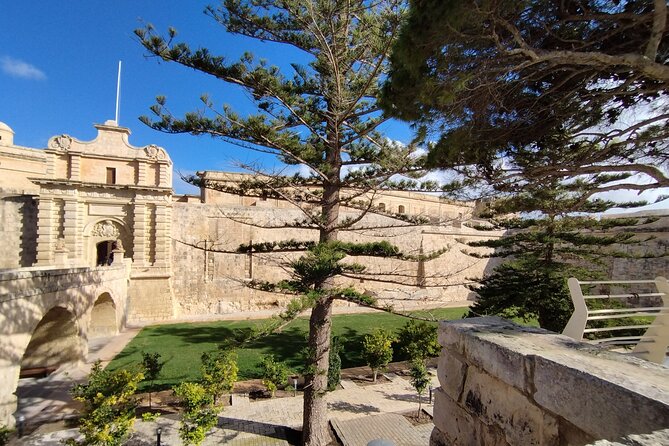
- Start at the Main Gate of Mdina, where the tour is easy to find and the guide gets you moving fast
- Vilhena Palace at Mdina’s entrance, with early 1700s French baroque architecture by Charles Francois de Mondion
- Pjazza Mesquita, a peaceful square tied to Game of Thrones filming
- Villegaignon Street, Mdina’s main street, lined with palaces that make time feel slower
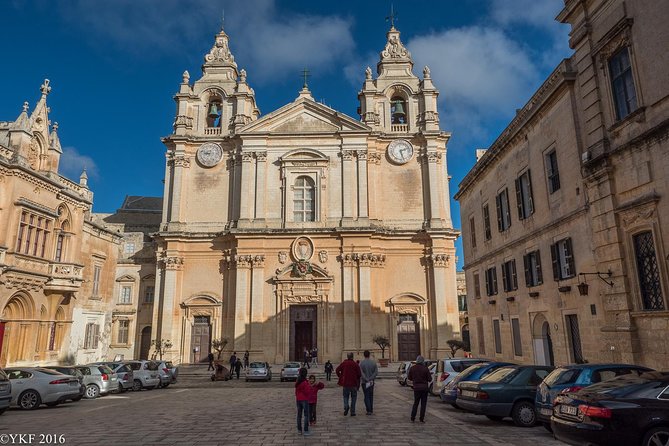
- Pjazza San Publju, Mdina’s main square dominated by the Metropolitan Cathedral of Saint Peter and Saint Paul
- Rabat in one smooth link, including the meaning of the name as a former suburb of Mdina
Other routes through Mdina and Rabat
- Malta: Mdina, Dingli Cliffs and San Anton Botanical Gardens
★ 4.3 · 991 reviews - Mdina and Rabat Insider’s Tour
★ 5.0 · 528 reviews - Valletta: Vintage Bus to Valletta, Sliema, Rabat & Mdina
★ 4.1 · 433 reviews - Half-Day Tour of Mosta, Ta’Qali Crafts Village & Mdina
★ 4.1 · 110 reviews
Mdina Gate meet-up, red umbrella, and why this route works
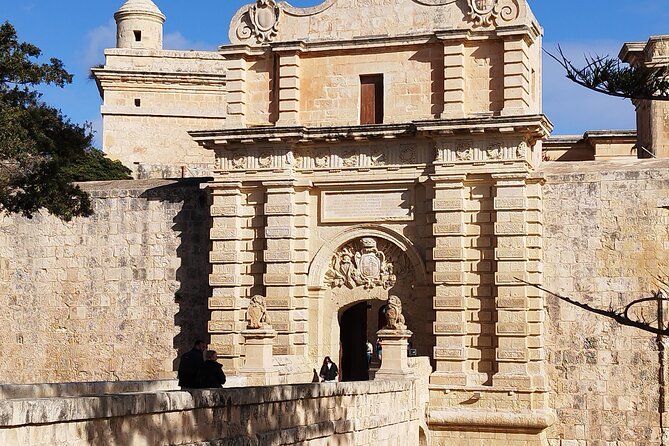
This tour is built for people who want the highlights without doing a complicated hopscotch of taxis and tickets. You meet at the Main Gate of Mdina, and your guide is holding a City Walking Tours red umbrella. That small detail matters. Mdina is compact, but the approach area can feel busy, so having a clearly visible meeting point helps you get oriented quickly.
The timing is also smart. With an approximately 2-hour walking format, you get a full arc: first the walled-medieval feel of Mdina, then a gradual transition out into Rabat. That second part is where many first-time itineraries get lazy. Here, you get at least a solid taste of Rabat’s quieter, more rural vibe instead of just snapping photos and leaving.
The group size cap of up to 20 is another plus. It is not private, but it is still small enough that your guide can keep momentum and point out details as you walk.
Stop 1: Mdina’s Main Gate to the Middle Ages streets
Your first walk segment runs about 30 minutes and centers on Mdina’s medieval atmosphere. You pass key palaces, convents, churches, and typical narrow streets while your guide ties the look of the town to what it meant back then. Even if you are not a history buff, this is the kind of explanation that helps the town make sense. Mdina is scenic, but it is also a set of choices made over time, and a good guide helps you see those layers instead of just admiring stone.
A practical tip for this opening stage: Mdina’s main gate area can be crowded, especially when tour groups and school-age visitors overlap. If you are sensitive to noise or find it hard to hear, arrive a few minutes early so you are not stuck at the back right at the start.
Stop 2: Vilhena Palace, the French baroque detail you might miss
Next up is Vilhena Palace, about 10 minutes. This is one of those “how is this here?” sights. Mdina is famous for its quiet stone streets, but Vilhena Palace brings a distinctly French baroque flavor, built in the early 18th century.
What I like about this stop is that it gives you a contrast point. Your guide can explain how architectural styles traveled and how Mdina was not a frozen medieval postcard. It was a living place, shaped by new tastes and power. The tour specifically credits French architect Charles Francois de Mondion, which is the kind of name you will actually remember later when you see similar facades around Malta.
If you are the type who enjoys “spot the style” games, this is a great moment. Look for the formal feel of a palace sitting at the entrance to town. It sets expectations for what you will see next on the palaced streets.
Stop 3: Pjazza Mesquita and the Game of Thrones connection
After that, you reach Pjazza Mesquita, a 5-minute pause in a peaceful square within the silent city. This is where the tour taps pop-culture without turning into a trivia contest. The square is noted as one of the Game of Thrones filming locations.
The value here is not the show reference by itself. It is the way a square like this functions. Squares in Mdina and Rabat are social nodes, even when they feel quiet. Your guide’s job is to point out why this calm space worked for filming and how it relates to the town’s layout.
If you are going for photos, this stop is also efficient. It is short enough that you do not lose the walking rhythm, but long enough to take in the setting and reframe what you saw before.
Other guides worth walking behind
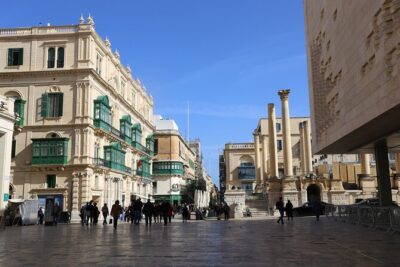


Stop 4: Villegaignon Street, palaces on Mdina’s main spine
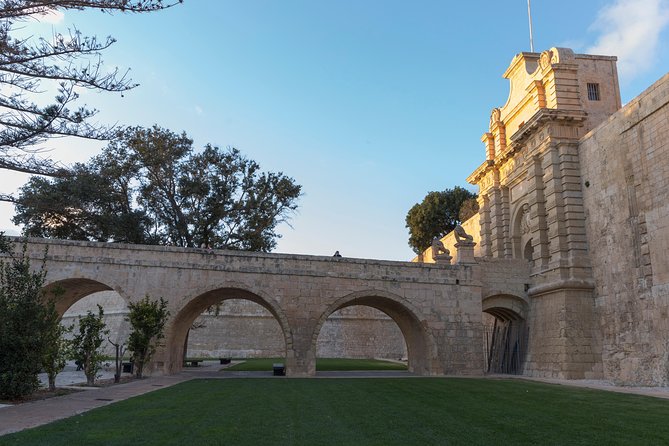
Your next stretch is about 30 minutes along Villegaignon Street, Mdina’s main street lined with some of the most stunning palaces in the city. This is the part where the tour’s pacing really earns its keep. Walking this street slowly enough to look up is a gift, because if you rush on your own you will focus on your feet and your photos, not the architectural rhythm.
The tour’s description nails the feeling: as you explore, it is like you stepped back in time. I like that you get commentary instead of just a “walk and look” approach. A good guide helps you notice patterns, like which buildings look grander, which entrances feel more ceremonial, and how the street’s curves affect sightlines.
One drawback to keep in mind: if you are in a group that is larger than ideal at that point, sound can become an issue. Some people have reported that the audio setup can be inconsistent, with noise or static. If your ears are your main concern, position yourself closer to the guide when you can.
Stop 5: Pjazza San Publju and the Metropolitan Cathedral
Then comes Pjazza San Publju, Mdina’s main square. This stop runs about 10 minutes and revolves around the Metropolitan Cathedral dedicated to Saint Peter and Saint Paul.
For value, this is a smart inclusion because it is one of Mdina’s defining visuals. The tour keeps it focused: you get the key orientation point (the cathedral dominating the square), and you learn what you are looking at. What you do not get is “museum-ticket time.” That is because entrance fees to churches or museums are not included.
So here is how to plan: if your goal is just to see the cathedral from the square and understand its significance, you are fine with this tour. If you want to go inside, you should expect separate costs and extra time. The tour stays within its two-hour window, so you might decide to do any interior visit on your own right after, or on another day when you can slow down.
Stop 6: Rabat, the suburb meaning, and a more rural feel
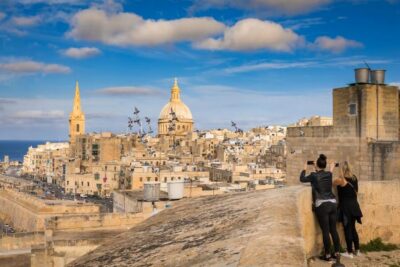
Finally, you transition to Rabat, just outside Mdina. This segment is about 20 minutes and is deliberately more leisurely. Rabat is described as a typical Maltese town with a quiet, more rural character.
The tour also gives Rabat’s name context: it means a former suburb in Semitic, because Rabat was once the suburb of Mdina. That tiny bit of naming history changes how you read the town. Instead of seeing Rabat as a separate place, you understand it as an extension of the walled center.
What I like here is the shift in mood. Mdina can feel like a set, Rabat feels like daily life. A short guided walk through Rabat’s typical streets gives you enough texture to plan what you might explore later on your own.
The tour ends close to the Parish church of Rabat, and the end point is listed near the Basilica of St Paul address area. Practically, it means you finish in a part of town that is walkable for onward exploration.
Price and value for a two-city highlight in one go
The cost is $24.10 per person for an approximately 2-hour guided walk. For Malta, that is a pretty clear value proposition when you consider what you are buying: a fully licensed guide, a tightly designed route, and the kind of stop-by-stop explanation that usually takes longer (and costs more) if you rely on self-guided wandering.
The catch is what is not included. You should treat it as a walking-and-seeing tour, not a ticketed attraction tour. Entrance fees to any museum or church are not included. That does not make the tour worse, but it changes how you should budget. If your plan includes going inside a church or museum during your stops, set aside extra money.
One more value note: you get a mix of “big picture” landmarks and street-level storytelling. Many tours only hit the postcard stops. Here, the palaces, convents, churches, and typical streets are part of the main content, so you leave with a stronger sense of where to go next in Mdina and Rabat.
The guide factor: stories, names like Nadine, and what to expect
The strongest theme in the provided feedback is the guide experience. People praised guides for being well informed and sharing stories with high-level knowledge, in a way that does not feel like a lecture. One guide name that shows up is Nadine, described as exceptionally knowledgeable and helpful with suggestions after the tour.
That matters more than you might think. Mdina and Rabat can be so scenic that it is easy to lose your bearings. A good guide helps you translate what you see into practical next steps, like where to spend extra time, what to prioritize, and how to understand what you are looking at without getting stuck in facts that do not stick.
There is also a sign of professionalism in how the guide handled rain. You might find that the guide looks for a quick place to shelter you for a short time if weather turns. Malta weather can flip quickly, so it is comforting to know your guide is not acting surprised by clouds.
Group size, sound issues, and how to make the most of your hearing setup
This tour runs with a maximum of 20 travelers, which is generally a manageable size for a walking route. Still, two separate issues show up in feedback: crowding at the start area and audio reliability.
At the Mdina gate, crowds can build fast with other groups and buses. If you want to hear everything clearly, get there early and try to position yourself where you can see the guide and speak clearly when questions come up.
For audio, one concern is that there may not be enough headsets in some cases, and that there can be static or noise. If you are hard of hearing in one ear, treat this as a key decision point. You will get more out of the tour if you can follow the guide’s explanations smoothly.
A small strategy that helps on any walking tour: keep your focus forward. When people drift into their own photoshoot bubble, the guide’s voice can get lost in the group noise.
Best time to book (and why planning matters here)
This tour is frequently booked about 18 days in advance on average. That suggests it is popular, especially during peak travel weeks. You do not need to panic-book months ahead, but I would not wait until the last minute either, particularly if you want a time that avoids the most crowded gate area.
If you are building a Malta itinerary, think of this tour as a “set the stage” activity. Do it early enough that it informs where you want to go later. You will finish Rabat with enough context to decide if you want to linger longer there, or return to Mdina for slower exploration.
Who this tour is best for, and who should choose differently
This is a great fit if you:
- want an efficient Mdina to Rabat overview in about two hours
- like architecture, squares, and street layouts, not just museum stops
- enjoy guided storytelling with named landmarks like Vilhena Palace and Pjazza San Publju
- want an easy meet-up point at Mdina’s main gate
You might think twice if:
- you need very reliable audio support, because some people reported headset or static issues
- you get overwhelmed in crowded meeting areas, since the gate area can get busy
- you plan to spend lots of time inside churches and museums, because entrance fees are not included and the tour timing is tight
Should you book the Best of Mdina and Rabat walking tour?
Yes, I think you should book it if your goal is a smart, guided highlight loop that connects Mdina’s medieval feel with Rabat’s day-to-day vibe. The route hits the big visual anchors, like the Metropolitan Cathedral in Pjazza San Publju, and it also includes street-level detail along Villegaignon Street that makes Mdina feel real.
Just factor in two things when deciding: entrance tickets are not included, and audio can be less perfect if the group gets heavy. If those points work for you, this tour is a strong use of time, especially at a price that stays friendly for what you get.
FAQ
How long is the Best of Mdina and Rabat Walking Tour?
It is an approximately 2-hour walking tour.
How much does the tour cost?
The price is $24.10 per person.
What language is the tour offered in?
The tour is offered in English.
Where do I meet the guide, and where does the tour end?
You meet at the Main gate of Mdina, with the guide holding a City Walking Tours red umbrella. The tour ends close to the Parish church of Rabat, with the end point listed near the Basilica of St Paul area.
What is included in the price?
A 2-hour walk with a fully licensed guide is included.
Are entrance fees included for churches or museums?
No. Entrance fees to museums or churches are not included.
More Tours in Malta




More Tour Reviews in Malta


The Silent City and Rabat




Recently reviewed around Malta
- Valletta City of Gentlemen guided walking tour★ 3.5 · 3 reviews
- Temples, Blue Grotto, Marsaxlokk★ 4.5 · 3 reviews
- The Village Experience Tour★ 5.0 · 3 reviews
- Serenity at Sea: Comino Blue Lagoon Exclusive Day Cruise★ 5.0 · 3 reviews
- Gozo and Blue Lagoon Private Boat Trips in Comino★ 5.0 · 3 reviews
- Malta Chocolate Factory Gin and Truffle Making Experience★ 5.0 · 3 reviews
- Malta: Around Comino Cruise With Blue Lagoon stop★ 5.0 · 3 reviews
- Pastizzi Making Experience in Malta★ 5.0 · 3 reviews
Mdina and Rabat, compared.
 ★ 4.4Highlights of Malta & Mdina Full Day Tour with LunchFrom $792,688 reviews
 ★ 4.8Mdina and Rabat Walking Tour with CatacombsFrom $291,126 reviews
 ★ 4.3Mdina, Dingli Cliffs and San Anton Botanical GardensFrom $41991 reviews
 ★ 4.8Mdina and Rabat: Guided City Walking TourFrom $24549 reviews
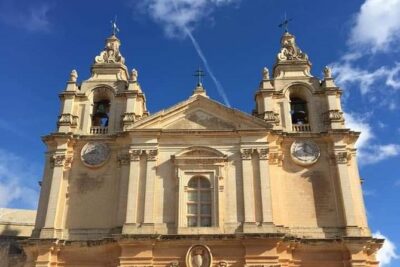 ★ 5.0Mdina and Rabat Insider’s TourFrom $24528 reviews
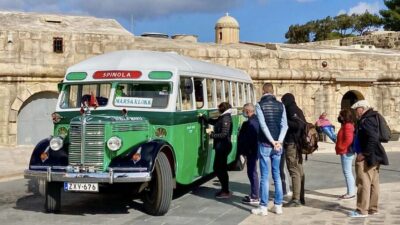 ★ 4.1Valletta: Vintage Bus to Valletta, Sliema, Rabat & MdinaFrom $9433 reviews
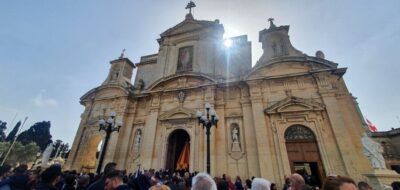 ★ 5.0Mdina and Rabat Tour with Local GuideFrom $24408 reviews
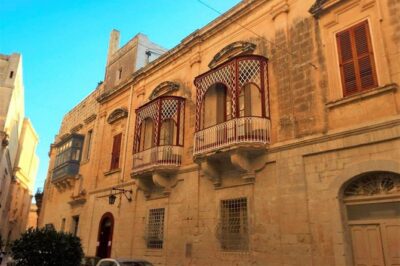 ★ 5.0Mdina and Rabat Walking Tour inc. Catacombs and St. Paul’s GrottoFrom $30341 reviews
Browse the lists this tour appears in