
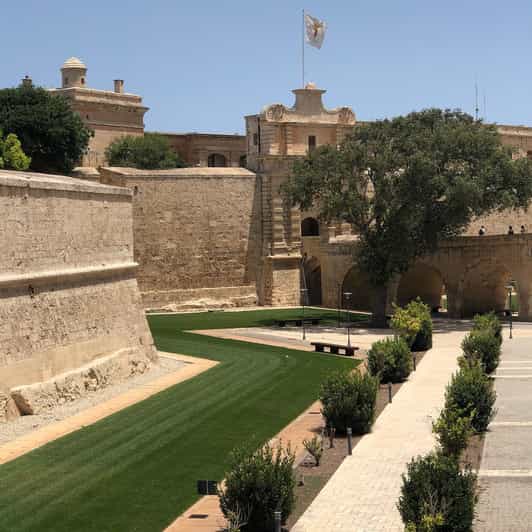
REVIEW · MDINA AND RABAT
Malta: Mdina and Rabat Walking Tour with Catacombs
Mdina feels timeless, then goes underground. This Mdina and Rabat walk brings together the walled, honey-colored feel of Mdina with paid-entry stops like WW2 shelters and catacombs, so you experience Malta as both a medieval stronghold and a place that coped with modern war. I like that you get guided context as you move, not just photo stops, and the sights are packed into a short 2.5 hours.
The only catch is the physical side. It is a walking tour with standing and time in enclosed underground areas, and the activity notes say it is not suitable for wheelchair users or people with mobility impairments.
In This Review
- Key highlights worth planning for
- Mdina and Rabat: how two towns tell one Maltese story
- Meeting outside Mdina Gate, then getting oriented fast
- Vilhena Palace, St Agatha’s Chapel, and the Banca Giuratale stop
- Mdina Cathedral and the bastion views you should not rush
- Greeks Gate and Palazzo Falzon: the facades that make Mdina feel lived-in
- Walking into Rabat: Wignacourt Museum and the WWII shelters
- St Paul’s Grotto and the catacombs: practical tips for the underground time
- The guides are the difference: Mario, Carmel, Matthew, and more
- Walking tour practicalities: shoes, sun, and keeping your energy up
- Value check: what $29 really buys you in this 2.5-hour format
- Who this tour fits best, and who should consider another option
- Should you book this Mdina and Rabat tour with catacombs?
- FAQ
- How long is the Malta Mdina and Rabat walking tour?
- What entrance sites are included in the tour price?
- Where do I meet the guide?
- What should I bring for the walk?
- Is this tour suitable for wheelchair users or limited mobility?
- Can I cancel for a refund?
Key highlights worth planning for
- Mdina Gate start right outside the walls, next to the playing field, so you begin with the right orientation
- Palazzo Falzon and Greeks Gate both on the route, letting you read Mdina’s architecture as you go
- Mdina Cathedral and bastion walls for that classic skyline look from the higher ground
- Rabat Wignacourt Museum plus WW2 shelters before you head into the older underground sites
- St Paul’s Grotto and catacombs with entrance included, so you do not have to add tickets later
Other routes through Mdina and Rabat
- Malta: Mdina and Rabat Walking Tour with Catacombs
★ 4.8 · 1,126 reviews - Mdina and Rabat: Guided City Walking Tour
★ 4.8 · 549 reviews - Malta: Mdina and Rabat Tour with Local Guide
★ 5.0 · 408 reviews - Mdina and Rabat Walking Tour inc. Catacombs and St. Paul’s Grotto
★ 5.0 · 341 reviews
Mdina and Rabat: how two towns tell one Maltese story
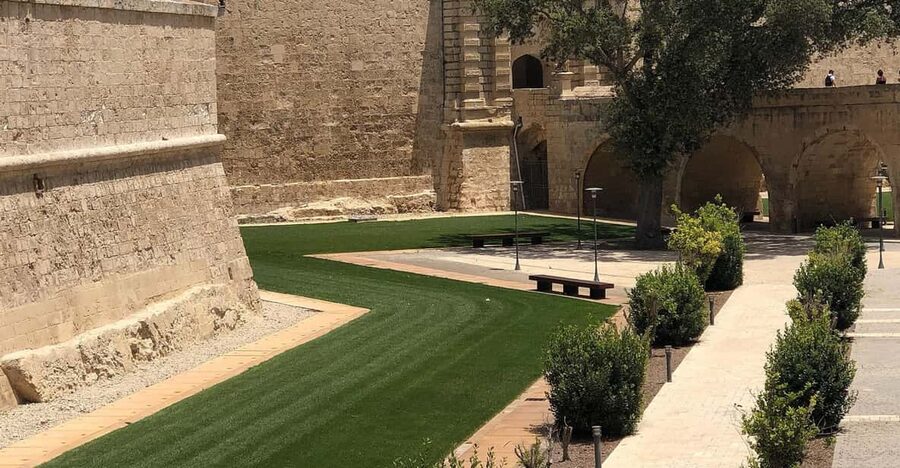
Mdina is often called Malta’s noble city, and the layout helps you feel why. It sits on a plateau in the middle of the island, so the bastions and church domes basically run the show in your field of view.
What makes this tour smart is that it links Mdina to Rabat, which is close by but feels different on the ground. Mdina gives you the long medieval feel, with narrow streets that have not changed much for centuries. Rabat brings you into sites tied to religious tradition and Malta’s more recent past, including WWII shelters you can actually enter.
There’s also a strong timeline you can hold in your head as you walk. The area has been inhabited since at least the Bronze Age, then Phoenicians and Romans left their mark. Later, Arab rule shaped the city’s modern name and layout before the Normans set it as a capital center. Even when Valletta became more important, a major earthquake in 1693 led to reconstruction and Mdina’s revival. The result is a place where the same ground keeps telling new chapters.
Meeting outside Mdina Gate, then getting oriented fast
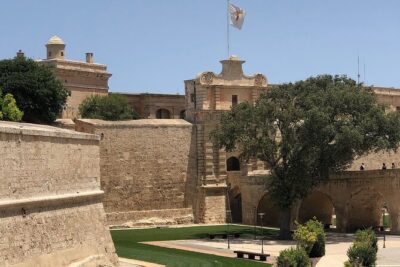
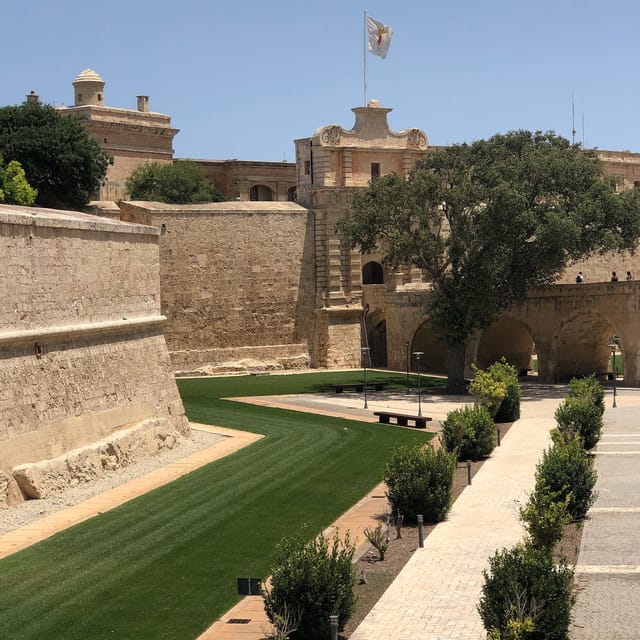
You meet your guide outside Mdina Gate, right next to the playing field. That matters more than it sounds. You start at the edge of the walled city, so you can quickly understand how Mdina sits on its plateau and how the walls shape movement through the streets.
From there, the tour focuses on walking the historic core, with frequent stops at recognizable landmarks. Mdina’s streets are tight and the buildings are close, so you will spend plenty of time looking up as well as ahead. That is a good thing here. You are not just moving from point to point, you are learning how the town reads visually.
One practical tip: if you have a choice of start times, pick an earlier departure. One common theme in the experience is that Mdina can feel quieter later in the day, and the whole point is to enjoy the city while it is still lively enough to help you place the streets.
Vilhena Palace, St Agatha’s Chapel, and the Banca Giuratale stop
Mdina can look like a postcard until you get a bit of context. That is where the guide earns their fee.
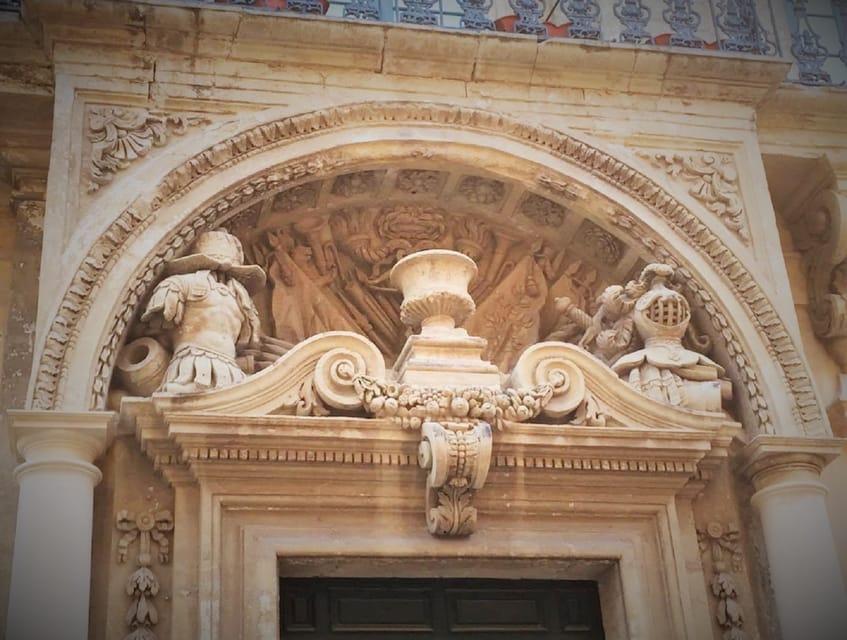
On this walk, you pass by several major stops, including Vilhena Palace, St. Agatha’s Chapel, and the Banca Giuratale. Each of these helps you understand that Mdina is not only medieval stone. It is also where baroque style took over important public and religious buildings, shaping the skyline you see from the bastions.
I like how this tour treats these sites as part of a sequence. Instead of one long lecture, you keep moving. That makes it easier to remember what you are seeing, especially on a short 2.5-hour outing.
If you want to get the most out of these stops, keep one simple habit: pause, look, then ask. The tour format is built for questions, and guides often use your curiosity to explain why a facade, chapel, or civic building mattered in its time.
Mdina Cathedral and the bastion views you should not rush
Mdina’s Cathedral is one of those landmarks you notice from a distance, and it also works as an anchor during the walk. Here, the cathedral is not just a must-see church, it helps you locate the “center of gravity” of Mdina’s skyline. When you stand near it, you feel how the city’s elevated position lets religious and political buildings dominate the view.
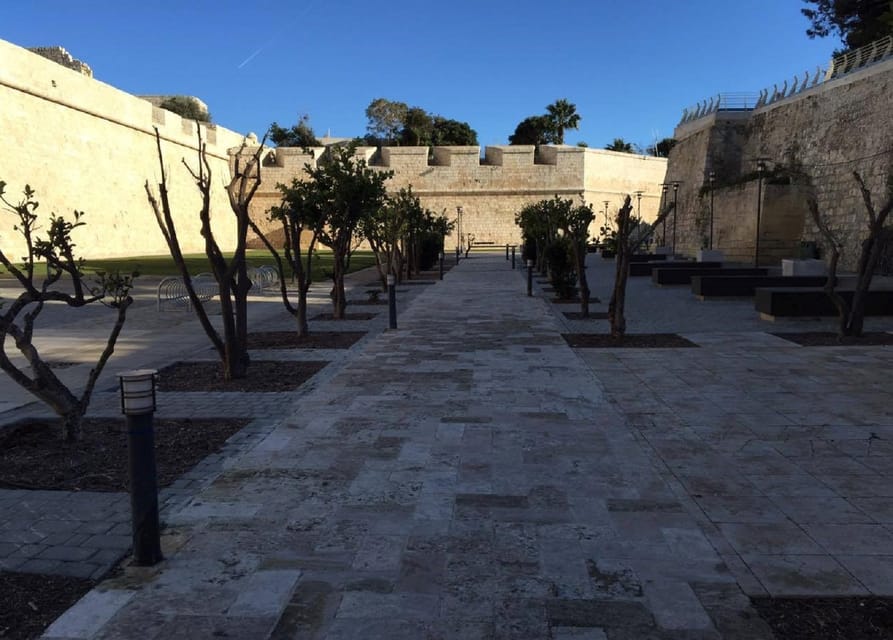
After that, you get panoramas from the bastion walls. This is a key part of the experience because it flips the perspective. Up close, Mdina is all narrow streets and close stone. From the bastions, you can see how the city sits on the plateau and how the surrounding area wraps around it.
Do not treat this part like a quick photo break. Give yourself a minute to scan. The value is in learning the geometry of the place, so later, when you explore on your own, you know where you are in relation to the walls and major landmarks.
Other guides worth walking behind

Greeks Gate and Palazzo Falzon: the facades that make Mdina feel lived-in
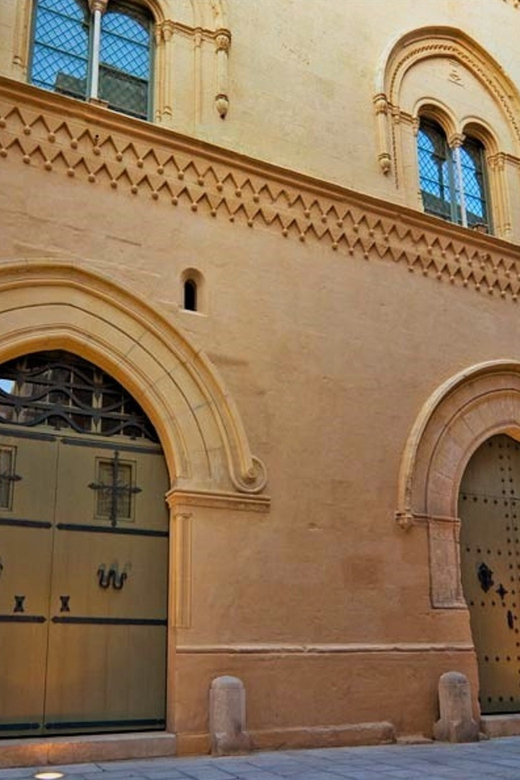
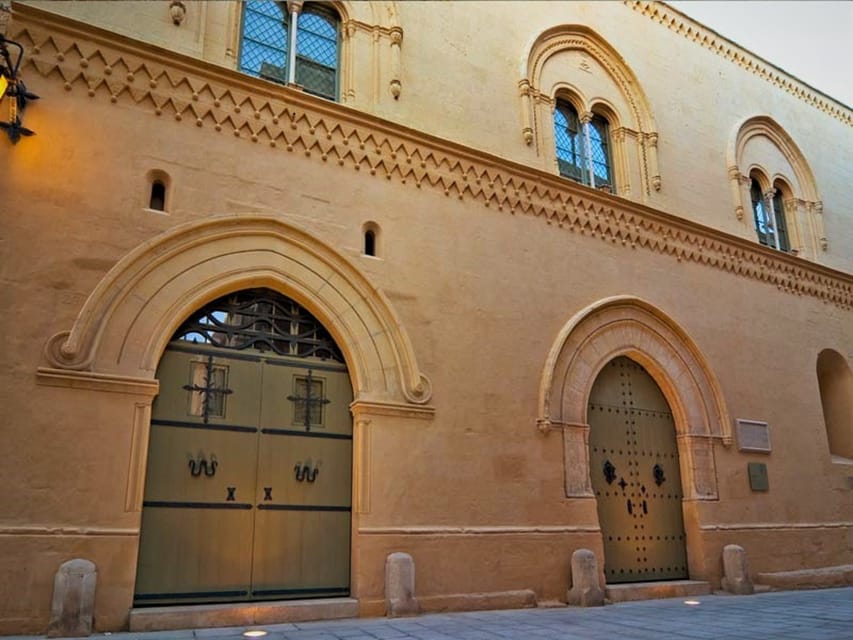
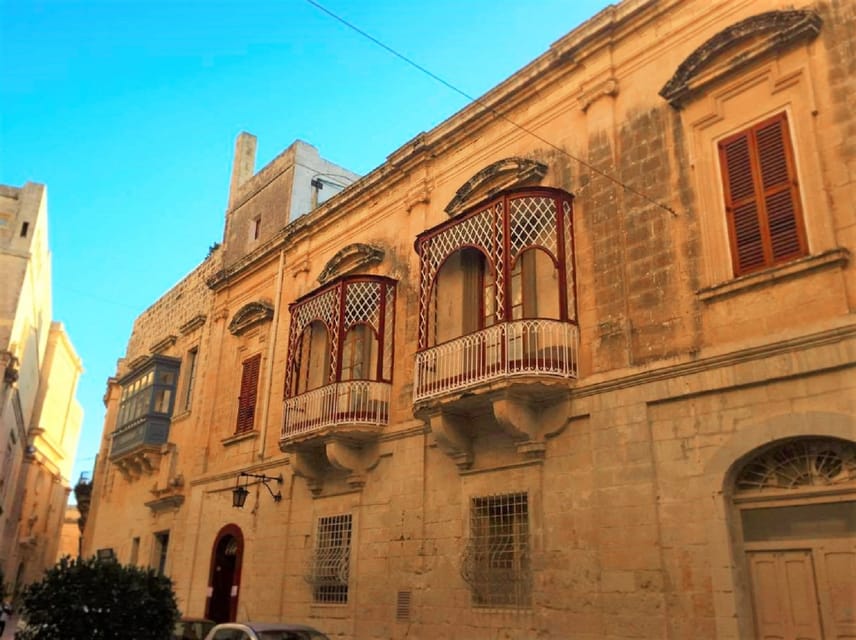
Two specific highlights on the route are Greeks Gate and Palazzo Falzon. These are the kinds of stops that can go by fast if you are not paying attention, because they look like “just buildings” until someone explains what you are looking at.
Greeks Gate helps you read the city through the lens of its historical communities and movements. Palazzo Falzon gives you the baroque-era grandeur that sits on top of older layers of place. Together, they show how Mdina combines old and newer styles without losing its tight, protective sense of space.
I also like that the tour is organized around famous sites, not random corners. You still get the charm of narrow streets, but you are not guessing what matters. The guide points out the key names and then you connect those names to what you can actually see.
Walking into Rabat: Wignacourt Museum and the WWII shelters
Once you leave Mdina’s walled atmosphere, you shift gears in Rabat. The tour includes a stop at Wignacourt Museum, which helps set context for what comes next.
Then comes one of the most memorable transitions of the entire experience: entering WW2 Shelters. These are not just stories. You go into the space tied to wartime survival, which changes how you think about Malta’s geography and history. When you step into shelters like this, you instantly understand why protection and planning mattered so much.
The entrance is included, which is a real value add. With tours that only talk, you still end up spending time and money booking tickets separately. Here, you get guided access and you stay on schedule.
St Paul’s Grotto and the catacombs: practical tips for the underground time
After the WWII shelters, the tour continues deeper into Rabat’s spiritual and ancient underground sites, including St Paul’s Grotto and the catacombs. The entrance fees for catacombs are included, and St Paul’s Grotto also has entrance included.
What to expect, practically: the underground spaces can feel enclosed. People have described the catacombs area as airless, and at least one suggestion was that the time down there could feel long for some. On the flip side, there are also notes that the catacombs did not feel overly claustrophobic or creepy for everyone.
So here is my balanced advice. If you have concerns about enclosed spaces, tell your guide during the tour so you can pace your comfort. Also, come prepared for a different sensory environment than Mdina’s bright streets. You are switching from open-air viewpoints into spaces designed for protection.
St Paul’s Grotto brings a different kind of meaning to the underground theme. It shifts the story from wartime survival to religious tradition and early Christian associations. By the time you finish, you usually feel like the “underground Malta” idea has clicked: it is not only for war, and it is not only ancient. It is a place where different eras left their mark below ground.
The guides are the difference: Mario, Carmel, Matthew, and more
This tour lives or dies by its guide, and the pattern across experiences is pretty clear. The best tours keep a steady pace, answer questions without losing the group, and make the details stick.
You may be guided by people like Mario, Carmel, or Matthew, and the style varies just enough to keep it fun. Mario has been described as a history teacher type, with lots of detail and a strong habit of explaining small points. Carmel is often praised for humour and for making the story feel personal. Matthew is noted for answering questions thoroughly while still staying on track.
Other guide names you might see include Dylan, Allysia, Michael, and Carmen. Across them, a common strength is pacing. You are not sprinting through the highlights, and you are not stuck in one place too long.
One more useful note: some guides use pop-culture comparisons, including Game of Thrones-style references, to help you remember the setting. If that is your thing, it can make the architecture feel less distant.
Walking tour practicalities: shoes, sun, and keeping your energy up
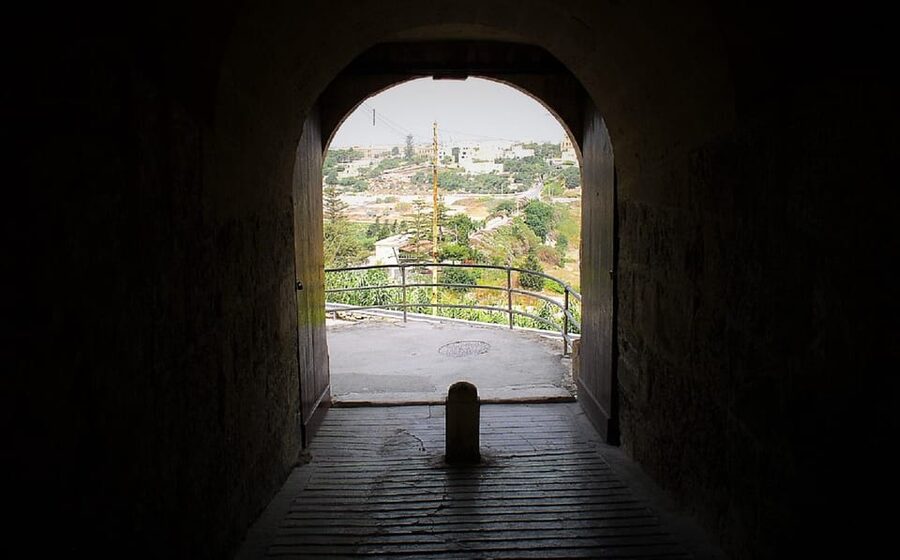
Plan for a real walking experience. Mdina’s narrow streets and Rabat’s connections add up, and you also spend time standing while the guide explains sites.
Bring the basics the tour asks for:
- Comfortable shoes
- Sun hat
- Sunscreen
- Water
- Food (the tour does not include meals)
- Comfortable clothes
Also, think weather. Malta can shift fast. One experience described buying a rain poncho near the meeting point and still getting through the wet parts by using cover when needed. If rain is in your forecast, pack a light layer. You will walk through both bright moments and gray ones.
Value check: what $29 really buys you in this 2.5-hour format

At $29 per person for a 2.5-hour tour, the value comes down to two things: guide time and entrance inclusions.
Included:
- A professional licensed guide
- Entrance fees to catacombs, WW2 Shelters, and St Paul’s Grotto
That combination matters. Those underground sites typically involve separate entry decisions that can eat time, especially if you are trying to fit Malta into a tight schedule. Here, the tour folds those paid experiences into a guided route, so you get context while you are actually inside.
The price also makes sense if you are a first-time Malta visitor. You get the main Mdina highlights plus Rabat’s most distinctive underground stops in one concentrated outing.
Who this tour fits best, and who should consider another option
This tour is ideal if:
- You want a guided walk through Mdina’s key landmarks and you like learning the story behind the streets
- You like mixing visual history (palazzos, gates, churches) with something more hands-on (WW2 shelters and catacombs)
- You are traveling on a schedule where you want a meaningful experience in a short window
It may be less ideal if:
- You need wheelchair-friendly access or mobility support. The activity notes say it is not suitable for wheelchair users and people with mobility impairments.
- You are traveling with very young children who may struggle with the walking time and the standing needed for explanations.
- You dislike enclosed spaces. You can manage this by pacing yourself, but the tour does include underground time.
Should you book this Mdina and Rabat tour with catacombs?
If you want a compact dose of Malta that goes beyond surface photos, I think this is a strong choice. You get Mdina’s atmosphere, Rabat’s added layers, and then three serious paid-entry stops underground, all guided by someone who keeps the story moving.
Book it especially if you like tours where you can ask questions. This one is built for interaction, and the guides are consistently praised for humor, clear answers, and good pacing.
Skip it if walking and underground spaces are not your thing, or if mobility needs make a walking-and-shelter route risky.
FAQ
How long is the Malta Mdina and Rabat walking tour?
The tour duration is listed as 2.5 hours.
What entrance sites are included in the tour price?
Entrance fees are included for the catacombs, the WW2 Shelters, and St Paul’s Grotto.
Where do I meet the guide?
Meet your guide outside the Mdina Gate, next to the playing field.
What should I bring for the walk?
Bring comfortable shoes, a sun hat, food, sunscreen, water, and comfortable clothes.
Is this tour suitable for wheelchair users or limited mobility?
The activity notes say it is not suitable for people with mobility impairments and not suitable for wheelchair users.
Can I cancel for a refund?
Yes. Free cancellation is offered up to 24 hours in advance for a full refund.
More Tours in Mdina




More Tour Reviews in Mdina
The Silent City and Rabat
Recently reviewed around Mdina
- 30-Minute Mdina Experience Audio-Visual Show Ticket (Open Ticket)★ 4.5 · 4 reviews
- Mdina and Rabat Private Walking Tour with local pastizzi★ 5.0 · 6 reviews
- Mdina, Dingli cliffs and San Anton Gardens guided tour★ 3.5 · 14 reviews
- Proposal Photoshoot with Professional Photographer in Malta★ 5.0 · 15 reviews
- Guided Night Tour of Valletta Waterfront, Mdina and Rabat★ 4.5 · 22 reviews
- Palazzo Falson Historic House Museum entrance ticket★ 4.7 · 22 reviews
- Mdina: The Mdina Experience Audio-Visual Show (Open Ticket)★ 4.3 · 22 reviews
- Mdina and Rabat Private Walking Tour★ 5.0 · 25 reviews
Mdina and Rabat, compared.
 ★ 4.4Highlights of Malta & Mdina Full Day Tour with LunchFrom $792,688 reviews
 ★ 4.3Mdina, Dingli Cliffs and San Anton Botanical GardensFrom $41991 reviews
 ★ 4.8Mdina and Rabat: Guided City Walking TourFrom $24549 reviews
 ★ 5.0Mdina and Rabat Insider’s TourFrom $24528 reviews
 ★ 4.1Valletta: Vintage Bus to Valletta, Sliema, Rabat & MdinaFrom $9433 reviews
 ★ 5.0Mdina and Rabat Tour with Local GuideFrom $24408 reviews
 ★ 5.0Mdina and Rabat Walking Tour inc. Catacombs and St. Paul’s GrottoFrom $30341 reviews
 ★ 4.3Mdina: Valletta Waterfront Area, Mdina, and Rabat Night TourFrom $41302 reviews
Browse the lists this tour appears in