
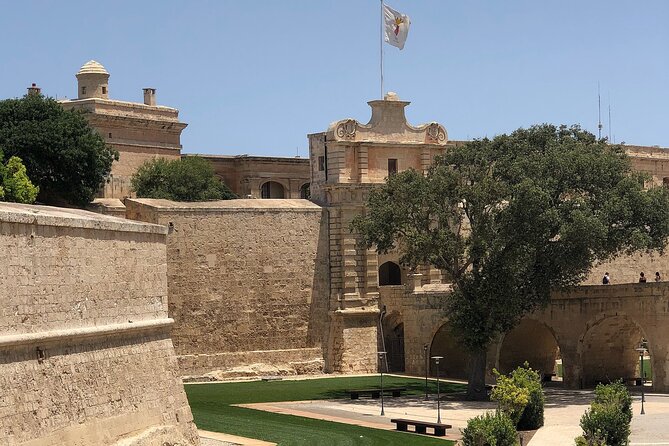
REVIEW · MDINA AND RABAT
Mdina and Rabat Private Walking Tour
Mdina is Malta’s quiet capital. This private walking tour of the walled old city is a smart first stop, with a guide who ties together architecture, legend, and local history as you go. It’s also designed to feel personal, since it’s just your group, not a bus of strangers.
Two things I like a lot: you get a private guide who can tailor the pacing to your group, and you see Mdina’s top moments in a route that doesn’t waste time. You start at the Baroque Mdina Main Gate, then work your way through the cathedral area, side streets, and viewpoints, finishing at Greek’s Gate.
One consideration: this is still a walk on narrow streets, so if your group has limited mobility, plan on slower pacing and breaks. The tour is doable for most people, but it is not a sit-and-watch experience.
In This Review
- Key highlights to expect
- Mdina on foot, and why this tour works
- Entering Mdina: the Baroque Main Gate and the start line
- Natural history outside the main sights, then legend at St Agatha
- Squares, TV filming trivia, and the Banca Giuratale facade
- St Paul’s Cathedral Museum, Bastion Square, and the Palazzo Falson question
- Carmelite Priory, Palazzo Santa Sofia, and a final walk to Greek’s Gate
- What you really get from a private guide here
- Price and value for a group of up to 4
- Who should book this Mdina walking tour
- Should you book it, or plan a self-guided walk?
- FAQ
- Where do we meet for the tour, and where does it end?
- How long is the private walking tour?
- Is this tour private, and how many people can be in a group?
- What admission costs are included versus not included?
- Does the tour include hotel pickup and drop-off?
- What is the cancellation policy?
Key highlights to expect
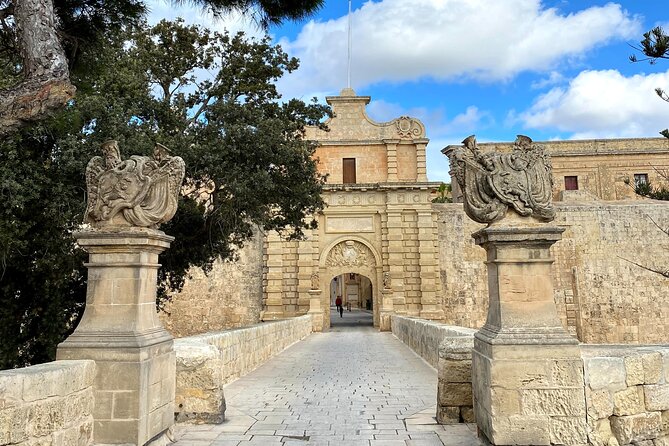
- A guided walk that turns buildings into stories, from gates to churches and palaces
- Tight old-street navigation, with the tour shaped for your group’s interests and abilities
- Photo-worthy stops on a logical loop, including Bastion Square and key facades
- Museum and cathedral stops with clear ticket info, so you can budget ahead
- English guide plus flexible departure times, helpful when you want to match your day
- A strong finish at Greek’s Gate, ending where the city’s medieval defenses feel most tangible
Other routes through Mdina and Rabat
- Malta: Mdina and Rabat Walking Tour with Catacombs
★ 4.8 · 1,126 reviews - Mdina and Rabat: Guided City Walking Tour
★ 4.8 · 549 reviews - Malta: Mdina and Rabat Tour with Local Guide
★ 5.0 · 408 reviews - Mdina and Rabat Walking Tour inc. Catacombs and St. Paul’s Grotto
★ 5.0 · 341 reviews
Mdina on foot, and why this tour works
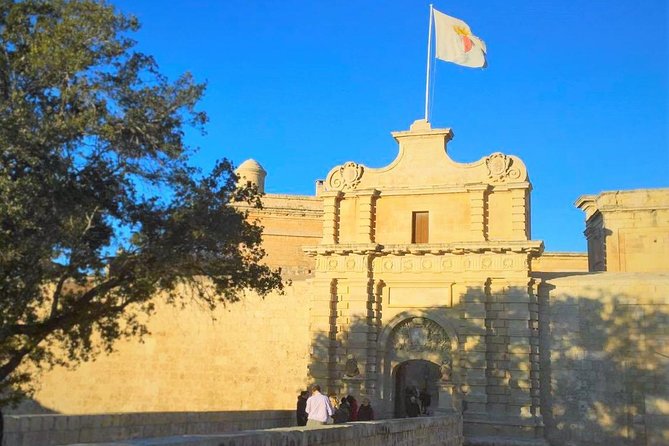
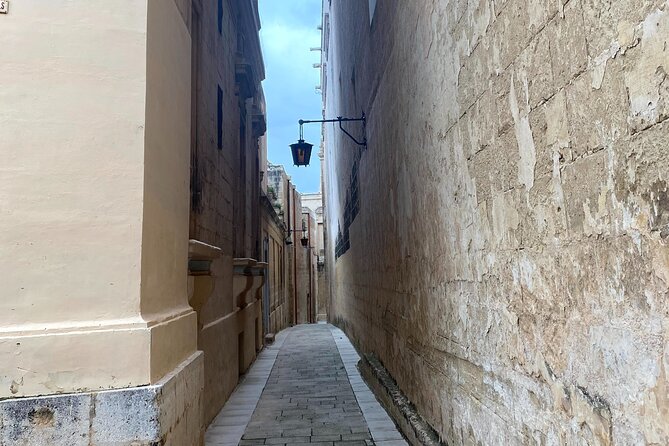
Mdina is small enough to explore at walking speed, but old enough that it rewards attention. The streets twist. The views pop up without warning. And the whole place carries layers, because different rulers have shaped Malta over time.
What I like about this tour format is that it keeps you moving through the most meaningful corners of the old city, not just a list of landmarks. Your guide starts you at Mdina’s Main Gate and then walks you along a route that makes the city feel connected. You’re not bouncing between random stops. You’re seeing how one square, church, palace, and gate leads naturally to the next.
The tour is also very practical for first-time visitors. If Mdina is your first big dose of Malta’s inland history, you get a coherent storyline. The influence of Phoenicians, Romans, Arabs, and Normans is brought into the walk, so it doesn’t feel like you’re collecting facts without a map.
And since this is private, you’re not stuck with someone else’s pace. That matters in Mdina, where you may want an extra minute to look closely at a facade or step back for a better angle.
Entering Mdina: the Baroque Main Gate and the start line
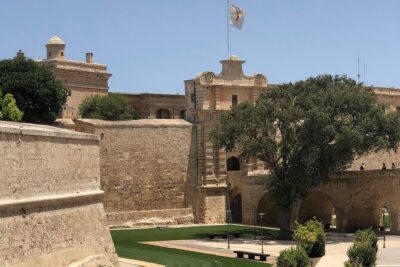
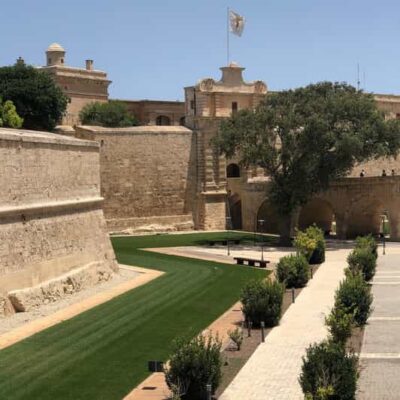
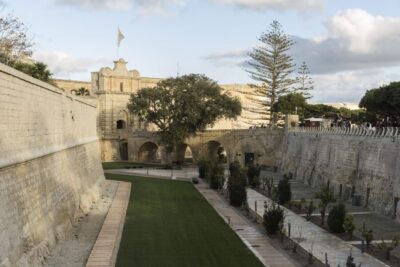
The tour meets at Mdina Main Gate. This is a great choice for a first stop because it frames everything that follows. You begin right at the Baroque gateway, so you’re immediately oriented in the old city.
From there, you head into Mdina’s lanes and keep building your sense of place. The guide’s job at the start is twofold: set the historical context and help your group settle into the walk. If you’re the kind of traveler who wants to understand what you’re looking at, you’ll appreciate this phase.
At the very beginning, admission is noted as free for that first stop. That’s a small detail, but it’s useful when you’re trying to keep track of costs for the rest of the day.
If you want one practical tip for this kind of route, it’s this: wear shoes you trust. Mdina is famous for its old-road charm, and that charm comes with uneven, sometimes sloping surfaces.
Natural history outside the main sights, then legend at St Agatha
Stop 2 takes you to the National Museum of Natural History. The tour framing here is less about you racing through galleries and more about asking what the building itself is about. Even if you don’t do a deep museum visit, the exterior and setting help anchor the story of Mdina as a living city, not just a postcard.
Next comes Church St. Agatha. This stop is positioned around a legend, including how Mdina was saved from tragedy. When a guide delivers a story like this while you’re standing in the church area, it lands differently than reading about it later. You understand why the place matters, not just when it was built.
Stop 3 is marked as free for admission, so it’s a good break point if you want to rest your feet without paying another ticket right away.
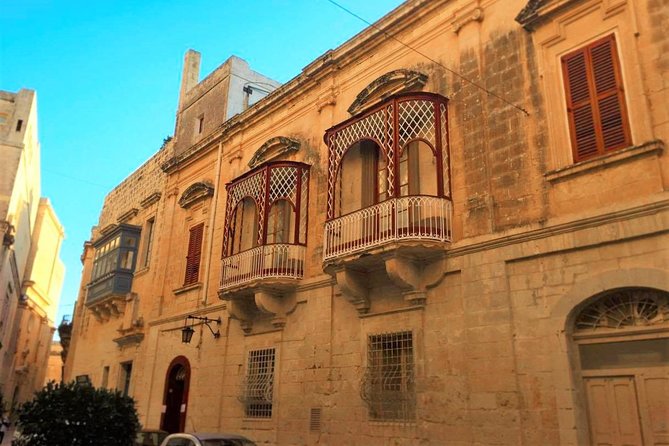
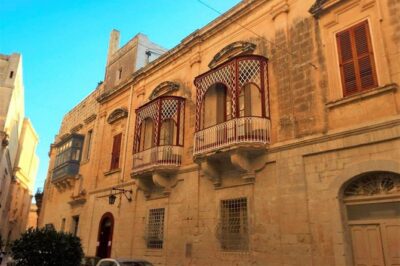
Then you shift from legend to noble families with Inguanez Street and Palazzo Inguanez, described as home to one of Malta’s oldest noble families. The value of adding a noble-palace stop here is that it helps you see Mdina’s social structure. It wasn’t just churches and gates. It was also where powerful families lived and displayed status.
Stops 2 and 7, 9 are ticket-not-included moments, so this part of the day is where you’ll feel the tour’s mix of included versus optional-cost sights. The good news is your itinerary is clear about what comes with tickets and what doesn’t, so you can decide without stress.
Squares, TV filming trivia, and the Banca Giuratale facade
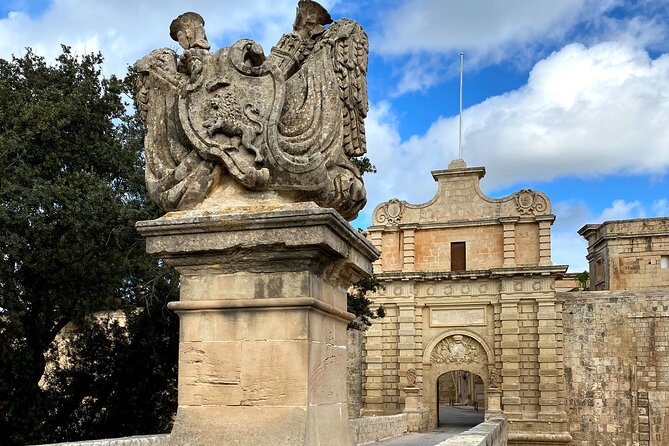
Stop 5 is Pjazza Mesquita. The tour notes mention scenes from famous TV series were filmed here. If you like those little reality-check moments, this is the sort of stop that turns a quiet square into something familiar fast. You get a quick spark of recognition, even if you’ve never studied Maltese film locations before.
Then you move to Banca Giuratale, where the key takeaway is the Baroque facade of the former town hall. Town halls are often treated like paperwork buildings in other cities, but in Mdina, you feel how central civic power was. Standing in front of it while your guide explains what it was, you get a better sense of how the city ran and why certain structures are still such visible markers.
Stop 4 and 6 are marked free for admission, so between palaces, square views, and facades, you’re keeping the paid stops spaced out.
This stretch is also where the tour’s private pacing pays off. Mdina’s streets and corners make it easy to lose time if you’re wandering on your own. With a guide and a plan, you get to enjoy the vibe without doing mental math on what you still need to see.
Other guides worth walking behind

St Paul’s Cathedral Museum, Bastion Square, and the Palazzo Falson question
Now you reach the cathedral zone.
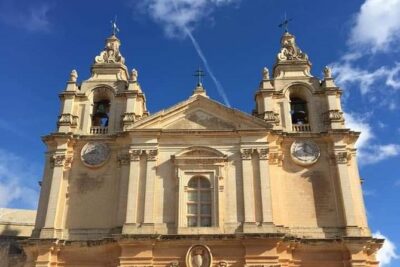
Stop 7 is the Metropolitan Cathedral of Saint Paul, described as the traditional seat of the Bishops of Malta. The itinerary lists admission as not included for this stop. That’s important because cathedral stops can be where your costs change depending on how you handle museum entry.
Even if you decide not to do an extra ticketed visit, this stop is still valuable because it clarifies Mdina’s religious importance. It’s the kind of place where the guide’s explanations make the building feel like it has a role in everyday life, not only a role in history.
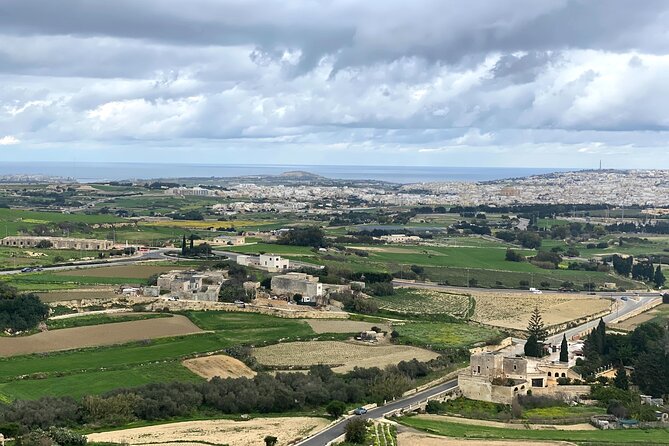
Stop 8 is Bastion Square. This is your viewpoint moment, described as one of the highest points on the island, with an impressive panorama. If you only did Mdina for the streets, you’d miss the way the city sits in its landscape. This is where you get the visual context. You understand why people kept walls and defenses there, and you also get that calm satisfaction of seeing the city from above.
Stop 9 is Palazzo Falson Historic House Museum, with the itinerary framing a specific question: who was the man behind setting up this house museum. That kind of “answer the story” prompt is exactly how to make house museums more than rooms and objects. Instead of walking through as if you’re checking boxes, you’re looking for the link between a person and a collection, a setting, and a purpose.
Again, admission is not included for stop 9. So if your group wants to step inside, budget for it. If you’d rather prioritize views and photos, you can still get the value of the surrounding explanation and exterior presence.
Carmelite Priory, Palazzo Santa Sofia, and a final walk to Greek’s Gate
Stop 10 is Carmelite Priory Mdina, dedicated to Our Lady of Mount Carmel. This stop is marked free for admission, so it’s an easy one to fit in without paying extra. It also works as a spiritual and architectural contrast after the cathedral area. You’re not just circling the biggest monuments, you’re sampling different expressions of faith in the same compact city.
Stop 11 is Palazzo Santa Sofia, described as the oldest still standing building in Malta. That’s a big claim in the itinerary notes, and it’s exactly why this stop is a must for many people. When you hear that the building is still standing, you start noticing details that would otherwise blend together on a quick walk.
Stop 12 is Greek’s Gate, and the itinerary calls it the oldest surviving gate in Mdina. Ending here is brilliant, because it brings the tour full circle. You started with the Baroque Main Gate and end at a surviving medieval defensive gate. The guide’s narrative makes the shift feel like a change in time period, not just a change in street corner.
Finally, stop 13 is labeled Mdina Old City, with an admission ticket included. The exact wording suggests there’s a concluding ticket component tied to the old city area. In practical terms, treat stop 13 as the tour’s “wrap-up” segment where you finish with the city itself, not just individual buildings.
If you’re the type who likes to leave feeling like you actually learned the layout of a place, this end point helps. You finish where you started the city’s story, through its most symbolic gate.
What you really get from a private guide here
The most highly praised part of this kind of tour is the guide, and the evidence is straightforward: when the person leading your walk can connect geography, history, and the look of the buildings, Mdina becomes easy to understand.
The tour description says your guide will share stories from Mdina history as you walk, and it also says the route can be shaped to your group’s interests and abilities. That combination is what turns a “sights” tour into a “city understanding” tour.
I also like that the itinerary uses short, clear question prompts, like:
- What is the story behind the National Museum of Natural History building?
- Listen to the legend of how Mdina was saved from tragedy
- Who was the man behind setting up Palazzo Falson Historic House Museum
- Scenes from which famous TV series were filmed at Pjazza Mesquita
This style helps you pay attention. It’s not just facts. It’s built-in reasons to look, and reasons to listen.
In the best examples, guides named Mario and Matthew are described as especially strong at connecting topics like architecture and religion, and keeping the group comfortable. Even if your guide is different, the structure of the walk supports that same goal: you should leave with a mental map and a few stories you can repeat at dinner.
Price and value for a group of up to 4
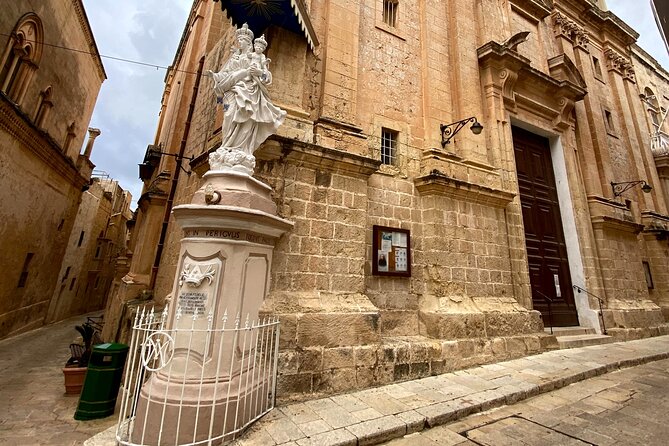
The price is $337.34 per group (up to 4 people) for about 2 hours. That’s the kind of pricing that can feel high if you’re traveling solo, but it often makes sense if you’re a small group sharing costs.
Here’s the practical way to think about value. If you split it four ways, it can feel close to the cost of a guided ticketed museum day, except you also get an organized walk through Mdina’s main landmarks and viewpoints. If you’re only two people, it’s more expensive per person, but you still benefit from the private pace and the fact that you avoid decision fatigue in a compact, winding city.
Another value factor is clarity. The tour notes are explicit about what’s free versus what has admission not included. That helps you avoid the “surprise ticket” feeling that can happen on walking tours where costs pile up.
Bottom line: this is best judged as a group purchase. If you’re traveling with family, friends, or a couple, it’s usually a strong fit.
Who should book this Mdina walking tour
This is a great match if you want:
- A first-time orientation to Mdina’s highlights
- A guided route that helps you move through narrow streets without getting lost
- A private experience that can slow down if needed
- An English-speaking guide and flexible departure times
It’s also a good option if you like religious and civic architecture, not just viewpoints. The route includes St Agatha, the Metropolitan Cathedral of Saint Paul, the Carmelite Priory, plus civic and noble structures like Banca Giuratale and Palazzo Inguanez.
A note on your expectations: this tour is centered on Mdina’s old city stops. Rabat is part of the tour name, so there’s a connection in the broader context, but the actual listed stops are all in Mdina.
If you’re traveling with children, the rules note that children must be accompanied by an adult. Service animals are allowed, and the tour is near public transportation, so you should be able to build it smoothly into your Malta day.
Should you book it, or plan a self-guided walk?
I’d book this tour if you want Mdina to make sense fast. A good guide turns this place from pretty lanes into a connected story: gates, churches, civic buildings, palaces, and viewpoints that all fit together. With a private format, you also avoid the pressure of following a crowd on streets that can’t really handle speed.
I’d consider a self-guided approach only if you already know Mdina well, or if your group prefers to choose every stop with zero structure. Also, if your top priority is spending lots of time inside ticketed museums and cathedrals, you’ll need to plan for the fact that some of those admissions are not included in the tour price.
If you want a smart, efficient intro to Mdina that still feels personal, this one is an easy yes.
FAQ
Where do we meet for the tour, and where does it end?
You meet at Mdina’s Main Gate. The tour ends at Greek’s Gate, also in Mdina.
How long is the private walking tour?
The tour lasts about 2 hours.
Is this tour private, and how many people can be in a group?
Yes, it is private. The price is per group of up to 4 people.
What admission costs are included versus not included?
Some stops are free and some are not included. The National Museum of Natural History, the Metropolitan Cathedral of Saint Paul, and the Palazzo Falson Historic House Museum are listed as admission not included. Many other stops are listed as free, and Mdina Old City is listed as an admission ticket included.
Does the tour include hotel pickup and drop-off?
No. Hotel pickup and drop-off are not included.
What is the cancellation policy?
You can cancel for a full refund if you cancel at least 24 hours before the experience starts. If you cancel less than 24 hours before the start time, the amount paid is not refunded.
More Tours in Mdina



More Tour Reviews in Mdina
The Silent City and Rabat
Recently reviewed around Mdina
- 30-Minute Mdina Experience Audio-Visual Show Ticket (Open Ticket)★ 4.5 · 4 reviews
- Mdina and Rabat Private Walking Tour with local pastizzi★ 5.0 · 6 reviews
- Mdina, Dingli cliffs and San Anton Gardens guided tour★ 3.5 · 14 reviews
- Proposal Photoshoot with Professional Photographer in Malta★ 5.0 · 15 reviews
- Guided Night Tour of Valletta Waterfront, Mdina and Rabat★ 4.5 · 22 reviews
- Palazzo Falson Historic House Museum entrance ticket★ 4.7 · 22 reviews
- Mdina: The Mdina Experience Audio-Visual Show (Open Ticket)★ 4.3 · 22 reviews
- Mdina and Rabat Private Walking Tour★ 5.0 · 25 reviews
Mdina and Rabat, compared.
 ★ 4.4Highlights of Malta & Mdina Full Day Tour with LunchFrom $792,688 reviews
 ★ 4.8Mdina and Rabat Walking Tour with CatacombsFrom $291,126 reviews
 ★ 4.3Mdina, Dingli Cliffs and San Anton Botanical GardensFrom $41991 reviews
 ★ 4.8Mdina and Rabat: Guided City Walking TourFrom $24549 reviews
 ★ 5.0Mdina and Rabat Insider’s TourFrom $24528 reviews
 ★ 4.1Valletta: Vintage Bus to Valletta, Sliema, Rabat & MdinaFrom $9433 reviews
 ★ 5.0Mdina and Rabat Tour with Local GuideFrom $24408 reviews
 ★ 5.0Mdina and Rabat Walking Tour inc. Catacombs and St. Paul’s GrottoFrom $30341 reviews
Browse the lists this tour appears in