
REVIEW · MDINA AND RABAT
Medina, Rabat and the pastizzi experience
Mdina plus Rabat feels like a living history lesson. You’ll follow a neat route through Malta’s old power spots and Roman-era leftovers, then end with Pastizzi at Serkin Crystal Palace Bar. I love that the walk connects church, law, and everyday Maltese culture, not just dates on a wall. I also like that food is built in, so you get a real taste of Malta as part of the experience. One drawback to plan for, this tour needs good weather, and wind can turn a stroll into a cold one fast.
The biggest quality signal is the guide. Julia, and other guides from Excursiones en Malta, are praised for being friendly, funny, and genuinely well informed, at an easy pace that still keeps you moving. With a maximum of 6 travelers, you get more of a conversation than a lecture, and you’re less likely to feel lost in a crowd.
In This Review
- Key Highlights You Should Know
- Why Mdina and Rabat Pair So Well
- Start at Mdina Gate, Then Walk Straight Into Power and Faith
- Cathedral to Old Law Courts, Seeing Medieval Malta Up Close
- A Fine Art Museum in an Old Mdina House
- The Only Roman Museum in Malta, and What to Look For
- Rabat Cradle of Christianity, Plus That Melita Connection
- Christian Catacombs Stop, Where the Story Gets Real
- Pastizzi at Is-Serkin Crystal Palace Bar: Snack, Reward, Culture
- Price and Value for a 2.5-Hour Mdina and Rabat Walk
- Practical Stuff: Timing, Weather, and Comfortable Walking
- Who Should Book This Tour (and Who Might Want Another Option)
- Should You Book This Mdina, Rabat, and Pastizzi Walk?
- FAQ
- How long is the Mdina, Rabat and Pastizzi tour?
- Where does the tour start and where does it end?
- What time does the tour run?
- Is Pastizzi included?
- Are there admissions included at stops in Rabat?
- Does the tour require good weather?
- How many people are in the group?
- Can I bring a service animal?
- What should I do if I have food allergies?
Key Highlights You Should Know
- Mdina Gate start point that puts you right inside the walled city mood
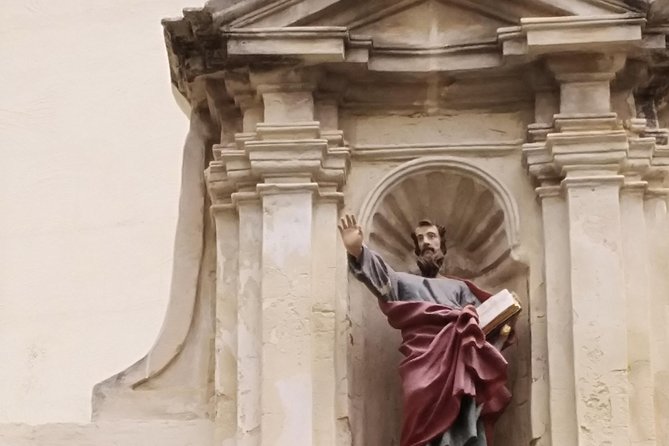
- Cathedral of Saint Paul at the diocese seat, with evidence of occupation going back to the 9th century B.C.
- Universitas law courts building storytelling, showing how medieval government worked
- One of the oldest Mdina houses turned fine art museum stop, not just another church photo
- Rabat catacombs link to Christianity and burial history in Malta’s older Roman and Christian worlds
- Is-Serkin Pastizzi stop where snack timing feels perfect, warm tea/coffee vibe in cooler weather
Other routes through Mdina and Rabat
- Malta: Mdina, Dingli Cliffs and San Anton Botanical Gardens
★ 4.3 · 991 reviews - Mdina and Rabat Insider’s Tour
★ 5.0 · 528 reviews - Valletta: Vintage Bus to Valletta, Sliema, Rabat & Mdina
★ 4.1 · 433 reviews - Half-Day Tour of Mosta, Ta’Qali Crafts Village & Mdina
★ 4.1 · 110 reviews
Why Mdina and Rabat Pair So Well
Mdina and Rabat are basically two faces of the same story. Mdina is the calmer, postcard-pretty walled city. Rabat, just outside it, is where life thickens and the deeper layers show up, including the Christian story and burial sites.
What I like about this tour plan is that it keeps you from doing the classic mistake: spending hours in Mdina and then scrambling to fill the day with whatever is nearby. Instead, you get a structured flow from the big religious center, to medieval government remnants, to Roman-era evidence, then into Rabat. It’s one continuous way to understand Malta’s shift from Roman Melita to a Christian cradle, without feeling like you’re hopping around randomly.
Also, the timing works. Starting in the afternoon means you’re not fighting the hardest midday crowds. And ending with Pastizzi means you’ll have something to look forward to the moment your feet start asking questions.
Start at Mdina Gate, Then Walk Straight Into Power and Faith

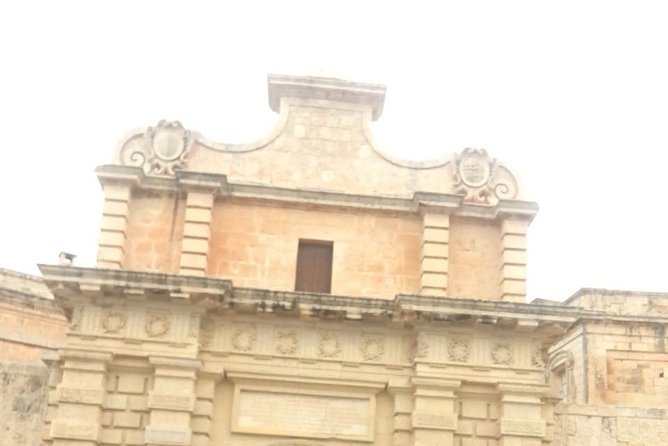
You meet at Mdina Gate, so your first steps are already in the right atmosphere. From there, the route points you toward the Cathedral of Saint Paul, which is described as the most important church of Malta’s 365 churches and the seat of the Diocese. The site has been occupied since the 9th century B.C., which is the kind of fact that changes how you look at stone. Suddenly, you’re not just admiring architecture, you’re reading a timeline.
This stop also sets the tone for the whole walk. The guide style matters here, and the feedback is consistent that guides like Julia mix clear explanations with humor and an easy pace. That combo is great because the Cathedral is meaningful, but it can also be intimidating if the talk becomes too heavy. Here, you get history and context in a way that feels human.
If you want a practical tip: give your eyes a minute before you start looking for details. Let the building and surroundings settle first, then your guide’s points land faster. It’s an old trick, but it works.
Cathedral to Old Law Courts, Seeing Medieval Malta Up Close
After the Cathedral, the tour moves to a historical hinge point: the old law courts of the Universitas, the feudal government in medieval times. This is the kind of stop that often gets skipped on quick tours because it is not as visually loud as a grand church door. But it’s exactly what helps the walk feel complete.
Here’s why it matters for you: government is part of daily life, even when it’s centuries old. Seeing a place tied to how the Universitas functioned helps you connect the dots between the religious authority of the Diocese and the civic reality people lived under in medieval Malta.
This is also where a good guide earns their keep. The best tours make you understand why the building mattered, not just what it used to be. The feedback on Julia and Silvia highlights that they explain history with personal experience and a warm, engaging manner. That makes stops like this feel more alive, not like a boxed lecture.
A Fine Art Museum in an Old Mdina House
Next, you visit one of the oldest houses in Mdina, which now serves as a museum of fine art collections. This stop is small compared with some of the big sites in Malta, but it’s a clever break. After stone churches and civic buildings, you get something more intimate.
Why I think this works for your day: an old house changes your sense of scale. You start noticing how people actually lived, stored things, moved through space, and used the home as a social and cultural unit. And the museum angle means you’re not only looking at history, you’re seeing how art fits into the story.
A practical consideration is pacing. If you prefer to zoom from sight to sight, this could feel like it takes a little longer than you expected. But if you like your travel with pauses, it’s a welcome reset.
Still hungry? More Maltese tables



The Only Roman Museum in Malta, and What to Look For
Then comes a real signature moment: the only Roman museum in Malta. That single detail makes the stop worth it, especially if you want your trip to have one or two anchor experiences that feel specific to Malta, not just general European old-city wandering.
For me, the appeal is the contrast. You’re moving from a medieval Christian and civic setting, and then you switch gears to Roman material culture in the same walking day. That jump helps you understand that Malta’s identity did not switch overnight. Roman influence, then new religious layers, then centuries of reuse and reinvention.
When you walk into a small museum, you don’t need to memorize everything. Use the guide. Ask, in your head, what the artifacts prove about daily life here. Do they show tools, goods, building habits, or Roman-style objects? You can usually get answers quickly once the guide points your attention in the right direction.
Rabat Cradle of Christianity, Plus That Melita Connection
Now you shift into Rabat, the suburb closely tied to Mdina. Rabat and Mdina were both Roman cities of Melita, and Rabat is also described as the cradle of Christianity in Malta. You can feel the emphasis change. The tour goes from elevated stones and institutions to a story that moves toward community, faith, and burial history.
The stop in Rabat is timed at about 45 minutes, and it notes that the admission ticket is free for this part. That’s a nice value add because it keeps your day from turning into a pay-to-enter maze. It also gives you time to absorb without rushing.
If you’re the type who likes connecting big labels to real locations, this is the section where your guide’s explanations help you see Rabat as more than a side trip. It’s not just outside Mdina, it is part of the same historic engine that shaped Malta.
Christian Catacombs Stop, Where the Story Gets Real
From Rabat, the tour includes a stop connected to the Christian catacombs of Rabat. Catacombs in Malta are described as burial places, with the vast majority found in Rabat.
This is one of those moments where the mood can change quickly. You’re dealing with burial history, and the point is not scary drama. It is understanding how belief and community show up in physical places. If you’ve ever wondered how early Christianity took root beyond legends, this kind of stop turns that question into something you can stand next to and actually consider.
Two practical notes. First, keep your coat close if the air is windy. Second, listen to the guide’s framing before you start looking around. Catacombs are easy to view with the wrong expectations, and the guide helps you see what to focus on.
Pastizzi at Is-Serkin Crystal Palace Bar: Snack, Reward, Culture
At the end, you arrive at Is-Serkin Crystal Palace Bar for Pastizzi. This is not a random food stop. It’s presented as the best way to eat cheaply in Malta, and the tour calls out that the most delicious Pastizzi is sold here.
This is exactly the kind of ending that makes a walking tour feel worthwhile. You’ve spent hours learning about institutions, buildings, and timelines. Then you get a snack that tells you about Malta today, not just Malta long ago.
The timing also makes sense. The Pastizzi stop is about 20 minutes, which means you’re not left hanging for an hour while the group figures out what to order. You get a quick, satisfying hit, with the classic pairing described as hot tea or coffee in winter, or cold beer in summer. If you’re traveling in cooler weather, this is where you’ll feel grateful you didn’t skip the drink plan.
Pro tip: eat it while it is fresh. Pastizzi is one of those foods that is best right away, not as a souvenir for later.
Price and Value for a 2.5-Hour Mdina and Rabat Walk
The tour price is $65 for about 2 hours 30 minutes, with a mobile ticket. The value comes from the mix: multiple significant sites plus a real food reward. Snacks are included, and the Pastizzi stop notes admission ticket included. The Rabat stop also lists free admission for that portion.
What that means for you is simple: you’re paying for guidance, organization, and the fact that key stops are folded into the schedule rather than left to guesswork. With a max group size of 6, the guide can keep quality high without losing control of the pace.
Is it a bargain? It is not the absolute cheapest way to walk around Mdina, sure. But it’s good value when you consider (1) you get guidance across several distinct historical contexts, (2) you don’t have to plan admissions and timing on your own, and (3) you finish with a local specialty that is included in the experience.
Practical Stuff: Timing, Weather, and Comfortable Walking
Start time is 2:30 pm, and the tour ends back at the meeting point. That matters because you can plan your evening without a long gap or another transfer.
One important planning factor: the tour requires good weather. The cancellation terms allow full refund if it’s canceled due to poor weather and you can choose another date or get your money back. In real life, that means if Malta is windy and cold, bring a jacket you actually want to wear.
The tour is near public transportation, which is helpful if you’re starting the day elsewhere and want to link your plans. Service animals are allowed, and most travelers can participate. If you have food allergies, you need to advise when booking. That’s a real must, because the Pastizzi is part of the tour and you need safe options.
Finally, this is a small-group experience. That can be a plus for comfort and conversation, but it also means schedules can be tight if you show up late. Show up a little early, catch your bearings at Mdina Gate, then let the guide take it from there.
Who Should Book This Tour (and Who Might Want Another Option)
This tour is a great fit if you want a guided route that ties together Mdina, Rabat, Roman evidence, Christian burial history, and Malta’s best-known snack. It’s also ideal if you appreciate guides who are friendly, funny, and capable of explaining big topics in a way that feels easy.
It’s especially good for first-timers who want a high hit rate. You see multiple types of places in one outing, not just one neighborhood and call it done.
You might want to think twice if you dislike history-heavy stops or if you strongly prefer to eat on your own schedule rather than having Pastizzi built into the plan. And if the weather is questionable, be ready to adjust, because the tour is weather dependent.
Should You Book This Mdina, Rabat, and Pastizzi Walk?
My take: yes, book it if you want a focused, story-driven way to understand Malta beyond the obvious postcard shots. You get high-value guidance with guides like Julia and Silvia, a small group size that keeps things personal, and you end with Pastizzi at Is-Serkin, one of the most practical and delicious ways to eat like a local.
If you’re traveling with someone who wants history plus food, this is a sweet compromise. If the weather forecast looks rough, wait for confirmation or be ready to choose another date. Do that, and you’ll turn an afternoon walk into a proper Malta highlight.
FAQ
How long is the Mdina, Rabat and Pastizzi tour?
It lasts about 2 hours 30 minutes.
Where does the tour start and where does it end?
The tour starts at Mdina Gate (VCM3+V9W, Mdina, Malta) and ends back at the meeting point.
What time does the tour run?
The start time is 2:30 pm.
Is Pastizzi included?
Yes. Pastizzi is included as part of the experience at Is-Serkin Crystal Palace Bar.
Are there admissions included at stops in Rabat?
Yes. The Rabat stop is listed with admission ticket free.
Does the tour require good weather?
Yes. The tour requires good weather.
How many people are in the group?
The tour has a maximum of 6 travelers.
Can I bring a service animal?
Yes, service animals are allowed.
What should I do if I have food allergies?
If you have any food allergies, you should advise when booking.
More Tour Reviews in Malta




Eating Your Way Through Malta

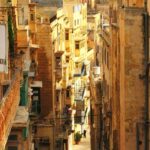



The Silent City and Rabat




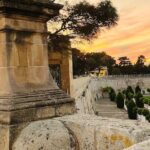
Recently reviewed around Malta
- Valletta City of Gentlemen guided walking tour★ 3.5 · 3 reviews
- Temples, Blue Grotto, Marsaxlokk★ 4.5 · 3 reviews
- The Village Experience Tour★ 5.0 · 3 reviews
- Serenity at Sea: Comino Blue Lagoon Exclusive Day Cruise★ 5.0 · 3 reviews
- Gozo and Blue Lagoon Private Boat Trips in Comino★ 5.0 · 3 reviews
- Malta Chocolate Factory Gin and Truffle Making Experience★ 5.0 · 3 reviews
- Malta: Around Comino Cruise With Blue Lagoon stop★ 5.0 · 3 reviews
- Pastizzi Making Experience in Malta★ 5.0 · 3 reviews
Mdina and Rabat, compared.
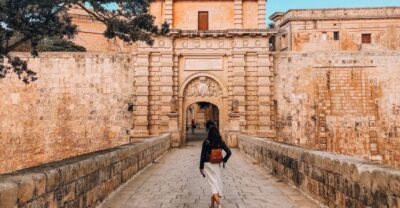 ★ 4.4Highlights of Malta & Mdina Full Day Tour with LunchFrom $792,688 reviews
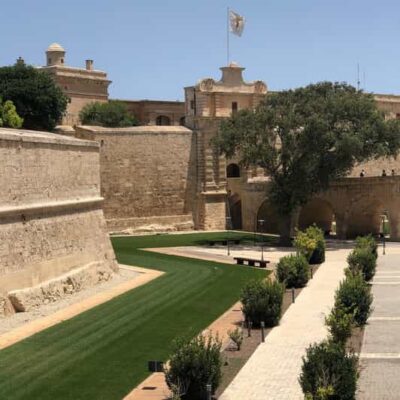 ★ 4.8Mdina and Rabat Walking Tour with CatacombsFrom $291,126 reviews
 ★ 4.3Mdina, Dingli Cliffs and San Anton Botanical GardensFrom $41991 reviews
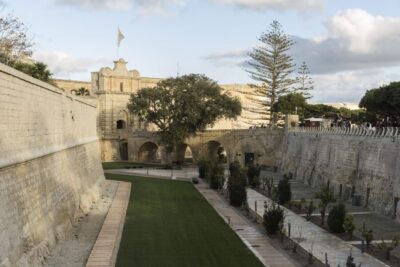 ★ 4.8Mdina and Rabat: Guided City Walking TourFrom $24549 reviews
 ★ 5.0Mdina and Rabat Insider’s TourFrom $24528 reviews
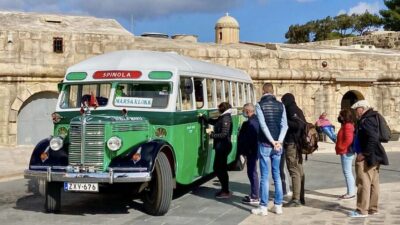 ★ 4.1Valletta: Vintage Bus to Valletta, Sliema, Rabat & MdinaFrom $9433 reviews
 ★ 5.0Mdina and Rabat Tour with Local GuideFrom $24408 reviews
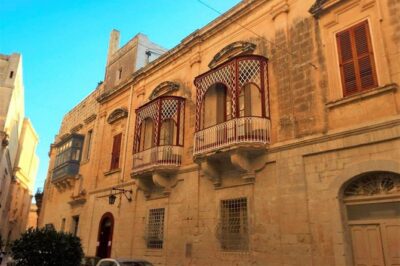 ★ 5.0Mdina and Rabat Walking Tour inc. Catacombs and St. Paul’s GrottoFrom $30341 reviews
Browse the lists this tour appears in