
REVIEW · PREHISTORIC TEMPLES OF MALTA
Prehistoric Temples of Malta Tour
Ancient stones, explained in human terms. This 4.5-hour Prehistoric Temples of Malta tour brings you face to face with some of the oldest megalithic architecture on Earth, set in the sun-baked, scrubby terrain of southern Malta and framed by UNESCO significance. You start with Hagar Qim and its soft limestone carvings, then move to Mnajdra, where the stonework still feels startlingly intentional.
Two things I especially like. First, the live guide makes the sites click, often with clear, language-switching narration. I’ve seen names like Mark, Marco, and Mario credited for turning archaeology into a story you can follow, not a lecture you endure. Second, the practical package is easy: you get hotel pickup and drop-off, plus transportation and entrance fees handled for the cave museum and both temple sites.
One consideration: the timing is tight and the ground is not flat. Expect a decent walk between temple areas, and plan for uphill stretches on the way back. Wear grippy shoes, because you will feel it even if you are not trying to set records.
In This Review
- Key Highlights You Should Not Rush
- UNESCO-Grade Prehistory, In One Practical Half Day
- Morning Pickup And The Ride South
- Hagar Qim: Soft Limestone, Sharp Footing
- Mnajdra’s Stonework: The Still-Standing Master Class
- Ghar Dalam Cave And Museum: Where Prehistory Turns Human
- Hamrija Tower: Knights of Malta, A Quick Nearby Frame
- Price And Value: What You Pay For, And What You Get
- Who Should Book This Tour (And Who Might Not)
- Should You Book the Prehistoric Temples of Malta Tour?
- FAQ
- FAQ
- How long is the Prehistoric Temples of Malta tour?
- Where do pickups happen?
- What’s included in the price?
- Which languages are the guided tours offered in?
- What should I bring for the tour?
- Is the tour good if I don’t want a strenuous day?
- Can I cancel and can I pay later?
Key Highlights You Should Not Rush
- Hagar Qim on globigerina limestone: soft stone, big craftsmanship, and ridge-top views over southern Malta.
- Mnajdra as a best-preserved megalithic example: a close look at how Malta’s ancient builders shaped space with stone.
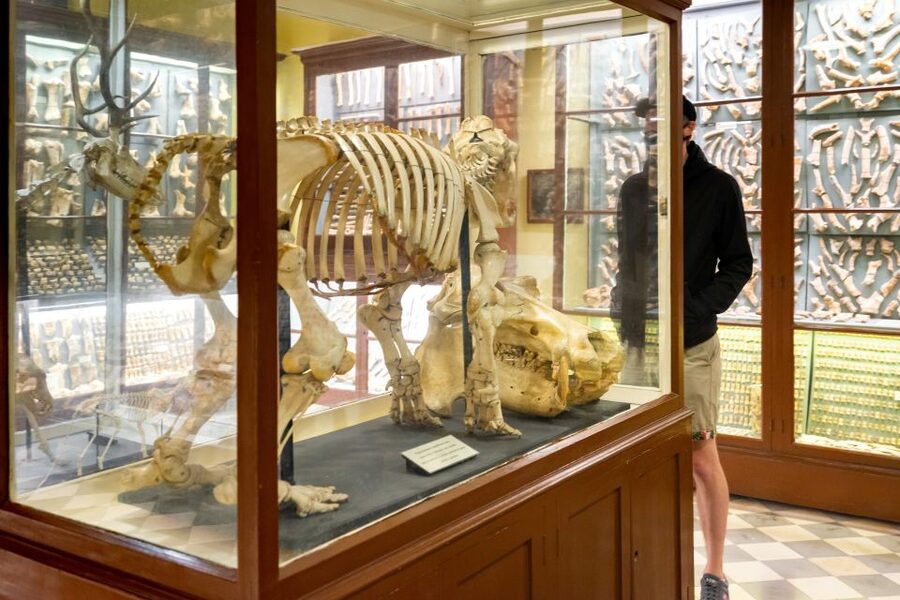
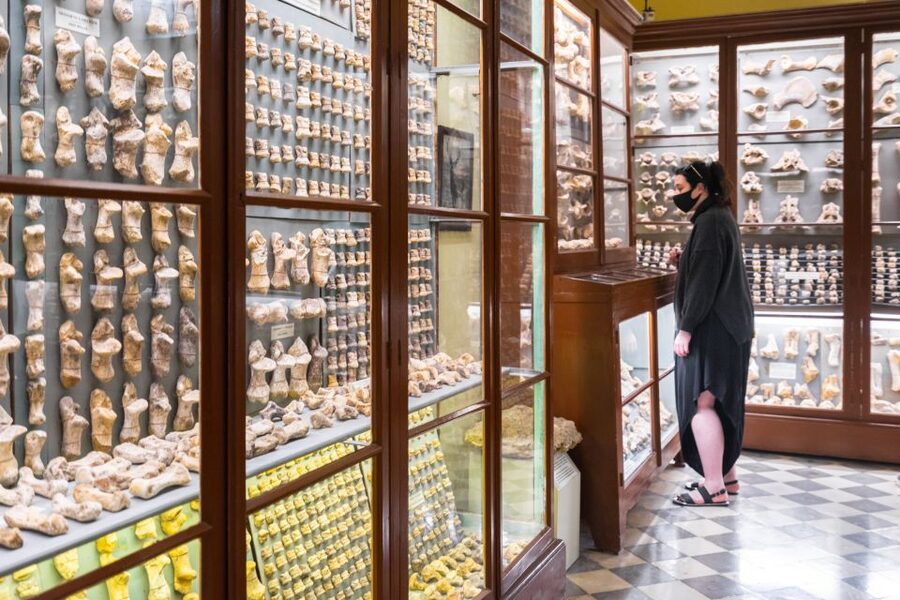
- Ghar Dalam Cave and Museum: the museum portion helps you connect prehistoric life to real bones and fossils.
- Hamrija Tower near the temples: a quick, meaningful stop tied to Knights of Malta, built by Grand Master Martin de Redin.
- Multilingual live guiding: English, German, Italian, and French, with guides praised for keeping explanations clear.
- Pickup convenience across Malta: a long list of pickup points means fewer headaches, especially if you are not staying near Valletta.
The older stones, other ways to see them
- From Malta: Gozo Day Trip Including Ggantija Temples
★ 4.2 · 2,399 reviews - From Malta: Gozo Full-Day Tour with Guide, Temples, & Train
★ 4.1 · 567 reviews - Prehistoric Temples of Malta Tour
★ 4.2 · 517 reviews - Temples Tour (Pickup, Transfer, Tickets & Drop-off Included)
★ 4.5 · 15 reviews
UNESCO-Grade Prehistory, In One Practical Half Day
The Megalithic Temples of Malta are so old that your brain needs a minute to catch up, about 3150 BC, and roughly 5,500 years in broad terms. Yet on this tour, it does not stay abstract. You walk up to the temple stones and start seeing why archaeologists care so much about alignment, design, and construction choices.
What makes this tour feel worthwhile is the pairing. You do not just visit two famous temple complexes. You also add Ghar Dalam Cave and Museum, which gives you prehistoric context beyond the stones. That balance matters when you only have half a day and you want your time to land with meaning, not just photos.
For value, I like that the day includes both travel management and paid entry. You do not need to line up tickets or figure out how to get from one ancient site to the next while you are already on Malta time.
Morning Pickup And The Ride South
This is a morning tour, and it is built around an organized pickup circuit. After booking, you get an email the day before with the exact pickup point and time, so you do not want to ignore that message.
Pickup timing is staggered across Malta, including options like:
- Cirkewwa 08:30
- Attard 08:30
- Mellieha 08:40
- Valletta 08:40
- Xemxija 08:50
- Golden Bay 08:50
- St. Paul’s Bay 09:00
- Bugibba 09:05
- Qawra 09:10
- St. Julian’s 09:10
- Sliema 08:55
The ride itself is part of the experience, even if you only treat it as transit. You’ll be heading to Malta’s south, where the terrain shifts into that Mediterranean garrigue look, low scrub and stark ground rather than lush greenery. If you like seeing where places sit geographically, this is an easy way to get oriented.
One note on comfort: the coach is often described as air-conditioned and reassuring, and the drivers are typically cautious. Still, if you are sensitive to bumpy roads, keep that in mind for the return journey. Malta roads can be a ride, even when everything is safe.
Hagar Qim: Soft Limestone, Sharp Footing
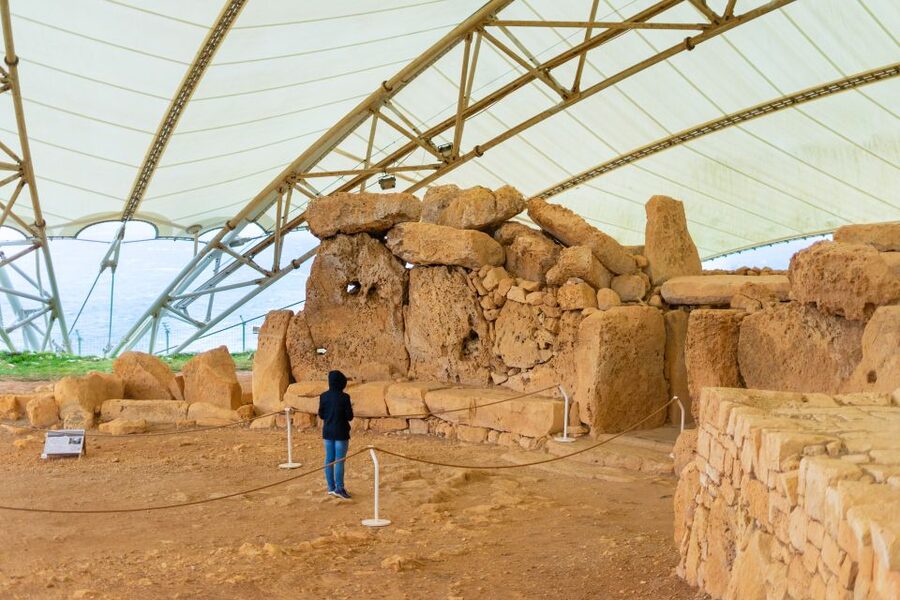
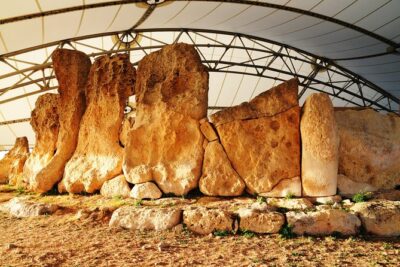
Hagar Qim is where the tour’s magic becomes physical. The temples are built from soft globigerina limestone on a ridge along southern Malta. That detail is not trivia. It helps you understand the texture of what you’re seeing, the way stone can be carved and shaped, and why preservation and erosion matter.
As you move through the site, your guide’s job is to connect structure to people. You’re looking at megalithic architecture that still holds together visually, with intricately carved stonework that can feel surprisingly intimate when explained clearly. It is also a place where you’ll notice the setting immediately. The ridge-top location gives you that open, sun-forward atmosphere, and you can often get sweeping views over the south.
Why I think Hagar Qim is a strong first stop: it sets a baseline. After Hagar Qim, Mnajdra feels less like a separate attraction and more like a conversation between two ancient designs.
Drawback to plan for: the ground and walking pace. Some parts are manageable, but you are still covering distances on uneven surfaces. Bring shoes that can handle grit, and expect to move a bit more than you would in a museum corridor.
Mnajdra’s Stonework: The Still-Standing Master Class
Mnajdra is described as possibly the best example of Maltese megalithic architecture still standing, and it earns that reputation. Even if you are not a stone-nerd, the site communicates engineering choices in a way that is hard to ignore once you’re there.
This is not just about big slabs. You’ll likely spend time talking about the overall layout and how the builders used space. A good guide will slow you down, so you notice features you’d otherwise miss, like how openings, chambers, and stone surfaces relate to the experience of being on the site.
Also, Mnajdra’s setting is part of the story. You are still in that Heritage Park world, where the vegetation is low and the rock texture is the star. That starkness helps the architecture look even more deliberate.
Timing is the key issue here. Several visitors highlight that the tour is fantastic but could feel a touch brief if you want more time to wander slowly and take extra photos. In other words, you get a smart visit, not a long, unhurried day. If you want to linger like you’re on vacation from your schedule, you may want to pair this with another self-guided moment later.




Ghar Dalam Cave And Museum: Where Prehistory Turns Human
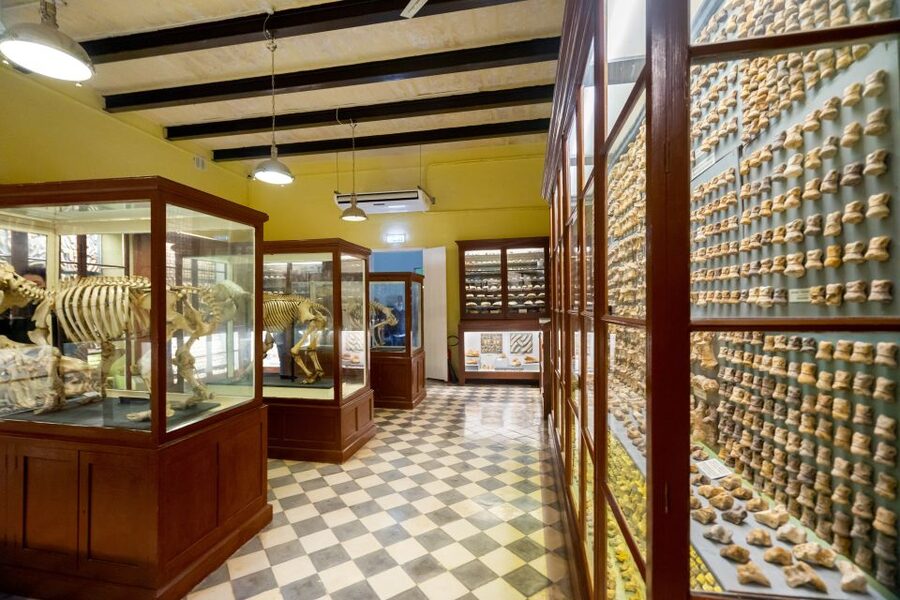
Ghar Dalam is where you shift gears from temples to the living world around them. The cave and its museum area help explain prehistoric Malta through finds connected to prehistoric animals and human life in the region.
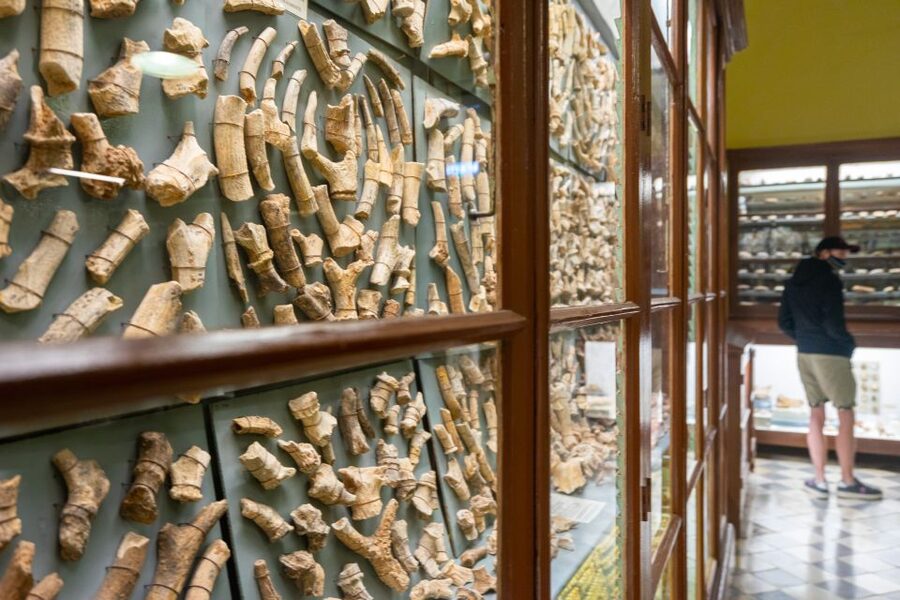
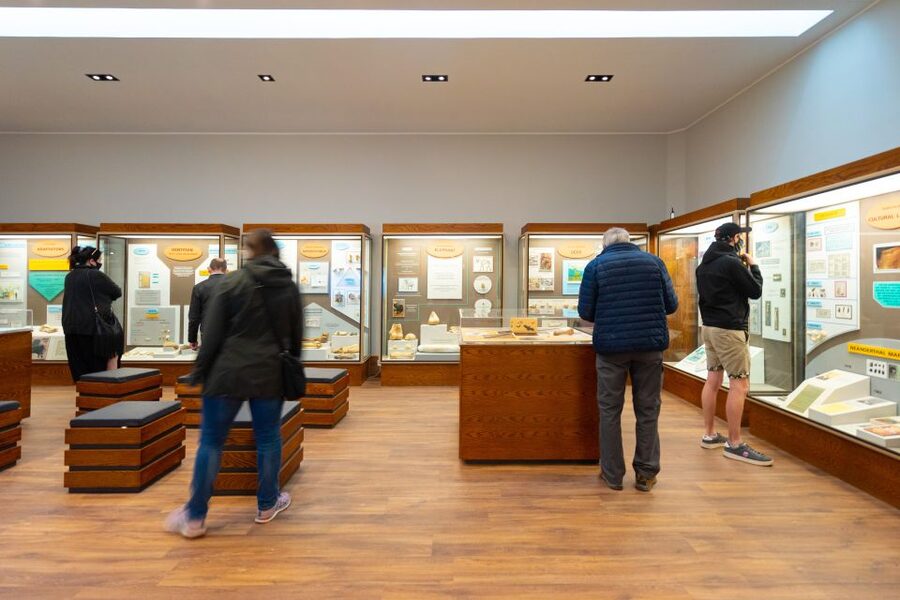
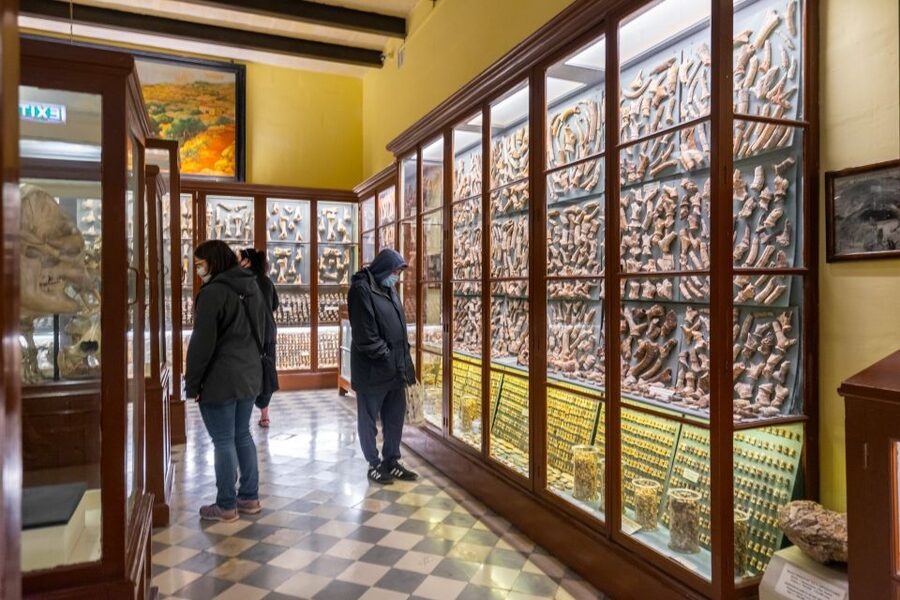
The museum portion is often the standout. You can look at bones and fossils from prehistoric species that lived on Malta, and that turns the megalithic sites into something more grounded. Instead of thinking only about builders and stones, you start thinking about ecosystems and daily survival.
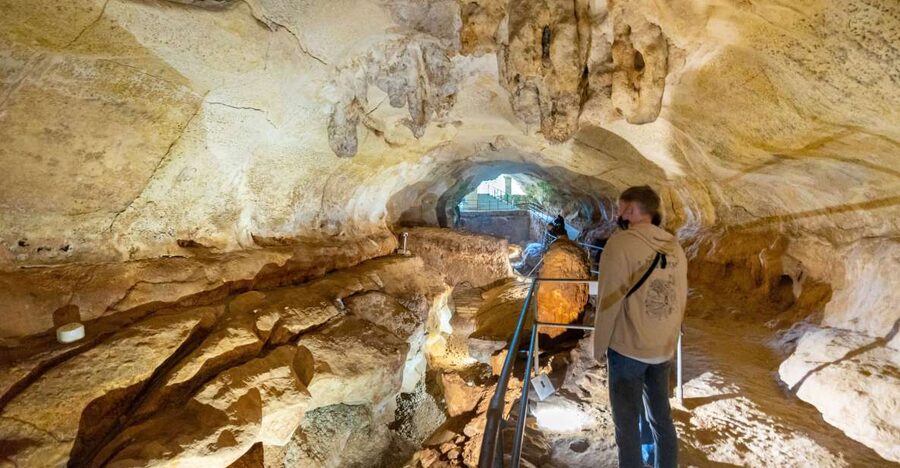
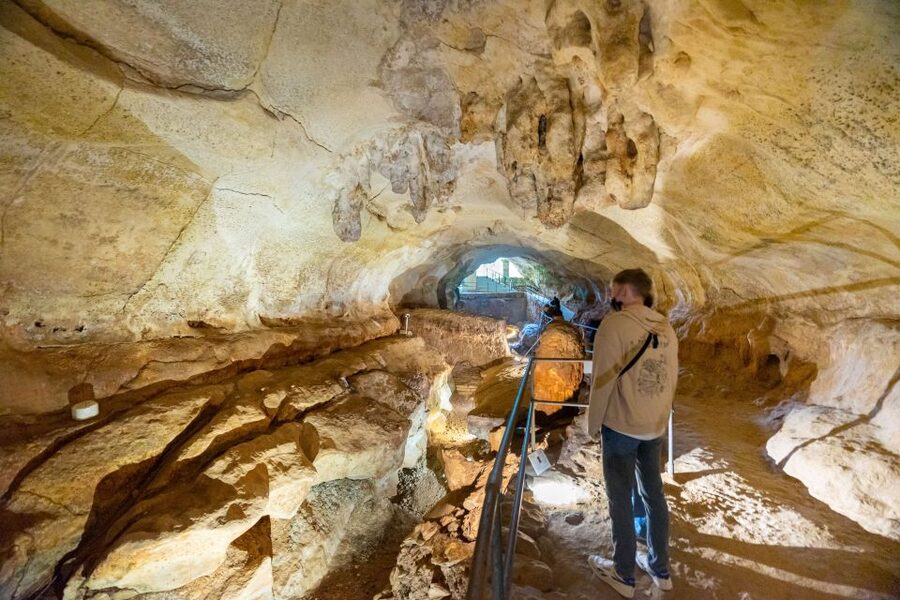
The cave experience itself can feel more limited depending on what you expect. One review notes that the cave was small and lacked dramatic stalactites, stalagmites, or lakes. Translation: it is not a show cave. It is a site with important collections and context, not a guided lighting-and-music attraction.
Still, it is valuable. If you care about how archaeologists piece together life thousands of years ago, Ghar Dalam gives you a useful anchor. You learn to see the temples as part of a wider story, not isolated monuments.
Practical bonus: there are often toilets and a gift shop on-site, which helps when you’re fitting three major stops into one morning.
Hamrija Tower: Knights of Malta, A Quick Nearby Frame
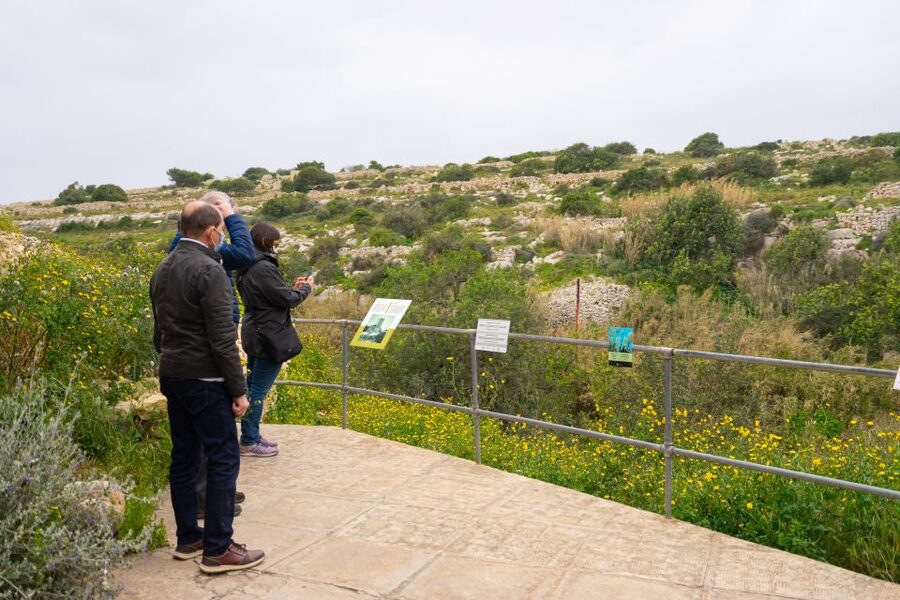
Between temple areas, you’ll also get a look at Hamrija Tower, one of Malta’s 13 watchtowers. It was built by Grand Master Martin de Redin, a detail that adds a surprising layer to what is otherwise a prehistoric-focused tour.
Why this is worth mentioning: it shows how Malta keeps reusing its strategic spots. The same coastline and vantage points that mattered long ago continued to matter for later periods. It also helps you understand the broader timeline of Malta, even when your main theme is prehistory.
You should treat Hamrija Tower as a scenic add-on rather than the center of the program, but it’s a nice reminder that the island’s “importance” does not belong to one era only.
Price And Value: What You Pay For, And What You Get
At $59 per person for about 4.5 hours, you are paying for three things that add up quickly on your own:
- Guided interpretation at major UNESCO-grade sites
- Transportation plus hotel pickup and drop-off
- Entrance fees for Ghar Dalam Cave & Museum, Hagar Qim, and Mnajdra
So is it cheap? Not really. Some comments call it a bit pricey for what you get, especially if you feel like you want more time at the temples. But if you add up the value of hassle-free logistics and guided context, it starts to look fair, particularly for a first visit.
The best way to think about it: this is a “smart half-day” buy. If you want a long, self-led archaeological pilgrimage, this may feel brief. If you want a clear introduction to Malta’s prehistory without spending hours planning routes, it makes sense.
Also, the guide quality is part of the value equation. Guides like Mark, Marco, and Maria are repeatedly singled out for being clear and for adapting explanations to mixed-language groups. That is exactly the sort of “invisible value” you feel once you’re standing in the wrong place without the right context.
Who Should Book This Tour (And Who Might Not)
This works especially well if:
- You are visiting Malta for a short time and want the Prehistoric Temples of Malta highlights in one morning.
- You like guided storytelling that helps you understand what you’re seeing, not just where it is.
- You want an easy plan with transport and paid entries included, so you can spend your energy on the sites.
You might want to reconsider if:
- You hate walking and uneven surfaces. The day includes a decent amount of movement, and the route involves uphill stretches.
- You expect a leisurely pace with plenty of extra time at each temple complex. The visit is well-paced, but it can still feel short for people who want to wander for longer.
Should You Book the Prehistoric Temples of Malta Tour?
Yes, with one clear condition: book it if you want a high-impact introduction to Hagar Qim, Mnajdra, and Ghar Dalam without trip-planning stress. The combination is strong, the site lineup is iconic, and the best guides make the stones feel like a real human story.
If you are the type who likes to linger for hours, take your time, and return later for a second pass, you might pair this with additional independent time elsewhere. But for most first-time visitors, this tour is a very efficient way to understand why Malta’s ancient architecture still grabs your attention long after the bus stops.
FAQ
FAQ
How long is the Prehistoric Temples of Malta tour?
The tour duration is listed as 4.5 hours, and it is described as an archaeological half-day experience.
Where do pickups happen?
Hotel pickup is offered from multiple locations across Malta, including Cirkewwa, Attard, Mellieha, Valletta, Xemxija, Golden Bay, St. Paul’s Bay, Bugibba, Qawra, St. Julian’s, and Sliema, with specific pickup times provided in the schedule.
What’s included in the price?
The price includes transportation, a live guide, hotel pickup and drop-off, and entrance fees for Ghar Dalam Cave & Museum, Hagar Qim Temples, and Mnajdra Temples.
Which languages are the guided tours offered in?
The tour guide speaks English, German, Italian, and French.
What should I bring for the tour?
Wear comfortable shoes, since you will be walking on site.
Is the tour good if I don’t want a strenuous day?
It’s a short half-day, but there is walking involved, including uphill sections, so it is not zero-effort. Shoes with good grip matter.
Can I cancel and can I pay later?
Yes. You can cancel up to 24 hours in advance for a full refund, and you can reserve now and pay later.
More Tours in Malta





More Tour Reviews in Malta



Older Than the Pyramids




Recently reviewed around Malta
- Valletta City of Gentlemen guided walking tour★ 3.5 · 3 reviews
- Temples, Blue Grotto, Marsaxlokk★ 4.5 · 3 reviews
- The Village Experience Tour★ 5.0 · 3 reviews
- Serenity at Sea: Comino Blue Lagoon Exclusive Day Cruise★ 5.0 · 3 reviews
- Gozo and Blue Lagoon Private Boat Trips in Comino★ 5.0 · 3 reviews
- Malta Chocolate Factory Gin and Truffle Making Experience★ 5.0 · 3 reviews
- Malta: Around Comino Cruise With Blue Lagoon stop★ 5.0 · 3 reviews
- Pastizzi Making Experience in Malta★ 5.0 · 3 reviews
Prehistoric Temples of Malta, compared.
 ★ 4.2Gozo Day Trip Including Ggantija TemplesFrom $922,399 reviews
 ★ 4.1Gozo Full-Day Tour with Guide, Temples, & TrainFrom $82567 reviews
 ★ 4.2Prehistoric Temples, Limestone Heritage & Blue GrottoFrom $41412 reviews
 ★ 4.0Gozo Guided Day Trip Incl. Ggantija Temples and LunchFrom $93368 reviews
 ★ 4.3Prehistoric Temples and Highlights of the SouthFrom $86254 reviews
 ★ 3.9Gozo Full Day visiting Ggantija Temples, Salt Pans & DwejraFrom $79112 reviews
 ★ 4.0Malta Prehistoric Temples TourFrom $5987 reviews
★ 3.0Gozo Full Day visiting Ggantija Temples, Salt Pans, DwejraFrom $8353 reviews
★ 4.0Malta Prehistoric Temples TourFrom $5987 reviews
★ 3.0Gozo Full Day visiting Ggantija Temples, Salt Pans, DwejraFrom $8353 reviews
Browse the lists this tour appears in