
REVIEW · WORKSHOPS
Workshop: Maltese Souvenir Tile Design Experience
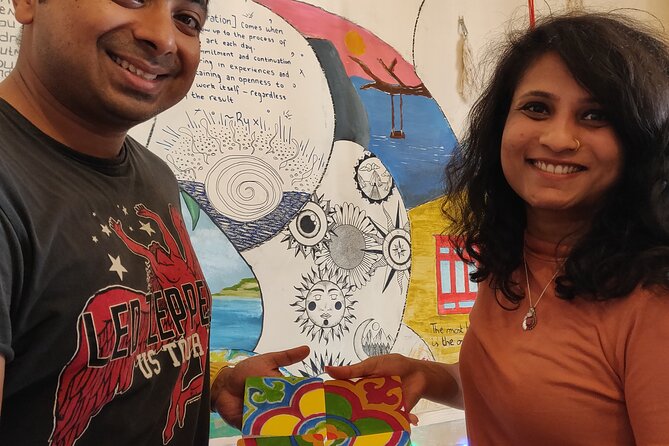
Make a Maltese tile with your own hands. In Malta, this workshop is a real craft session, not a museum stop, where you learn about Maltese tiles and then create your own replica tile in an indoor studio in Marsa. You get to work from first ideas to finished acrylic paint, and you leave with something genuinely yours.
I love the hands-on flow from historical background to your own design choices. I also love that it feels calm and beginner-friendly, with help step-by-step for painters of every level. One thing to consider: your tile is air-dried cement (it is not baked in an oven), so you are making a cement-based souvenir that finishes by drying rather than firing.
In This Review
- Key Highlights Worth Your Time
- Maltese Tiles in Marsa: Why This Isn’t Just a Craft
- Where You’ll Meet and What the Studio Feels Like
- What You Actually Make: The 10 by 10 cm Souvenir Tile
- From History to Pattern: How the Class Moves Step by Step
- 1) Quick historical background
- 2) Design time: yours to shape
- 3) Making the mold with plaster
- 4) Transfer and paint with acrylics
- Air-Dried Cement Tiles: A Detail You Should Know Before You Go
- Photos, Extra Tile Options, and Taking Something Home
- Price and Value: Is $35.95 Worth Two Hours?
- Best Fit: Who Should Book This Workshop
- Practical Stuff: Timing, Language, and Getting Comfortable
- Should You Book This Maltese Souvenir Tile Design Experience?
- FAQ
- How long is the Maltese souvenir tile design experience?
- What is the price per person?
- Is the workshop offered in English?
- Where is the meeting point?
- What size tile will I make?
- Is the tile baked in an oven?
- Can beginners join?
- Are photos included?
- Can I make an extra tile?
- What happens if the experience is canceled due to weather?
Key Highlights Worth Your Time
- Marsa studio, traditional house setting: you work in a small art space on the ground floor of a characterful home.
- Real tile-making process: you go from pattern to mold to paint, with clear instruction throughout.
- Your finished 10 by 10 cm coaster tile: you take home a practical keepsake sized to sit under a mug or glass.
- Design choices or ready-made patterns: you can invent your own pattern or use templates provided.
- Photos included: you get pictures as part of the price, so you can remember the steps you took.
- Optional extra tile: if time allows, you can make a second one for an added fee.
More hands-on afternoons on the island
- Chocolate Making Workshop
★ 5.0 · 47 reviews - Workshop: Maltese Souvenir Tile Design Experience
★ 5.0 · 38 reviews - Malta: Family of Monsters Chocolate Making Class
★ 4.6 · 15 reviews - Malta: Gin and Chocolate Pairing Workshop
★ 5.0 · 12 reviews
Maltese Tiles in Marsa: Why This Isn’t Just a Craft
Maltese tiles are one of those local traditions you notice everywhere once you start looking. They show up as decoration, but they also carry a sense of place. This workshop treats those tiles like part of everyday Maltese identity, not just pretty background for photos.
The class begins with a short burst of context about Maltese tile designs, so the patterns you paint later actually mean something. Then you move straight into making. That order matters. You are not just copying shapes, you are learning what people liked to put on walls and floors, and then translating that into your own small replica.
The experience also has a simple advantage for travel days: it is indoor. Malta’s sun can be relentless, especially in peak hours. Two hours indoors with paint, plaster work, and a focused task can feel like a reset button.
Where You’ll Meet and What the Studio Feels Like
You meet at 23 Gizwiti, Il-Marsa (MRS 1562), Malta. The activity ends back at the same meeting point.
One detail worth noting is location navigation. The address is specific, but at least one practical tip can save you stress. If you rely on map apps, double-check you land on the correct side of the street, because there are multiple listings around the area that can look similar. Walking the last minute instead of trusting the pin can prevent a small detour.
Inside, the workshop is run out of a small art studio in a traditional house in Marsa. From what you can expect in the atmosphere, think warm, personal, and slightly quirky, the kind of place where the host talks through ideas while you work. You also get the comfort of a small-group setup: it is private, meaning only your group participates.
What You Actually Make: The 10 by 10 cm Souvenir Tile
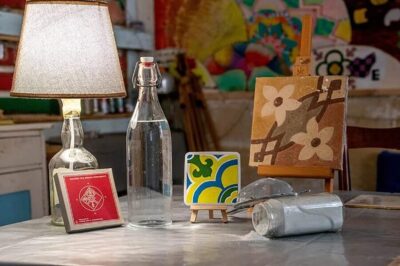
Your finished souvenir is a tile sized 10 by 10 cm. It is designed to work as a coaster, so you can put it under a cup back home. That practical use is part of the appeal. It is not just a flat decoration that ends up in a drawer. You are making something that can stay in your daily routine.
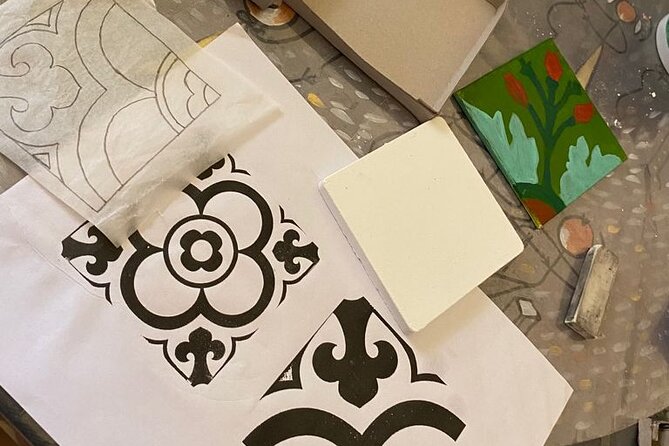
The core technical point is also important. These tiles are not made like the glazed, fired ceramic wall tiles you might picture. Here, your tile is created with cement components and it is air-dried, not oven-baked. The workshop walks you through the process so you understand what you are holding and how it will finish.
You also have control over the design approach. You can either create your own pattern (with guidance) or choose from designs already available. That flexibility makes this easier for people who want full creativity, and also for people who just want a strong, Maltese-looking result without getting stuck on the first sketch.
From History to Pattern: How the Class Moves Step by Step
The session has a clear structure. It keeps you moving, but it also gives you time to think and adjust.

1) Quick historical background
You start with a brief historical introduction to Maltese tiles. This is not long or heavy. It is enough to orient you, so when you later choose a design, you are painting with intent instead of random decoration.
2) Design time: yours to shape
Next comes designing your pattern. You can research and think through your own idea, or you can use patterns the studio provides. Either way, the instruction style is hands-on: you are shown how to translate a pattern concept into something that will work on your small tile.
This is one reason the workshop works for both beginners and experienced people. If you are new to painting, you can lean on the ready patterns and get comfortable with the workflow. If you like art, you can push your own design choices.
3) Making the mold with plaster
Then you move into the physical side of the craft. You create the mold using plaster. After the mold is made, your design gets transferred to it. This step matters because it is where your design becomes a tangible tile shape, not just a drawing.
The class explains the process from concept to realization, so you get a sense of what happens between your idea and the finished object.
4) Transfer and paint with acrylics
Finally, you paint the tile using acrylics. Acrylic paint is popular for workshops because it dries quickly, so you can see progress fast without waiting around. You get guidance on painting your chosen motif and colors so your design reads clearly on the finished tile.
At the end, you keep your tile. You are taking home a handmade souvenir that still carries the “I made this” meaning.
Air-Dried Cement Tiles: A Detail You Should Know Before You Go
The workshop is straightforward about materials: your tile is made with cement, and it dries in the open air, not by baking in an oven. If you grew up expecting fired ceramic, think of this as a different process and a different finish.
What that means for you in real terms:
- You should expect a cement-based piece that completes by drying.
- The workshop is built around that reality, including how the steps connect from mold to painting.
- You should not expect a fired glaze look unless that is already inherent in the way the acrylic paint is applied and sealed (details on any sealing are not specified here).
This is a small consideration, not a dealbreaker. Just go in with correct expectations, and you will enjoy the craft more because you understand the “why” behind the method.
Photos, Extra Tile Options, and Taking Something Home
The price includes photos. That’s useful because tile-making has a lot of small steps. Your end tile is the headline, but the process images are what help you remember how you actually made it.
If you have extra time, you can make an additional tile. The cost for an extra tile is 3 euro, and it depends on time availability during your session. That can be a nice option for families or couples who want two designs, one matching their home style and another as a gift.
Also, the tile comes back with you, ready to be a souvenir on day one. That makes it easier for packing than bigger crafts that need later pickup or special shipment.
Price and Value: Is $35.95 Worth Two Hours?
At $35.95 per person for about 2 hours, the value comes from three things, not just the craft itself.
First, you get instruction that walks you through the process from pattern to mold to painting. Second, you leave with a handmade, custom tile sized for daily use as a coaster. Third, photos are included, so you get both a physical and visual memory.
You also get an indoor cultural activity that feels active. If you are tired of standing in heat near sites, this workshop is a break that still belongs to Maltese culture.
If you are traveling as a couple or with a friend, the $35.95 cost can feel easier to justify because you can each make your own tile. If you are short on time, remember it is about two hours, so it is best when you can commit to that block without rushing out early.
Best Fit: Who Should Book This Workshop
This workshop is ideal for people who want something hands-on, small, and personal.
You will likely enjoy it if:
- you like making things with your hands, even if you are not an artist
- you want a Maltese souvenir that is not a mass-market shop item
- you want an indoor cultural activity that does not require museum stamina
- you travel as a couple or family and want a shared task
It is less ideal if you want a high-energy, big-group event or if you dislike anything involving plaster or cement materials. The class is relaxed and methodical, not a fast show-and-tell.
Also keep expectations realistic: your tile is air-dried cement and the process is part of the experience. It is not “factory-perfect ceramic made instantly.”
Practical Stuff: Timing, Language, and Getting Comfortable
The workshop runs in English and you receive a confirmation depending on how close to your travel date you book. It is also on a schedule that often gets reserved ahead, with an average booking window around 20 days in advance. If your dates are fixed, booking earlier is safer.
The session is designed for most people to join. Still, your comfort matters. Wear comfortable clothes because you will be handling materials and painting. Closed-toe shoes can help your feet feel steadier during seated or standing work, though the specific dress code is simply comfort.
Public transport is nearby, so you likely will not need a taxi for the final approach, and there is a mobile ticket. If you have a service animal, service animals are allowed.
Should You Book This Maltese Souvenir Tile Design Experience?
I think you should book it if you want a souvenir with a story you can explain. This is not just buying tile from a shop. You learn what Maltese tile patterns mean, then you create one replica tile yourself, and you take it home as a coaster-sized piece.
It is also a smart choice when Malta’s weather turns your outdoor plans into a heat battle. Two hours indoors, paint drying quickly, and a structured process can feel relaxing rather than exhausting.
If you hate any hands-on mess or you want a fired ceramic tile look, then this might not match your expectations. But if you like the idea of making something Maltese, step by step, in a small Marsa studio, it is an easy yes.
FAQ
How long is the Maltese souvenir tile design experience?
The workshop runs for about 2 hours.
What is the price per person?
It costs $35.95 per person.
Is the workshop offered in English?
Yes, it is offered in English.
Where is the meeting point?
You start at 23 Gizwiti, Il-Marsa, MRS 1562, Malta, and the activity ends back at the same meeting point.
What size tile will I make?
You create a replica tile that is 10 by 10 cm.
Is the tile baked in an oven?
No. The tiles are air dry and made with cement, not baked.
Can beginners join?
Yes. The activity is described as ideal for both beginners and advanced participants.
Are photos included?
Yes. Photos are included in the price.
Can I make an extra tile?
If you have time, an extra tile is possible. It costs 3 euro.
What happens if the experience is canceled due to weather?
If it is canceled due to poor weather, you will be offered a different date or a full refund.
Make Something While You Are Here



More Tour Reviews in Malta





Recently reviewed around Malta
- Valletta City of Gentlemen guided walking tour★ 3.5 · 3 reviews
- Temples, Blue Grotto, Marsaxlokk★ 4.5 · 3 reviews
- The Village Experience Tour★ 5.0 · 3 reviews
- Serenity at Sea: Comino Blue Lagoon Exclusive Day Cruise★ 5.0 · 3 reviews
- Gozo and Blue Lagoon Private Boat Trips in Comino★ 5.0 · 3 reviews
- Malta Chocolate Factory Gin and Truffle Making Experience★ 5.0 · 3 reviews
- Malta: Around Comino Cruise With Blue Lagoon stop★ 5.0 · 3 reviews
- Pastizzi Making Experience in Malta★ 5.0 · 3 reviews
Workshops, compared.
 ★ 4.6First Experience Scuba Diving LessonFrom $91415 reviews
 ★ 4.8Chocolate Making WorkshopFrom $2980 reviews
 ★ 4.9Truffle Making Master ClassFrom $3553 reviews
 ★ 5.0Chocolate Making WorkshopFrom $3047 reviews
 ★ 5.0Gozo: Cooking Class and Market VisitFrom $8742 reviews
 ★ 5.0Maltese Tile – Souvenir painting workshop with localFrom $4140 reviews
 ★ 4.8Sliema: Beach Yoga Class with SwimmingFrom $2628 reviews
 ★ 5.0Cooking Class in Gozo with Market VisitFrom $7724 reviews
Browse the lists this tour appears in