
REVIEW · VALLETTA TOURS AND EXPERIENCES
Discover Valletta Half-Day Walking Tour
Valletta clicks fast on foot. I like how this half-day group tour strings together major stops around Upper Barrakka Gardens and the St. John’s Co-Cathedral area, so you get views plus big artistic payoffs. The one thing to watch is that several headline sights have admission fees, so your final spend depends on how many interiors you choose to enter.
I also like the calm logistics. You meet at the Phoenicia Malta area in Floriana, then the guide handles the flow while you decide what to add with tickets. It’s a small-group feel too, with a maximum of 50 people, and you use a mobile ticket for the experience.
In This Review
- Key things to know before you go
- Why this Valletta walk works in 3 hours 15 minutes
- Meeting at Phoenicia Malta and the Triton Fountain warm-up
- City Gate and Republic Street: Renzo Piano’s most noticeable civic edge
- The Royal Opera House site and why ruins still matter
- Auberge de Castille, Auberge d’Italie, and Palazzo Parisio: the buildings that control the skyline
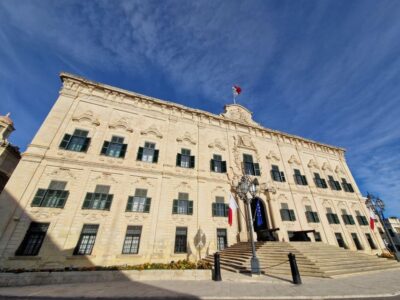
- Auberge de Castille (Castile Palace)
- Auberge d’Italie (now MUŻA)
- Palazzo Parisio
- Upper Barrakka Gardens: the view break you’ll remember
- St. John’s Co-Cathedral area: your 45-minute decision window
- St. George Square and Grandmaster’s Palace: the civic heart at walking speed
- Fort St Elmo and the National War Museum, then the Malta Experience show
- What you should watch for with guides, language, and timing
- Price and value: what $22.11 buys you, and what costs extra
- Who should book this Valletta half-day walking tour
- Should you book this Valletta half-day walking tour?
Key things to know before you go
- Outside stops first, paid entrances when you want them: many key sights are viewed from the street or yards, with optional museums and churches you can choose to pay for.
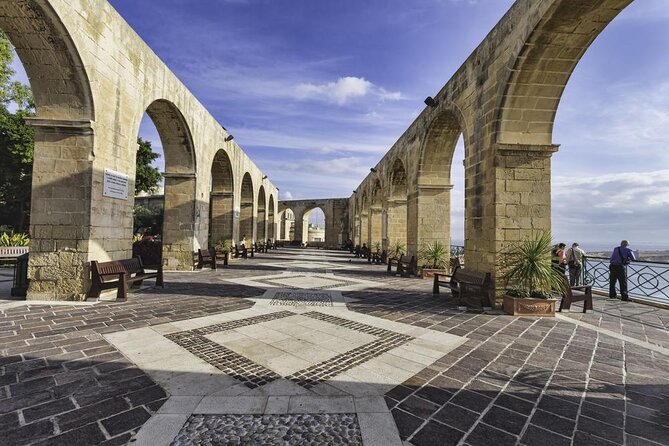
- A real viewing break: Upper Barrakka Gardens comes with free time and a classic Grand Harbour viewpoint.
- St. John’s Co-Cathedral has timed flexibility: you get 45 minutes to decide on tickets, the museum, and even a quick coffee break.
- Aren’t just monuments, there’s a story: from the 1959 Triton Fountain to the ruins of the old Royal Opera House, the tour explains why Valletta looks the way it does.
- Ends with an optional show: you finish at Malta Experience around 12:45, and the audio-visual presentation runs later at 13:00.
Still in Valletta? Here is what else is on
- Valletta: Guided Walking Tour with Optional Cathedral Tour
★ 4.3 · 758 reviews - The Valletta Street Food and Culture Walking Tour
★ 5.0 · 711 reviews - Valletta: Vintage Bus to Valletta, Sliema, Rabat & Mdina
★ 4.1 · 433 reviews - Valletta Segway Tour and The Malta Experience
★ 5.0 · 397 reviews
Why this Valletta walk works in 3 hours 15 minutes
Valletta is compact, but it’s layered. You can wander for hours and still feel like you missed the point. This tour is built for a different goal: get your bearings fast, then give you time to choose what you want to go inside.
You’re on the route for about 3 hours 15 minutes, then you’re free for the rest of the day. That structure matters because it lets you build your own day plan right after you understand the city. In other words, you’re not stuck on a rigid itinerary all afternoon.
This is also a group walking tour, so the price stays low compared with private guiding. The tradeoff is pacing. You’ll be moving often and stopping briefly, so it’s best if you’re happy with outside viewing, short orientation stops, and one or two timed “decision windows” for paid entries.
Meeting at Phoenicia Malta and the Triton Fountain warm-up
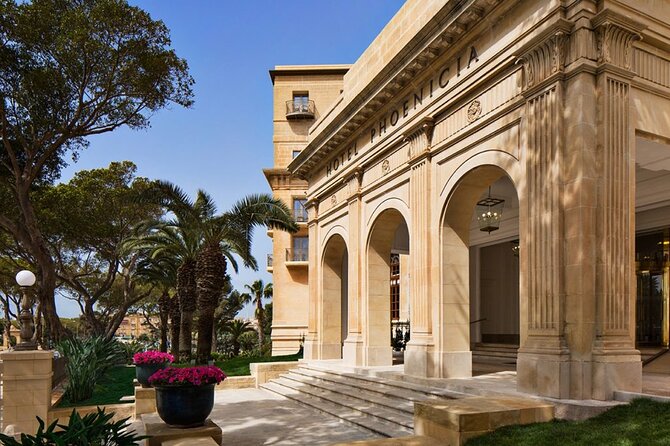
The tour starts at 9:15 am at The Phoenicia Malta, The Mall, Floriana. It’s an easy-to-find landmark-based meeting point, and it’s also near public transportation. No hotel pickup is included, so plan to arrive on your own.
Right away, the tour points you to a detail many people miss: the Triton Fountain just outside Valletta’s City Gate. It’s made up of three bronze Tritons holding up a basin, and it’s a major modernist landmark for Malta. It was first inaugurated in 1959, then restored in 2018.
That opener is smart. It tells you, in one glance, that Valletta isn’t only old stone. It has modern layers too, and the city is still actively shaped.
City Gate and Republic Street: Renzo Piano’s most noticeable civic edge
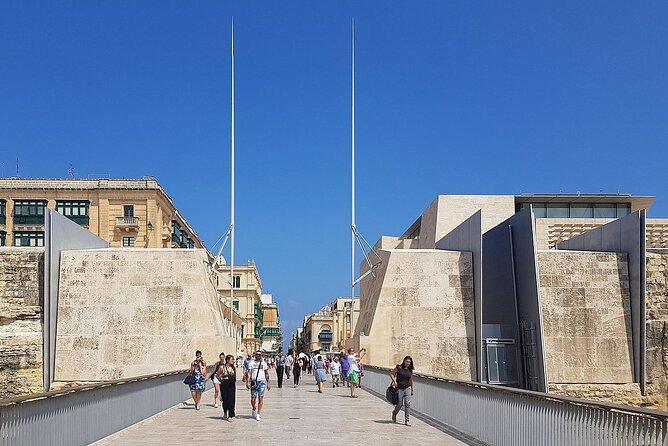
Your first “real orientation” moment is Valletta City Gate. It sits in the Porta Reale Curtain, between St. James’ and St. John’s Bastions. Notice the setting: there’s a deep ditch and a bridge that spans it. The gate marks the beginning of Republic Street, Valletta’s main drag through the city, all the way toward Fort St. Elmo.
One practical plus: the City Gate itself is quick to process and free to visit. You do not need tickets to appreciate the scale and the layout.
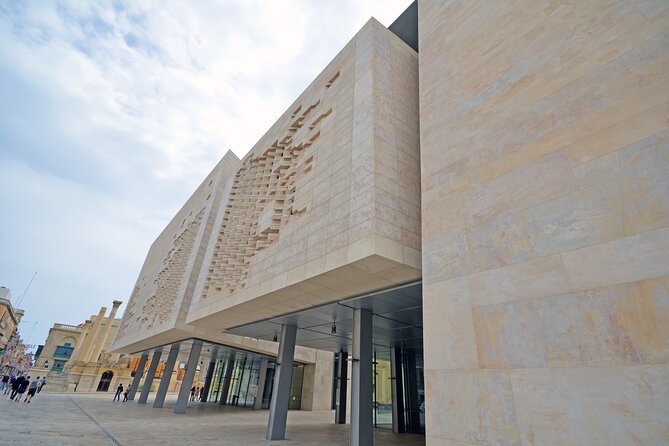
Then the tour pivots to a new civic chapter right beside the gate: the New Parliament building. It was constructed between 2011 and 2015, and designed by Renzo Piano as part of the City Gate Project. The design theme is especially interesting, because the building’s steel frame is clad in Gozitan limestone intended to resemble honeycombs. The story tied to Malta’s name adds context to the look.
Even if you don’t love modern architecture, this stop helps you understand Valletta’s contrast. The city didn’t freeze in time. It has kept updating while keeping the historical street plan in place.
The Royal Opera House site and why ruins still matter
Another quick stop that works well on a walking tour is the Royal Opera House site. The original opera house was designed by English architect Edward Middleton Barry, completed in 1866. During World War II, it took a direct hit in 1942, and the building was destroyed.
What you see today is the “after” version: the ruins were redesigned by Renzo Piano, and in 2013 they started functioning as a performance venue again.
This is a good example of something I appreciate in walking tours: you’re not only checking off places, you’re learning what changed and why. Valletta has many sites that look like “just stone,” but the story often explains how people adapted after loss.
Other guides worth walking behind
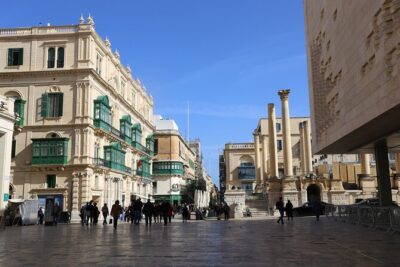


Auberge de Castille, Auberge d’Italie, and Palazzo Parisio: the buildings that control the skyline
Once you’re in the higher zone, the tour shifts into palace and auberge territory. That’s where Valletta’s visual drama shows up, and where short stops still feel worthwhile because the architecture is so distinctive.
Auberge de Castille (Castile Palace)
Auberge de Castille sits at the highest point of Valletta. It was built in the Baroque style under Manuel Pinto da Fonseca in the 1740s, replacing an earlier 1574 building that housed knights from the Order of Saint John connected to the langue of Castile, León, and Portugal.
Today it houses the Office of the Prime Minister of Malta. That means you usually view it from the outside, but it’s still one of the most important pieces in the city’s power geography. It helps you understand why Valletta’s best buildings are also the ones with political weight.
Auberge d’Italie (now MUŻA)
Next you’ll pass Auberge d’Italie, built in the late 16th century for the knights from the langue of Italy. In 2018, it became the new National Art Museum (MUŻA).
This stop is a “you decide” moment. The tour doesn’t force museum time on you. If you want art and indoor time, you can follow your curiosity later. If you don’t, you can keep moving and save your energy for the viewpoints and main churches.
Palazzo Parisio
Palazzo Parisio adds a French and political thread to the walk. It was built in the 1740s by Domenico Sceberras and later passed through the Muscati and Parisio Muscati families. Napoleon stayed there for six days in June 1798 during the early French occupation.
After that, it became the General Post Office from 1886 to 1973, then the Ministry for Agriculture, and now it houses the Ministry for Foreign Affairs. So again, you get history without a hard museum commitment.
Upper Barrakka Gardens: the view break you’ll remember
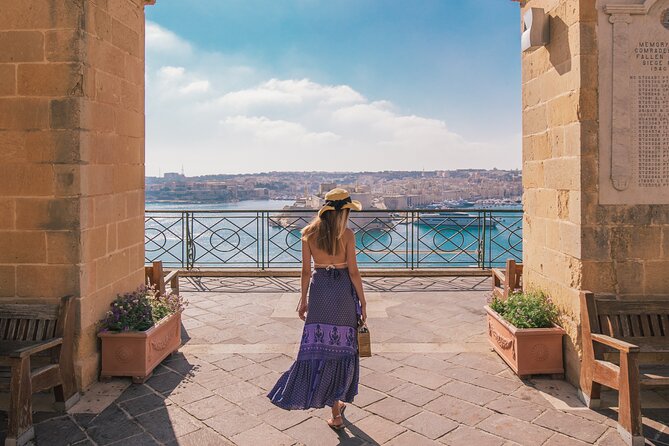
If you want one moment that justifies doing Valletta on foot, it’s Upper Barrakka Gardens. You get about 15 minutes of free time, and that time matters because it gives your brain a breather between stops.
The gardens sit on the upper tier of St. Peter and Paul Bastion, which dates to the 1560s. Originally, knights of the Italian langue used the space for recreation. Today, it’s about your eyes and your photos.
From the terrace you get broad views over the Grand Harbour, the Three Cities, the shipyard, and the lower-lying parts of Valletta. It also sits high on the city walls, which makes the perspective feel dramatic even though you’re not going anywhere far.
This is also where I’d quietly suggest you do something small but smart: take a few minutes to locate your future walking options. Once you can see the harbor orientation, you’ll understand how the rest of your day connects.
St. John’s Co-Cathedral area: your 45-minute decision window
The tour includes 45 minutes of free time at St. John’s Co-Cathedral and Museum area on Republic Street. Admission is not included, so you pay only if you want to go in.
This is the biggest “choose your own adventure” block on the tour. You can:
- purchase tickets to visit the Co-Cathedral and Museum
- see the Caravaggio masterpieces in the Oratory
- view the church museum and a collection of Flemish textile art
- use a multilingual audio guide included with entrance
- relax at cafeterias around Republic Square and nearby piazzas
There’s a key interior feature you should plan around if you go inside: the Co-Cathedral is known for its marble inlaid floor, often described as one of the most beautiful floors in the world. That’s the kind of thing you want time for, not rushed glances.
One practical note: if you prefer to do churches on your own pace, this is still workable. You have a defined time block, so you can commit or skip without messing up the group rhythm.
St. George Square and Grandmaster’s Palace: the civic heart at walking speed
After St. John’s, the tour reaches St. George Square, also called Palace Square. It’s Valletta’s largest and most prominent square, located right in front of the Grandmasters’ Palace. Even though the square’s appearance has changed over the years, it has stayed a main venue for major occasions and celebrations.
From here you see the “power center” layout clearly. You get the big picture of where decision-making happened and where official Malta looked out over the city.
Then comes a major structure: Grandmaster’s Palace (officially known as The Palace). It was built between the 16th and 18th centuries as the palace of the Grand Master of the Order of St. John, who ruled Malta. The palace later became the seat of the Parliament of Malta from 1921 to 2015.
Today it houses the Office of the President of Malta and the palace state rooms and palace armoury, which are open to the public as a museum. Admission is not included, so you’re viewing from outside on the tour itself, unless you choose to add museum time on your own.
If you like understanding city government in physical space, this stop will click fast. The building tells you how Malta organized itself.
Fort St Elmo and the National War Museum, then the Malta Experience show
The walk then pushes toward Valletta’s seaward defenses. First is Fort Saint Elmo, a star fort on the Sciberras Peninsula shore that divides Marsamxett Harbour from Grand Harbour. It also commands the entrances to both harbours along with Fort Tigné and Fort Ricasoli.
Fort St Elmo is best known for its role in the Great Siege of Malta in 1565. Since 1975, part of the fort has housed the National War Museum.
The tour gives you a short stop here, which is perfect if you want a context setting. The fort is built for defense, and the shape is part of the lesson even when you do not go inside. If you want deeper museum time, you can come back later on your own schedule.
Then the tour ends at 12:45 pm at the entrance of Malta Experience on St Elmo Bastions. You can buy tickets to watch the 45-minute multilingual audio-visual show at 13:00. There’s also an option for a drink and snack overlooking Grand Harbour, with those items not included.
This ending is smart because it lets you convert what you just learned into a more linear story. In one of the experiences shared by a guide, people specifically liked this final history movie style component. If you want narrative closure instead of just facts, it’s a strong add-on.
What you should watch for with guides, language, and timing
The tour is led by a professional licensed guide. Language depends on booking, and can be English, French, German, Italian, or Spanish. In some cases, a tour can be run in two languages, but it’s not the norm.
I’ll be honest about value here. A walking tour lives or dies by the guide’s pacing and explanation style. Some people loved their guide’s knowledge and personality, including guides named Josephine and Maria. Other experiences were more mixed when it came to explanation depth and bilingual delivery.
Timing can also vary. One negative note I’d take seriously: even if you’re early, the group might not start at the exact first minute if they are waiting for the full roster.
So my advice is simple: arrive a few minutes early, and keep expectations realistic. This is a “half-day walking tour with guided stops,” not a museum class that runs with military precision.
Price and value: what $22.11 buys you, and what costs extra
At $22.11 per person, this tour is clearly aimed at keeping costs down. The key reason it’s good value is that the route is built around sights that can be enjoyed without paying entrance fees, then offers options for paid interiors.
Some stops are free:
- Triton Fountain outside City Gate (viewing)
- Valletta City Gate
- Upper Barrakka Gardens
- St. George Square
- the walk-by orientation portions at several major landmarks
Some stops are not included for admission:
- New Parliament building is a quick viewing stop, no admission mentioned as included
- Royal Opera House site viewing is brief
- Auberges, Palace areas, and St John’s Co-Cathedral have optional paid entry
- Fort St Elmo has museum potential, not included on the tour route itself
- Malta Experience show is optional and ticketed
This matters for your budgeting mindset. If you only do the walk and choose not to enter the big-ticket interiors, your spending can stay close to the base price. If you add Co-Cathedral tickets plus Malta Experience, your total will rise, but you’ll also pack in more “inside story” time.
If you want a budget friendly Valletta highlight run, this works well. If you want maximum museum time, you might still enjoy it, but you will probably want to pair it with paid ticket visits on another day.
Who should book this Valletta half-day walking tour
This is a good fit if:
- it’s your first visit and you want a guided map of key landmarks
- you like photos and viewpoints, not just museum hours
- you want history context without committing the whole day
- you’re comfortable making decisions on the spot about entries
It’s less ideal if:
- you need a slow pace with long time inside each major building
- you hate group timing and quick stops
- you want deep, continuous museum explanation at every stop
The best strategy is to treat it as a planning tool for the rest of your day. Use the free time blocks to pick one or two “must enter” sights, then let the tour route teach you where everything sits.
Should you book this Valletta half-day walking tour?
I think this tour is worth booking for most first-timers, especially if you want a solid start to your Valletta day. The route hits the big visual anchor points, and the timing is right: you finish at 12:45 with options left open for the afternoon.
Book it if you like a mix of outside architecture, a real harbor viewpoint break, and one major indoor decision at St. John’s Co-Cathedral. Skip or consider alternatives if your top priority is long museum time, or if you know you want a very structured, nonstop deep dive into interiors.
If you do book, show up a bit early, carry cash or card for any optional tickets, and decide in advance whether Co-Cathedral and Malta Experience are “yes” for you. The tour is designed so you can make those calls without stress.
More Tours in Malta




More Tour Reviews in Malta


Valletta, Keep Going




Recently reviewed around Malta
- Valletta City of Gentlemen guided walking tour★ 3.5 · 3 reviews
- Temples, Blue Grotto, Marsaxlokk★ 4.5 · 3 reviews
- The Village Experience Tour★ 5.0 · 3 reviews
- Serenity at Sea: Comino Blue Lagoon Exclusive Day Cruise★ 5.0 · 3 reviews
- Gozo and Blue Lagoon Private Boat Trips in Comino★ 5.0 · 3 reviews
- Malta Chocolate Factory Gin and Truffle Making Experience★ 5.0 · 3 reviews
- Malta: Around Comino Cruise With Blue Lagoon stop★ 5.0 · 3 reviews
- Pastizzi Making Experience in Malta★ 5.0 · 3 reviews
Valletta Tours and Experiences, compared.
 ★ 5.0The Original Valletta Walking TourFrom $262,719 reviews
 ★ 4.7Valletta: 3-Hour Walking TourFrom $251,605 reviews
 ★ 4.8Valletta: Guided City Walking TourFrom $241,256 reviews
 ★ 4.8Valletta: Street Food and Culture Walking TourFrom $651,251 reviews
 ★ 4.9Valletta: City Walking Tour in a Small GroupFrom $24957 reviews
 ★ 4.3From Sliema: Valletta and the Three Cities Scenic CruiseFrom $24763 reviews
 ★ 4.3Valletta: Guided Walking Tour with Optional Cathedral TourFrom $46758 reviews
 ★ 5.0Valletta Food TourFrom $60711 reviews
Browse the lists this tour appears in