
REVIEW · SCUBA DIVING
Malta: PADI Discover Scuba Diving Experience
First breaths underwater in Malta feel oddly natural. This PADI scuba try experience pairs online theory with a small group setup, so you can learn the basics without feeling rushed. You also get to practise skills on a house reef and then move on to more open water time with an instructor watching closely.
My biggest caution is the medical fitness check. The program is strict about conditions involving lungs, heart, blood, back, eyes, ears, or medication, and it is not suitable for pregnant women or anyone with certain health issues or a cold.
Plan for a focused session that runs about 2.5 hours, with everything ending back at the meeting point at New Dimension Scuba. You show up ready to swim, they provide the kit, and the instructor keeps things calm and clear.
In This Review
- Key things that make this Malta scuba try session work
- New Dimension Scuba in Malta, where your 2.5 hours start
- Online theory you complete before you go, not on the spot
- Equipment orientation and safety briefing, built for comfort
- House reef practice first, then open water time
- What you actually see on Malta’s reefs, and the rules that keep it special
- Instructor style and small-group attention, why it feels manageable
- Price in context: what $85 includes, and why that is good value
- The optional second session, up to 12 meters for more experience
- What to bring, what to avoid, and how to set yourself up for success
- Health and age rules: the stuff that decides whether you can go
- Should you book this Malta PADI scuba try session?
- FAQ
- How long is the Malta PADI Discover Scuba experience?
- How many people are in the group?
- Do I have to complete the online theory before I arrive?
- What equipment do I need to bring?
- What should I bring with me?
- Is the instructor English-speaking?
- Who is not suitable for this experience?
- Are there rules about marine life or substances?
- Can I do a second scuba session, and how deep can it go?
Key things that make this Malta scuba try session work
- Online theory before you arrive, so your first minutes in the water are about doing, not scrambling for basics
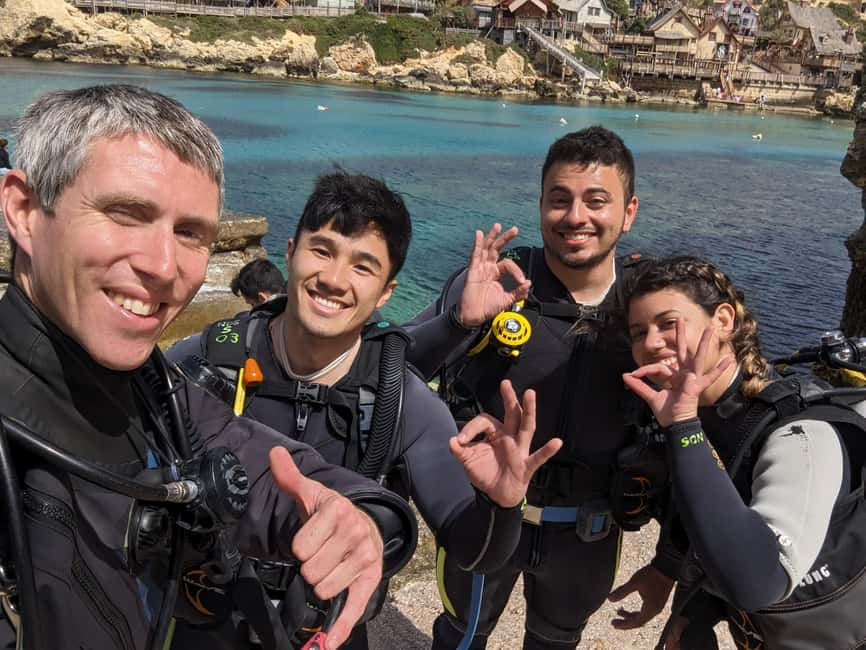
- Small groups up to 3 participants, which means more personal coaching and fewer wait times
- House reef practice first, including shallow confined skill work before you go further out
- English-speaking PADI instructor, with a patient, safety-first teaching style
- All equipment included, so you do not have to rent or carry scuba gear in Malta
- Optional second session, with a maximum depth of 12 meters for the follow-up
Where else the dive boats go
- Malta: First Experience Scuba Diving Lesson
★ 4.6 · 415 reviews - Malta, Scuba diving with instructor
★ 4.8 · 52 reviews - SSI Try Scuba Diving in the sea
★ 4.8 · 43 reviews
New Dimension Scuba in Malta, where your 2.5 hours start
This experience is run by New Dimension Scuba, and the meeting point is easy to find once you know what to look for. The instruction is to find the New Dimension Scuba logo in grey and yellow above the door. It is just up the hill from the swimming pool and in front of the tower, and that is also where the session finishes.
Why that matters: a first-time scuba experience is already a lot to process. When the meeting point is clear and the day ends back at the same place, you lose less time and stress. It is the kind of simple logistics that helps you focus on learning and not on navigation.
The session itself is listed as 2.5 hours, with starting times depending on availability. Because it is a short window, you will want to arrive with your swimwear sorted and ready to go, so you do not burn minutes changing once you get there.
Online theory you complete before you go, not on the spot
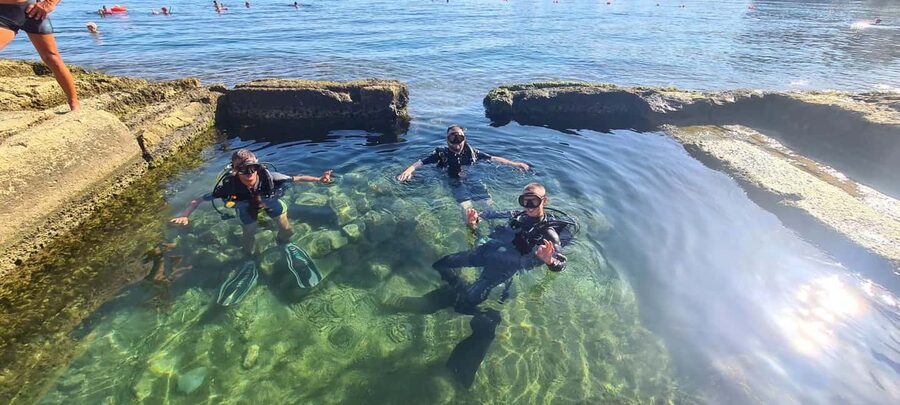
One of the most helpful parts here is that you do not just show up and hope for the best. You are required to complete online theory before the activity. That theory is meant to teach the basics of scuba safety and how breathing and equipment work underwater.
For first-timers, this is a big deal. In a short session, confusion is your enemy. If you already know the basic concepts, the instructor can spend time on practical skills and calm guidance, rather than stopping every few minutes to explain fundamentals.
Practical tip: treat the online portion like homework, even if it feels optional. If you arrive already comfortable with the key ideas, the water part usually feels more like a guided experience than a test.
Equipment orientation and safety briefing, built for comfort
After you arrive, you get an equipment orientation and a pre-water briefing. All the gear you need is provided, and the instructor walks you through how it fits and what you should expect.
Even if you have never worn scuba gear before, the structure is designed to reduce surprises:
- You learn what each piece does before it ever goes on.
- You get a briefing that focuses on safety and how to behave underwater.
- You practise in controlled conditions before going further out.
The program description also emphasizes that instructors are calm and patient and that the group size stays small. That pairing is exactly what you want when your body is adjusting to the feel of breathing underwater, buoyancy, and hand signals for communication.
House reef practice first, then open water time
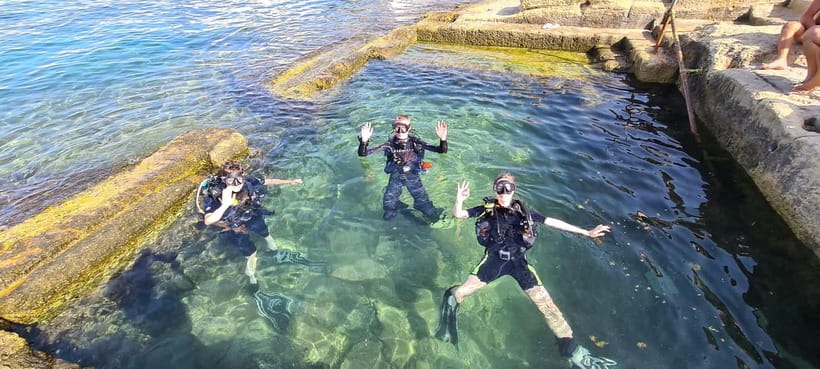
The plan is straightforward and very beginner-friendly. You start with practice on the house reef, including shallow confined skill practice. Then you head out further to explore for the open water portion.
Why that sequence matters:
- The shallow, more controlled part lets you build comfort with equipment, breathing rhythm, and basic movement.
- The later open water time gives you a chance to enjoy the underwater scenery without the pressure of performing everything from minute one.
If you are nervous, this is the style that usually helps. Instead of jumping straight into a bigger site, you earn your comfort step by step. And because the instruction is focused on safety and enjoyment, you should feel guided, not thrown into the deep end.




What you actually see on Malta’s reefs, and the rules that keep it special
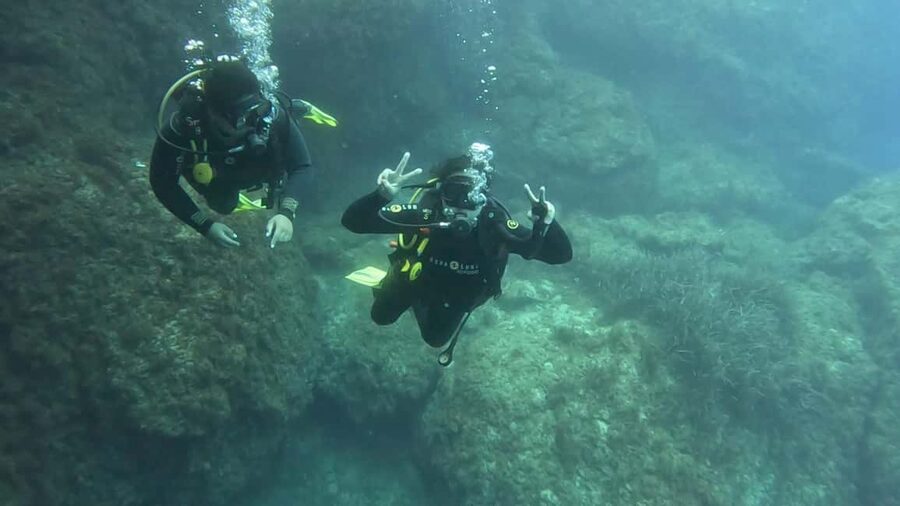
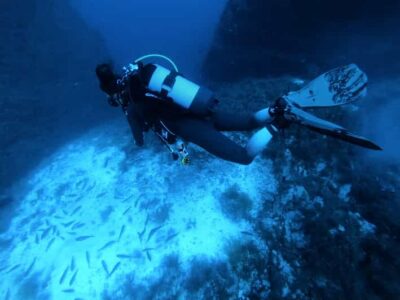
The highlight is simple: you get to discover the beauty of Malta’s underwater seascapes with a PADI instructor. You are not just wearing gear, you are actually seeing the reef environment up close.
At the same time, the experience includes a clear rule: touching marine life is not allowed. That rule is worth taking seriously, even if it feels tempting. It protects sea life and it also keeps you from accidentally damaging equipment or getting into a messy situation underwater.
What to keep in mind while you are learning:
- You will probably spend part of the session focused on technique, not just scenery.
- That is normal. If you treat the beauty as the reward for getting comfortable, the whole thing tends to click.
Also, the program is not presented as a wild adventure. It is structured learning, and that is a good thing for your first time underwater.
Instructor style and small-group attention, why it feels manageable
The experience is built around calm, patient instruction and small group sizes limited to 3 participants. That matters because first-time scuba is equal parts mental and physical. You need time to understand, time to practise, and time to reset.
Small groups also reduce delays. If you are waiting your turn while others go, anxiety can build fast. With fewer people, the instructor can keep your pace steady and correct issues early.
The provided feedback summary includes strong praise for the instructor, with multiple mentions of it being great and the instructor being great. Even without names listed, the pattern points to what you want most for a first attempt: clear teaching and a reassuring tone.
Price in context: what $85 includes, and why that is good value
The price is listed at $85 per person. For a short scuba experience, the key is what you get bundled in.
This includes:
- online theory (completed before the activity)
- equipment orientation and a pre-water briefing
- all equipment needed for the dive-related session
- a guided session on a local reef
So you are paying for instruction, safety setup, gear access, and a reef guide. From a value standpoint, it is often the hardest part of first-time scuba that gets expensive elsewhere: learning the system and sorting gear without guessing. Here, the essentials are included, so you are not trying to cobble together rentals and lessons on your own.
You only need to bring a towel, swimwear, and some water to drink. That is another value win, because you are not hauling extra items or spending time organizing equipment logistics.
The optional second session, up to 12 meters for more experience
After your first scuba try session, you can complete a second Discover Scuba session with your PADI instructor. The second session can be done at another underwater location, with a maximum depth of 12 meters.
For many people, the first session is about comfort. The second session is where you tend to feel more in control, which usually means you can enjoy the underwater environment with less mental load.
If you are tempted by the second session, it is worth asking yourself honestly: do you want more water time, or do you want to keep this as a one-and-done first try? The offer is there, but it is optional, and that flexibility is a smart setup.
What to bring, what to avoid, and how to set yourself up for success
The good news is packing is simple. You only need:
- Swimwear
- Towel
- Water to drink
That is it. Everything else is provided.
On the do-not list, the experience notes:
- Alcohol and drugs are not allowed
- Touching marine life is not allowed
One more practical reality: you should treat this as a day when you show up feeling well. The notes also say it is not suitable if you have a cold. If you are even slightly unsure, it is better to postpone than to risk feeling unwell underwater.
Health and age rules: the stuff that decides whether you can go
This program has a clear baseline: you must be at least 10 years old and medically fit to scuba. Before booking, you are expected to read the medical questions, and a yes answer may require a doctor’s approval of fitness to take part.
The information given flags many situations that mean you should not book, including:
- problems with lungs, breathing, heart, or blood affecting physical or mental performance
- respiratory issues, high blood pressure, and heart problems
- back problems or hernia
- epilepsy or seizures
- diabetes
- pregnancy
- recent surgery within the last 12 months
- a cold
- recent diarrhoea or stomach or intestine problems
- taking prescription medications (with birth control listed as an exception)
Age is also noted in more than one way. It says children under 10 years are not suitable, and it also says it is not suitable for children under 14 years. If you are booking for a younger teen, it is smart to double-check before you commit, because the written guidance is not a single simple age cutoff.
My advice: if you fall into any borderline category, handle the medical questions first. It is not a box-checking exercise. It is there because the activity depends on safe breathing, stable health, and the ability to handle moderate physical effort.
Should you book this Malta PADI scuba try session?
Book it if you want a structured, beginner-first scuba experience in Malta that keeps the group small, uses online theory before you arrive, and gives you real coaching on a house reef. At $85, the value is strongest when you compare what you get: online learning, gear, safety briefing, and an instructor-led reef session without needing to organize rentals yourself.
Skip it or postpone if your medical situation may be a problem, if you are pregnant, or if you are currently sick with a cold. Also, because the session is short and focused, it is best if you are ready for a teaching format rather than a long, wandering underwater adventure.
FAQ
How long is the Malta PADI Discover Scuba experience?
The experience duration is listed as about 2.5 hours. Starting times depend on availability.
How many people are in the group?
The group is limited to 3 participants.
Do I have to complete the online theory before I arrive?
Yes. Online theory is included, and it must be completed before the activity.
What equipment do I need to bring?
You do not need to bring scuba equipment. The experience includes equipment orientation, a pre-water briefing, and all equipment needed.
What should I bring with me?
Bring swimwear, a towel, and some water to drink.
Is the instructor English-speaking?
Yes, the instruction language is English.
Who is not suitable for this experience?
It is not suitable for children under 10 years, and it also lists children under 14 as not suitable. It is not suitable for pregnant women, people with back problems, heart problems, respiratory issues, epilepsy, or diabetes, and it notes it is not suitable for people with a cold or pre-existing medical conditions. You also must be medically fit to dive and read the medical questions before booking.
Are there rules about marine life or substances?
Yes. Alcohol and drugs are not allowed, and touching marine life is not allowed.
Can I do a second scuba session, and how deep can it go?
After your first session, you can complete a second Discover Scuba session with your PADI instructor. It can be at another underwater location, with a maximum depth of 12 meters.
Down Among the Wrecks and Reefs


More Tour Reviews in St Paul S Bay



Recently reviewed around St Paul S Bay
- Malta: PADI Discover Scuba Diving Experience★ 5.0 · 3 reviews
- Wakeboarding Adventure in Malta: Learn to Ride★ 5.0 · 4 reviews
- Malta: Jet Ski Safari to St. Paul’s Islands or St Thomas Bay★ 5.0 · 4 reviews
- Evening Catamaran Charter★ 5.0 · 5 reviews
- St Pauls: Gozo & Comino Islands, Blue Lagoon & Seacaves Tour★ 4.6 · 22 reviews
- Malta: Blue Lagoon Evening Swim & Snorkel Boat Cruise★ 4.9 · 24 reviews
- From Sliema or Bugibba: Two Islands Ferry to Comino and Gozo★ 3.8 · 38 reviews
- SSI Try Scuba Diving in the sea★ 4.8 · 43 reviews
Scuba Diving, compared.
 ★ 4.6First Experience Scuba Diving LessonFrom $91415 reviews
 ★ 4.8St Julians: Discover Scuba Diving ExperienceFrom $10693 reviews
 ★ 4.5First scuba diving experience with instructor – MaltaFrom $071 reviews
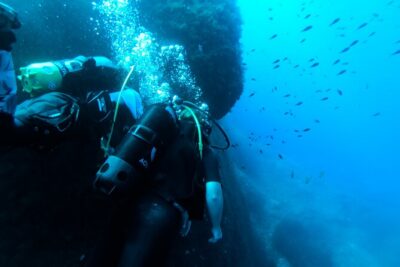 ★ 4.5First Experience Scuba DivingFrom $9652 reviews
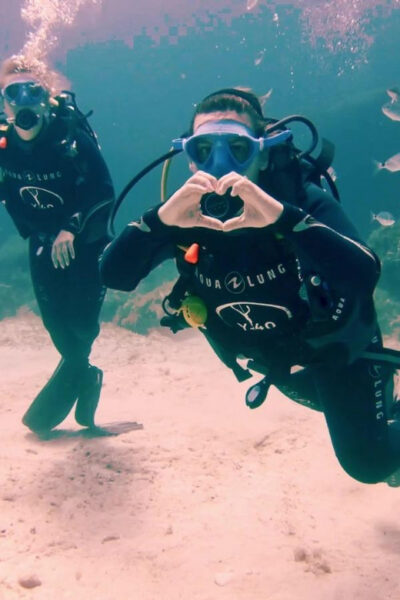 ★ 4.8Malta, Scuba diving with instructorFrom $9652 reviews
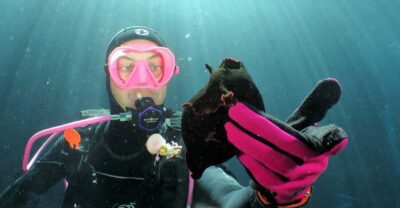 ★ 4.8SSI Try Scuba Diving in the seaFrom $5843 reviews
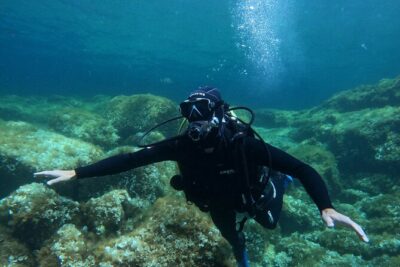 ★ 5.0Diving experience in MaltaFrom $13212 reviews
 ★ 4.62 Scuba Fun Dives for Certified diversFrom $11810 reviews
Browse the lists this tour appears in