
REVIEW · BUGIBBA AND ST PAULS BAY
Malta: St Paul in Malta & Early Christian Era Half Day Tour
Malta’s St Paul trail is a small route with big meaning. This half day tour connects Rabat, Mdina, and St Paul’s sites into one story about the Apostle Paul on the island. I especially like the way the licensed guide ties everyday street scenes to belief and history, and the stop at St. Paul’s Cathedral where the art inside makes the era feel real. The only caution is simple: there’s a moderate amount of walking, and it is not suitable for people with mobility impairments.
You’ll also get a practical, comfortable setup: hotel pickup, an air-conditioned coach, and tickets handled for St. Paul’s Grotto and the cathedral. For a tour at about $71 per person that includes transport and entrances, it’s a solid value if you want guided context instead of piecing it together yourself. The trade-off is that lunch is on your own, so you’ll need a plan for food during the free time.
In This Review
- Key points to know before you go
- Why this St Paul route feels different than typical Malta sightseeing
- Rabat on foot: narrow streets and early medieval details
- St Paul’s Grotto: the three-month story, up close
- Mdina walking: the calmer, iconic Malta you came for
- St. Paul’s Cathedral art: when the message becomes visible
- St Paul’s Bay narrated walk: the storm arrival claim in 60 AD
- The coach-and-pickup rhythm, plus lunch timing
- Price and value: what $71 buys you
- Who should book this tour, and who might skip it
- The booking decision: should you do it?
- FAQ
- How long is the Malta St Paul and Early Christian Era half day tour?
- What places does the tour visit?
- Is lunch included?
- Does the tour include hotel pickup and drop-off?
- Is there air-conditioned transportation?
- What entrance fees are included?
- What language is the guide?
- Is the tour suitable for people with mobility impairments?
- How much walking should I expect?
- What is the cancellation policy?
Key points to know before you go
- Licensed guide, story-led stops that link Rabat streets, grotto legend, and church art
- St Paul’s Grotto visit tied to the claim of three months on Malta
- Mdina walking with early medieval architecture and classic old-town views
- St. Paul’s Cathedral art and St Publius connection explained on-site
- St Paul’s Bay narrated walk focusing on the storm arrival claim in 60 AD
- Moderate walking with comfortable-shoes advice you should actually follow
What else runs out of St Pauls Bay
- St Paul’s Bay: Comino, Blue Lagoon, Gozo, & Caves Boat Tour
★ 4.5 · 979 reviews - Malta: St Paul in Malta & Early Christian Era Half Day Tour
★ 4.7 · 64 reviews - From Sliema or Bugibba: Two Islands Ferry to Comino and Gozo
★ 3.8 · 38 reviews - St Pauls: Gozo & Comino Islands, Blue Lagoon & Seacaves Tour
★ 4.6 · 22 reviews
Why this St Paul route feels different than typical Malta sightseeing
Malta can be busy. Tours can be a blur of stone and viewpoints. This one works because it’s themed, and the theme is specific: the early Christian era and the Apostle Paul’s Malta connection.
Instead of treating churches and caves like checkboxes, you’re nudged to notice details. In Rabat, you move through narrow, winding streets where early medieval architecture shows up in the way buildings sit and connect. At Mdina, the story shifts to a more formal setting, with St. Paul’s Cathedral and its artworks. Then you head to the coast at St Paul’s Bay for the narrated walk, which keeps the focus on what happened after Paul arrived, and what the era looked like after his death.
If you like tours where you understand what you’re seeing (and not just where it is), this style helps a lot. You also get the convenience of a coach with pickup and drop-off, which matters in Malta where getting around between areas can eat time.
Rabat on foot: narrow streets and early medieval details
Your day starts with a drive to Rabat, then you shift into a walking tour. This is the part I think many people underestimate. It’s not just a pass-through old town. The route is designed for strolling narrow lanes where early medieval architecture shows up in the street fabric.
Here’s what that means for you in real life. Those tight streets make the buildings feel closer than you expect, and they slow you down just enough to notice how the town shape channels you from point to point. You’ll also get context for why Rabat connects to Paul’s story in Malta’s tradition, which helps the next stop make sense rather than feeling random.
A practical note: Rabat walking is part of the tour’s “moderate amount of walking.” You don’t want stiff, grippy-only shoes. You want something that lets you step comfortably for a few hours, with a bit of uneven pavement possible in older streets.
St Paul’s Grotto: the three-month story, up close
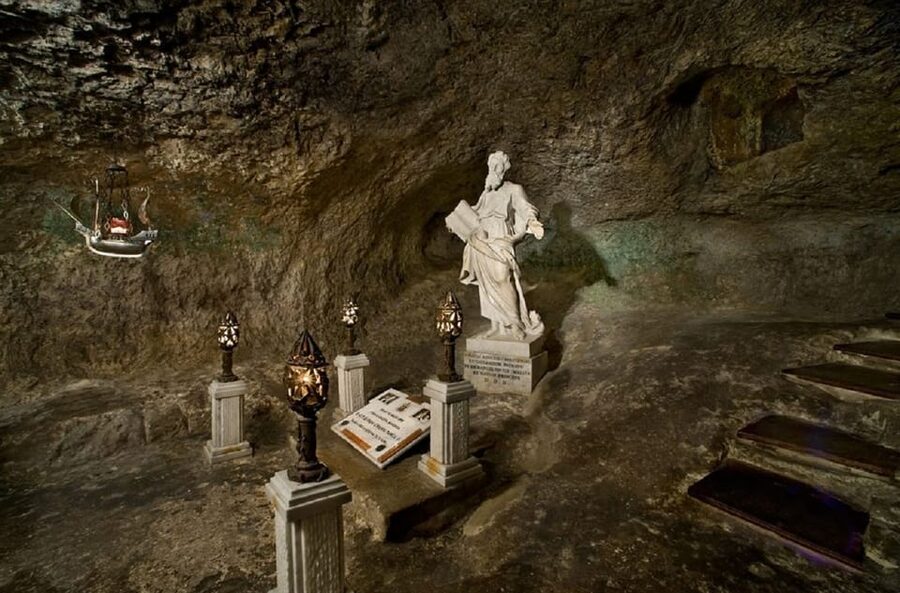
Then comes St. Paul’s Grotto, the emotional centerpiece for many visitors. The big claim tied to this stop is that the Apostle Paul is said to have lived here for three months.
Even if you don’t treat every religious tradition the same way, this kind of visit works. A grotto is physical. It’s not a lecture hall. You can feel how a cave space shapes sound, light, and mood. The tour guide’s job here is important: you’re not just looking at a site, you’re hearing how this place fits into Malta’s early Christian narrative.
You also get an entrance ticket included, so you’re not stuck hunting for times or trying to figure out ticketing while your group waits. That kind of smooth handling is a real value point on a half day tour.
If you’re sensitive to temperature, plan for that. Caves and grottoes can feel cooler or damp compared with the streets outside, and that’s something you’ll notice once you step in.
Mdina walking: the calmer, iconic Malta you came for
After Rabat, the day moves to Mdina, Malta’s famous walled town. This stop adds a different flavor. Mdina is more open in some moments, more structured in its layout, and it tends to create the classic “old Malta” photo feeling.
But the tour isn’t only about views. You’re still on a walking route, and the guide keeps you oriented with explanations that turn Mdina from scenery into setting. For me, the best part of Mdina is how it gives you a chance to breathe between heavier stops. You get movement, you get sights, and you also get the guided story that connects what you’re seeing to Paul’s era.
If your feet are already tired from the Rabat walking, pace yourself here. Mdina can tempt you to stop constantly for photos, and that can quietly add time on a half day schedule.

St. Paul’s Cathedral art: when the message becomes visible
Next is St. Paul’s Cathedral inside Mdina. This is where the tour becomes more than walking between places. You’re there to admire the artworks in the cathedral, and to hear about a specific person tied to Paul’s story: St Publius, described as the first bishop ordained by the Apostle Paul.
That detail matters, because it changes how you look. Instead of only admiring the building as a landmark, you’re prompted to connect church roles and early leadership to Malta’s Christian tradition. The guide’s talk helps you understand why certain references and themes would have mattered to early communities.
This stop also includes the cathedral entrance ticket, so it fits cleanly into the guided flow. You don’t have to coordinate your own entry time.
Two small practical tips that will help you enjoy this more:
- Take a slow moment early in the visit to orient yourself, so the artworks don’t turn into a blur of “pretty stuff.”
- If you like learning, ask a question when something strikes you. This tour format often supports conversation because the group is not always huge, which makes the guide’s explanations more personal.
St Paul’s Bay narrated walk: the storm arrival claim in 60 AD
In the afternoon, you head toward the coast at St Paul’s Bay. Here the tour shifts again, from town churches to the shoreline story.
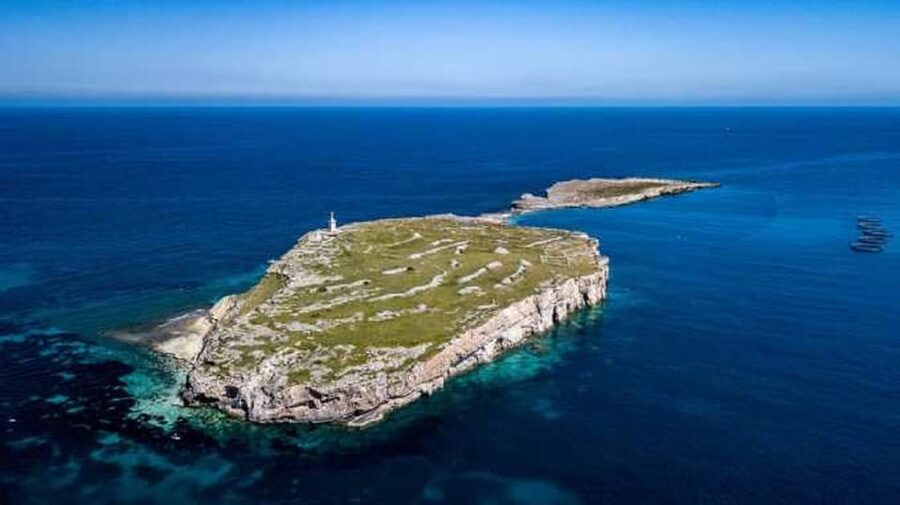
The key claim shared during the visit is that the Apostle Paul arrived on Malta during a large storm in 60 AD. After that, the narrated walk focuses on historical events in the early Christian era after Paul’s death, using the coast setting to keep the story grounded.
A coastal walk has two advantages. First, it breaks up the day visually after indoor and old-town stops. Second, the breeze and open space can be a welcome reset if you’ve been walking in tighter streets.
If the weather is warm, this is also where you’ll feel the day. Bring water and take small breaks. Even with an air-conditioned coach, the outdoor portion can add up in heat.
The coach-and-pickup rhythm, plus lunch timing
One of the reasons this tour works for many schedules is that it runs as a true guided day trip in miniature. You get pickup and drop-off from your hotel or the closest meeting point, and you ride in an air-conditioned coach. You should expect the meeting details to be sent to you in advance, so you can show up without guessing.
As for timing, the tour is about 6 hours, and it includes free time for lunch. Lunch is not included, so treat that free time as a planning moment, not a surprise. Choose a simple meal you can eat quickly, then get back ready. If you go too long hunting for the perfect restaurant, you can end up stressed when you should be relaxing.
Group size matters more than people think on half day tours. Smaller groups tend to make questions easier and explanations feel less rushed. When you have a guide like Mario, you tend to get thoughtful, detailed answers rather than just a standard script.
Price and value: what $71 buys you
At around $71 per person for roughly 6 hours, the math looks good when you count what you’re getting:
- Air-conditioned transport
- Licensed tour guide
- Entrance tickets for St. Paul’s Grotto and St. Paul’s Cathedral
- Pickup and drop-off
If you tried to do this on your own, you’d likely spend time coordinating transport between Rabat, Mdina, and the coast, and you’d still need entrance tickets. Even when individual sites are not expensive by themselves, the time and friction costs can add up quickly.
So the value question is really this: do you want the story explained for you? If yes, this price looks reasonable. If you prefer total independence and don’t mind researching sites and routes, you might spend less money, but you’ll likely spend more time figuring things out.
Who should book this tour, and who might skip it
This tour is a strong match if you:
- want a guided focus on the Apostle Paul and the early Christian era rather than generic sightseeing
- like walking tours with a clear theme, where each stop connects to the next
- care about church art and the people tied to it, like St Publius
- appreciate convenience, with pickup, coach transport, and entrances included
It’s not a great match if you:
- need step-free, low-walking access, since the tour includes a moderate amount of walking and is marked not suitable for mobility impairments
If you’re traveling with mixed ages or varied walking ability, tell yourself you’re going to manage pace early. Comfortable shoes are not optional here.
The booking decision: should you do it?
I’d book this tour if you want Malta to feel connected, not scattered. The structure makes sense: Rabat street atmosphere, St Paul’s Grotto, Mdina’s cathedral art and St Publius connection, then the coastal story at St Paul’s Bay. When the guide is as sharp as Mario and the driver as steady as Leno, the day feels smooth and well paced.
Skip it if you only want brief stops, minimal walking, or if you’re trying to build a self-guided “maximum sites” day. This is a story route, not a speedrun.
FAQ
How long is the Malta St Paul and Early Christian Era half day tour?
It runs for about 6 hours.
What places does the tour visit?
You’ll go to Rabat, St. Paul’s Grotto, Mdina and St. Paul’s Cathedral, and you’ll also visit St. Paul’s Bay for a narrated walk.
Is lunch included?
No. Lunch is free time on your own.
Does the tour include hotel pickup and drop-off?
Yes. Pickup and drop-off are included from your hotel or the nearest point, and you’ll be emailed the exact pickup location one day before.
Is there air-conditioned transportation?
Yes. You travel by air-conditioned coach.
What entrance fees are included?
Entrance tickets are included for St. Paul’s Grotto and St. Paul’s Cathedral.
What language is the guide?
The live tour guide is in English.
Is the tour suitable for people with mobility impairments?
No, it is not suitable for people with mobility impairments.
How much walking should I expect?
There is a moderate amount of walking, so comfortable shoes are important.
What is the cancellation policy?
Free cancellation is available if you cancel up to 24 hours in advance for a full refund.
More Tours in St Paul S Bay


More Tour Reviews in St Paul S Bay



Out of St Pauls Bay
Recently reviewed around St Paul S Bay
- Malta: PADI Discover Scuba Diving Experience★ 5.0 · 3 reviews
- Wakeboarding Adventure in Malta: Learn to Ride★ 5.0 · 4 reviews
- Malta: Jet Ski Safari to St. Paul’s Islands or St Thomas Bay★ 5.0 · 4 reviews
- Evening Catamaran Charter★ 5.0 · 5 reviews
- St Pauls: Gozo & Comino Islands, Blue Lagoon & Seacaves Tour★ 4.6 · 22 reviews
- Malta: Blue Lagoon Evening Swim & Snorkel Boat Cruise★ 4.9 · 24 reviews
- From Sliema or Bugibba: Two Islands Ferry to Comino and Gozo★ 3.8 · 38 reviews
- SSI Try Scuba Diving in the sea★ 4.8 · 43 reviews
Bugibba and St Pauls Bay, compared.
 ★ 4.4St Paul’s Bay: Malta National Aquarium Entry TicketFrom $202,532 reviews
 ★ 4.5St Paul’s Bay: Comino, Blue Lagoon, Gozo, & Caves Boat TourFrom $34979 reviews
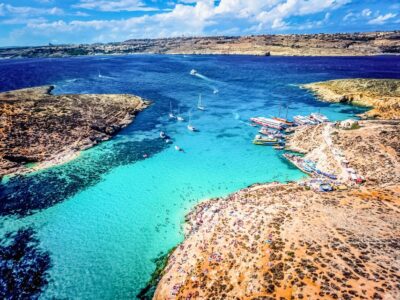 ★ 4.3From Bugibba: Blue Lagoon Afternoon Swim with Sunset CruiseFrom $34725 reviews
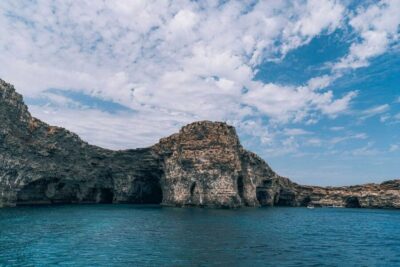 ★ 4.4Blue Lagoon, Comino & St Paul’s Islands CruiseFrom $28211 reviews
 ★ 5.0Malta Sunset Boat Tour: Bugibba to Comino Blue Lagoon CruiseFrom $36115 reviews
 ★ 4.2Valletta, Sliema, Bugibba Fireworks Festival CruiseFrom $3487 reviews
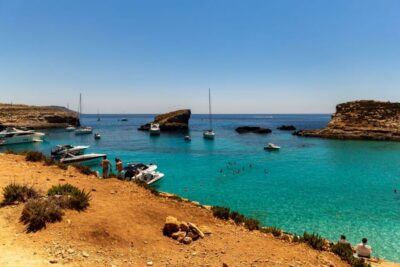 ★ 4.6Bugibba: Scenic Sunset Cruise with Blue Lagoon Swim StopFrom $2877 reviews
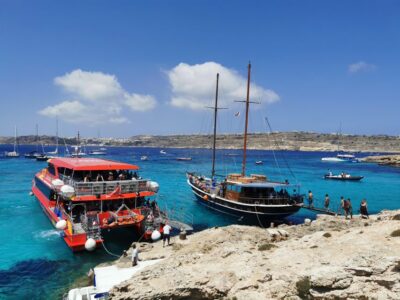 ★ 3.8From Sliema or Bugibba: Two Islands Ferry to Comino and GozoFrom $4238 reviews
Browse the lists this tour appears in