
REVIEW · WORKSHOPS
Malta Surf School, Beginner Surf Lessons
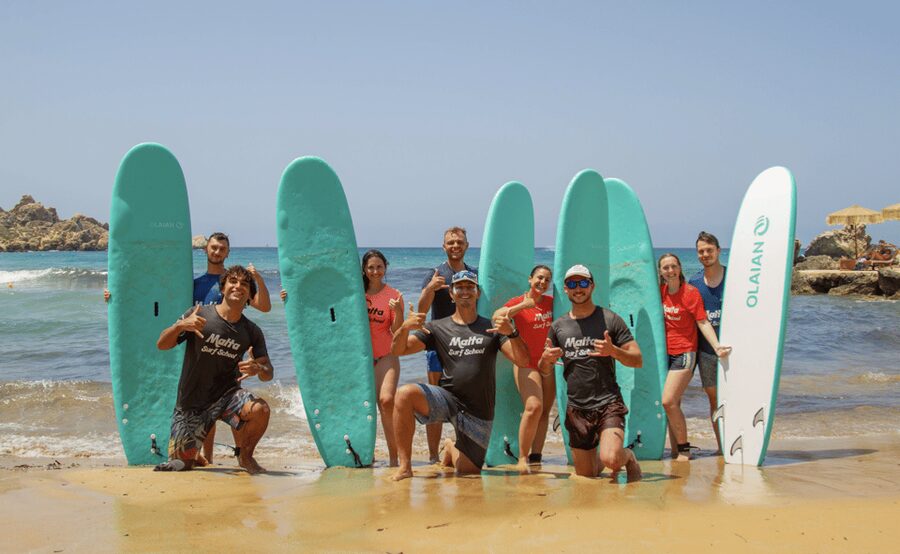
Your first wave starts with good coaching. Malta Surf School makes surfing feel achievable fast, with a beginner-focused 1-hour lesson that teaches the basics of paddling, standing up, and wave safety in Malta’s clear waters.
I especially like the small groups (max 6), which means you are not stuck watching from the sand. The vibe is relaxed, fun, and supportive, even if you have never held a board before.
One drawback to plan around: everything is weather-dependent. If the conditions are not right, the lesson may shift to other water activities.
Key points worth knowing
- Max 6 people keeps the coaching close and the waiting time low
- Sand practice first means you learn take-off and standing before you get in deeper water
- Chest-high water session is guided step by step with safety in mind
- Meet at the beach by the Singita kiosk, marked with a blue flag
- If no waves, you may switch to stand-up paddleboarding, wakeboarding, or boat tours
- Instruction is available in English, Italian, and Spanish
In This Review
- Getting Ready for Your First Wave in Malta
- What Happens During the 60-Minute Lesson
- Beach briefing and board basics
- Learn take-off and standing, right on the sand
- Chest-high water time with real wave-catching guidance
- The fun factor
- Small Groups, Real Feedback (And Why It Matters)
- Meeting Point, Timing, and How to Not Feel Rushed
- Price and Value: What You Get for About €60
- The Weather Factor: What If There Are No Waves?
- What to Bring (And What You Can Skip)
- Who This Lesson Fits Best (And Who Should Skip It)
- Coaches and Teaching Style That Beginners Actually Need
- Getting the Most Out of Your One Hour
- Is Malta Surf School Worth Booking?
- FAQ
- How long is the beginner surf lesson?
- How big is the group?
- Is surf equipment included?
- Where do I meet the instructors?
- What should I bring to the lesson?
- What happens if there are no waves?
- Is the lesson suitable for non-swimmers or young kids?
Getting Ready for Your First Wave in Malta
If you are picturing a chaotic beginner surf scene, forget it. This 1-hour beginner lesson is built for the people who need a plan: what to do first, what to do next, and how to stay safe while you figure out how surfing actually works.
The course runs for 1 hour and is designed specifically for true first-timers. You will start on the beach, practice key movements on sand, then move into the water with instructor guidance. It is not just about getting wet. The lesson has a clear sequence, so you build confidence in stages.
Price is also part of the appeal. You are looking at about $71 per person (listed also as €60 per person) for equipment included, meaning surfboard and wetsuit. For a first lesson, that is strong value because you are not paying extra for gear rental or trying to guess what you need.
More hands-on afternoons on the island
- Sunday: Ghajn Tuffieha (Riviera) Beach Yoga Class
★ 5.0 · 3 reviews
What Happens During the 60-Minute Lesson
The schedule is short on paper, but it packs in the most important surf skills for beginners. Here is the flow you can expect, in plain language.
Beach briefing and board basics
You meet at the end of the steps on the beach next to the Singita kiosk. Look for the surf school blue flag.
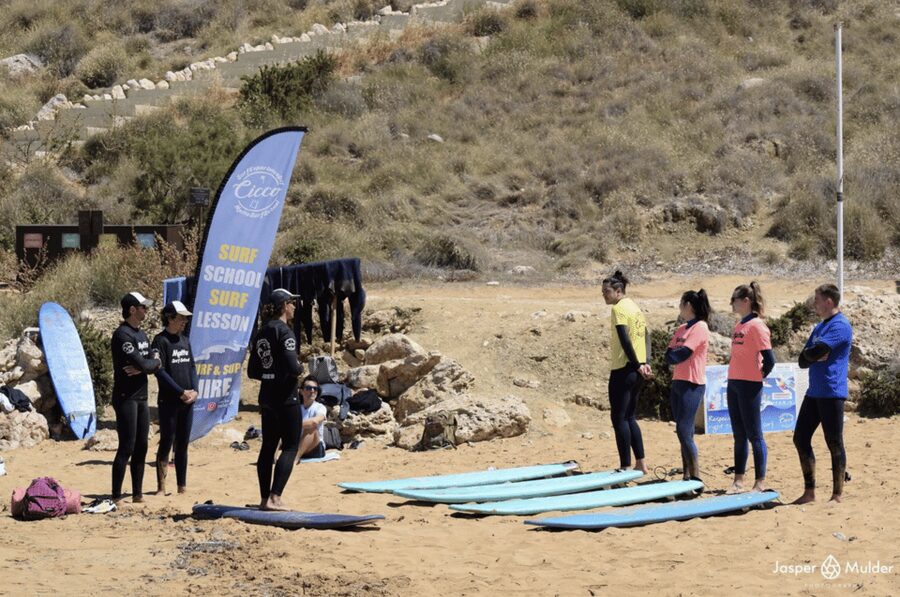
Once you arrive, you should expect a quick orientation before you get changed. The lesson starts with a briefing on the surfboard, surf spot conditions, and safety. This matters because beginners tend to rush straight to the fun part. You will get the rules and the reasoning up front so your time in the water feels safer and more organized.
Learn take-off and standing, right on the sand
Before anyone expects you to ride waves, you practice on dry land. The lesson includes take-off technique and how to execute the pop-up to stand on the board.
Practicing on sand is smart. Your body learns the sequence without the stress of balance on moving water. You also get feedback while things are still simple. In later reviews, people praised how clear instructors were and how the helpers stayed close to offer advice, which fits this teaching approach.
Chest-high water time with real wave-catching guidance
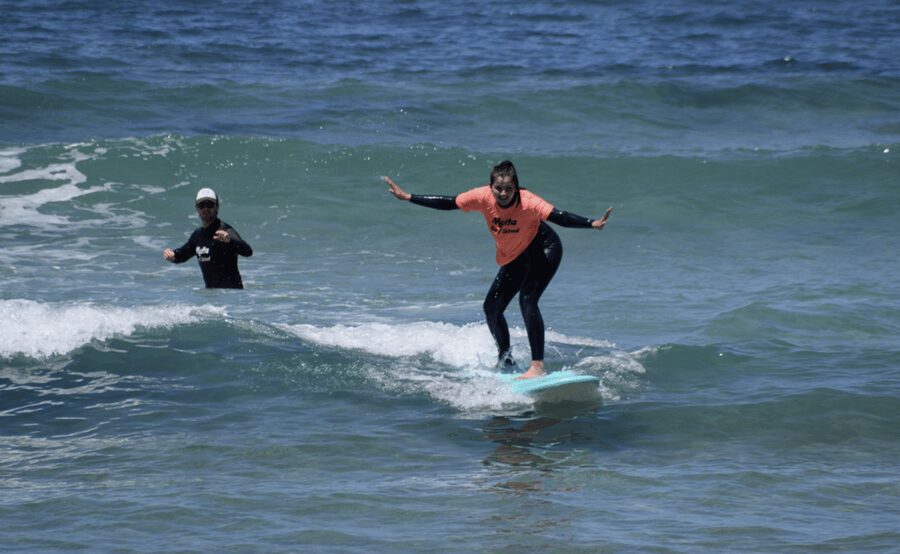
Next comes the water part. You move into chest-high deep water with an experienced team.
You will learn to:
- paddle effectively
- catch waves (with guidance)
- stay safe while you try
This stage is where many first lessons go wrong because beginners do not get enough support. Here, the lesson is set up so you are not left alone after the briefing. You get coaching throughout, and you are in a small group, so you can actually get corrections when you need them.

The fun factor
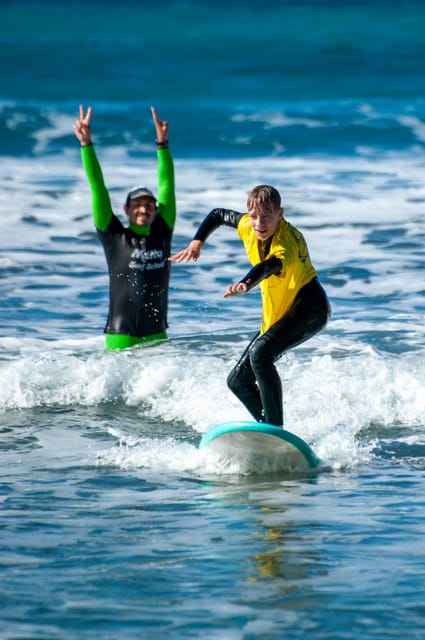
Surfing is supposed to be fun, not just educational. The lesson builds in a supportive, playful atmosphere where you laugh with your group and keep trying.
One of the standout themes from feedback is the feeling of being taken care of. Helpers are on hand to give advice or assistance, and instructors take their time. That combination is what turns a beginner attempt into a real memory.
Small Groups, Real Feedback (And Why It Matters)
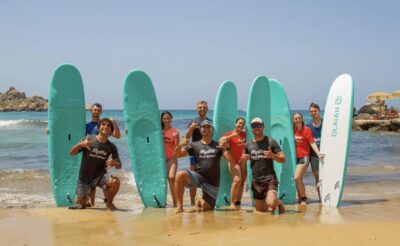
A big part of the value here is group size. The lesson caps at 6 participants. That is a sweet spot for beginners because instructors can watch you closely and correct the small things that make a difference, like body position during paddling and the timing of the pop-up.
If you have ever done an activity where everyone is grouped together and the instructor is shouting from far away, you already know the downside: you improve slowly because you are guessing. Here, the format is designed to reduce that guessing game.
In one review, the instructor was described as very clear and friendly, with helpers consistently available for tips or help. Another review highlighted that coaches took time to help you learn, not just move you through a checklist. That lines up with the lesson flow: sand practice, then guided water practice, then repeated tries.
Meeting Point, Timing, and How to Not Feel Rushed
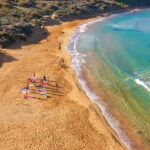
You will meet at the beach near the Singita kiosk. The location is easy to spot because the team uses a blue flag.
Plan to arrive 15 minutes early. This is not just a suggestion for logistics. You need time to get suited up and do the initial briefing without panic. If you show up right at start time, you will feel rushed while others have already warmed up and are ready to practice.
This is also a lesson where small delays can snowball. Wetsuits take a minute, and the instructors need everyone ready before you move from sand practice to water.
Price and Value: What You Get for About €60
At about €60 per person for the 1-hour beginner lesson, you are buying more than board time. You are paying for instruction that reduces trial and error.
Equipment is included:
- surfboard
- wetsuit
For a first lesson, that is a real value boost because you avoid two common problems:
- showing up without the right gear
- paying extra for rental equipment you might not even use correctly
You still need to bring a few personal items, like sunscreen and a towel, but the heavy stuff is handled.
Also, because the group is small, you are not just paying for time. You are paying for attention. That attention is what helps you stand up and catch waves sooner.
The Weather Factor: What If There Are No Waves?
This school is honest about one thing: conditions matter.
All activities are weather-dependent. If there are no suitable waves, you are not simply out of luck. The program offers alternative water options such as:
- stand-up paddleboarding
- wakeboarding
- boat tours
That flexibility is useful because Malta surf conditions can change quickly. If you are traveling and only have one day available, this is where you want to keep expectations realistic. The best plan is to book with an attitude of flexibility and treat the day as a water sports experience, not a guaranteed surf ride at all costs.
What to Bring (And What You Can Skip)
Packing for a beginner surf lesson is simple. You want to be comfortable in and out of a wetsuit.
Bring:
- sunscreen
- water
- swimwear (or board shorts)
- towel
- change of clothes
If you are surfing in cooler months, you will typically wear a swimsuit or board shorts under the wetsuit. In warmer months, you might use a branded T-shirt as directed by the school. Either way, the wetsuit is provided, so you do not need to buy anything special beforehand.
One practical note: bring a dry towel for after. You will be wet, you will get chilly if there is wind, and you will want to feel normal again quickly.
Not allowed: alcohol and drugs. Keep it clean and you will match the safety-first vibe.
Who This Lesson Fits Best (And Who Should Skip It)
This is truly a beginner lesson, but not for everyone.
Not suitable for:
- people with mobility impairments
- non-swimmers
- pregnant women
- children under 16
Also, if you are expecting a gentle, walking-on-the-shore type lesson only, this one moves into chest-high water, so you should be comfortable being in the sea with coaching.
If you are a confident swimmer and you want your first surf experience done the right way, you will likely enjoy this. The small group, sand-to-water progression, and ongoing support are exactly what beginners need to stop feeling awkward and start feeling capable.
Language support is another plus. Instruction is available in English, Italian, and Spanish, so you are not stuck if you only speak one of those.
Coaches and Teaching Style That Beginners Actually Need
From feedback, what stands out is the teaching style: clear explanations, friendly energy, and helpers who stay close.
One review specifically mentions Valerio and describes step-by-step teaching that helped the couple ride the wave multiple times on their first lesson. That is the outcome beginners hope for, even if it varies by conditions. But the pattern is consistent: careful instruction plus constant guidance.
Another review highlights coaches being very helpful and taking time to help you learn. That usually means the instructor watches your technique, corrects it, and does not treat you as a passive participant.
And in at least one experience summary, the group dynamic is described as supportive and fun, not tense. That matters because surfing is easier when you are not afraid of doing something wrong.
Getting the Most Out of Your One Hour
You only have 60 minutes, so your mindset matters.
Here are a few smart ways to get more out of the lesson:
- Listen closely in the briefing, especially around safety and board handling
- Focus on technique over speed. Standing up cleanly beats trying to impress anyone
- During sand practice, take the instructions literally. Your pop-up needs the right timing
- In the water, stay patient with paddling. Catching a wave is often about positioning more than luck
- Be ready to try again. Most beginners improve on their third or fourth attempt, not their first
If you do these things, your odds of catching a wave improve. Even when conditions limit what is possible, you will still learn real skills you can use on future days.
Is Malta Surf School Worth Booking?
I think it is worth booking if you fit the target profile: you are a beginner, you can swim, and you want a short lesson with small groups, equipment included, and hands-on coaching.
Book it if:
- you want your first lesson in a structured way, not a chaotic free-for-all
- you like the idea of sand practice before water
- you want instruction in English, Italian, or Spanish
- you are comfortable with the idea that the day depends on weather and waves, and you would accept an alternative like paddleboarding or wakeboarding
Skip it if:
- you are a non-swimmer or you do not feel comfortable in chest-high water
- you need mobility-friendly access
- you are traveling with a child under 16
- you want a lesson that is guaranteed to be surf no matter what
If you are flexible and ready to learn, this one-hour experience gives you a legit shot at your first wave, with the safety and support that beginners need.
FAQ
How long is the beginner surf lesson?
The beginner group lesson lasts 1 hour.
How big is the group?
The lesson is a small group with a maximum of 6 participants.
Is surf equipment included?
Yes. The lesson includes a surfboard and a wetsuit.
Where do I meet the instructors?
Meet at the beach near the Singita kiosk, at the end of the steps. The meeting point is marked with the surf school blue flag.
What should I bring to the lesson?
Bring sunscreen, water, swimwear, and a towel, plus a change of clothes.
What happens if there are no waves?
Activities are weather-dependent. If there are no suitable waves, the school offers alternative activities such as stand-up paddleboarding, wakeboarding, or boat tours.
Is the lesson suitable for non-swimmers or young kids?
No. It is not suitable for non-swimmers, children under 16, or people with mobility impairments, and it is also listed as not suitable for pregnant women.
Make Something While You Are Here
More Tour Reviews in Mgarr




Recently reviewed around Mgarr
- Half Day Tour in Marsaxlokk Village, Market, Blue Grotto & Qrendi★ 4.5 · 3 reviews
- Sunday: Ghajn Tuffieha (Riviera) Beach Yoga Class★ 5.0 · 3 reviews
- Photo Shoots Adventure – Trips in Lovers Cave, Gozo & Comino★ 5.0 · 3 reviews
- Party Prowl: Crystal Lagoon, Gozo, Santa Maria Caves, Malta★ 4.6 · 4 reviews
- Malta Surf School, Beginner Surf Lessons★ 4.8 · 5 reviews
- Mgarr/Cirkewwa: Comino, Gozo & Blue Lagoon Private Boat Trip★ 4.9 · 18 reviews
- Prehistoric Temples and Highlights of the South Full-Day Tour★ 4.0 · 26 reviews
- Comino Blue Lagoon: Private Boat Charter (2 Hours)★ 4.6 · 27 reviews
Workshops, compared.
 ★ 4.6First Experience Scuba Diving LessonFrom $91415 reviews
 ★ 4.8Chocolate Making WorkshopFrom $2980 reviews
 ★ 4.9Truffle Making Master ClassFrom $3553 reviews
 ★ 5.0Chocolate Making WorkshopFrom $3047 reviews
 ★ 5.0Gozo: Cooking Class and Market VisitFrom $8742 reviews
 ★ 5.0Maltese Tile – Souvenir painting workshop with localFrom $4140 reviews
 ★ 5.0Workshop: Maltese Souvenir Tile Design ExperienceFrom $3538 reviews
 ★ 4.8Sliema: Beach Yoga Class with SwimmingFrom $2628 reviews
Browse the lists this tour appears in